What is Yukgaejang?
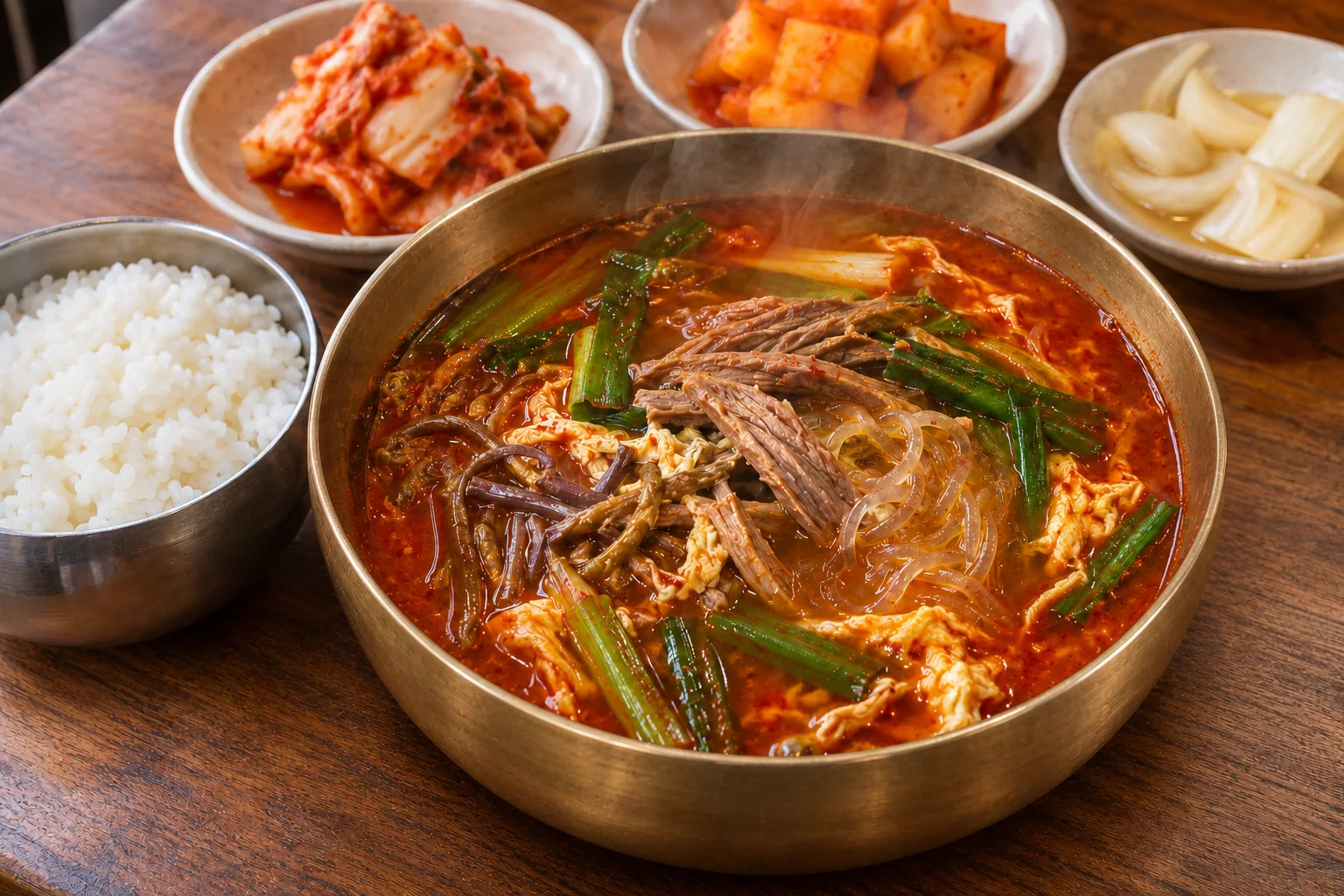
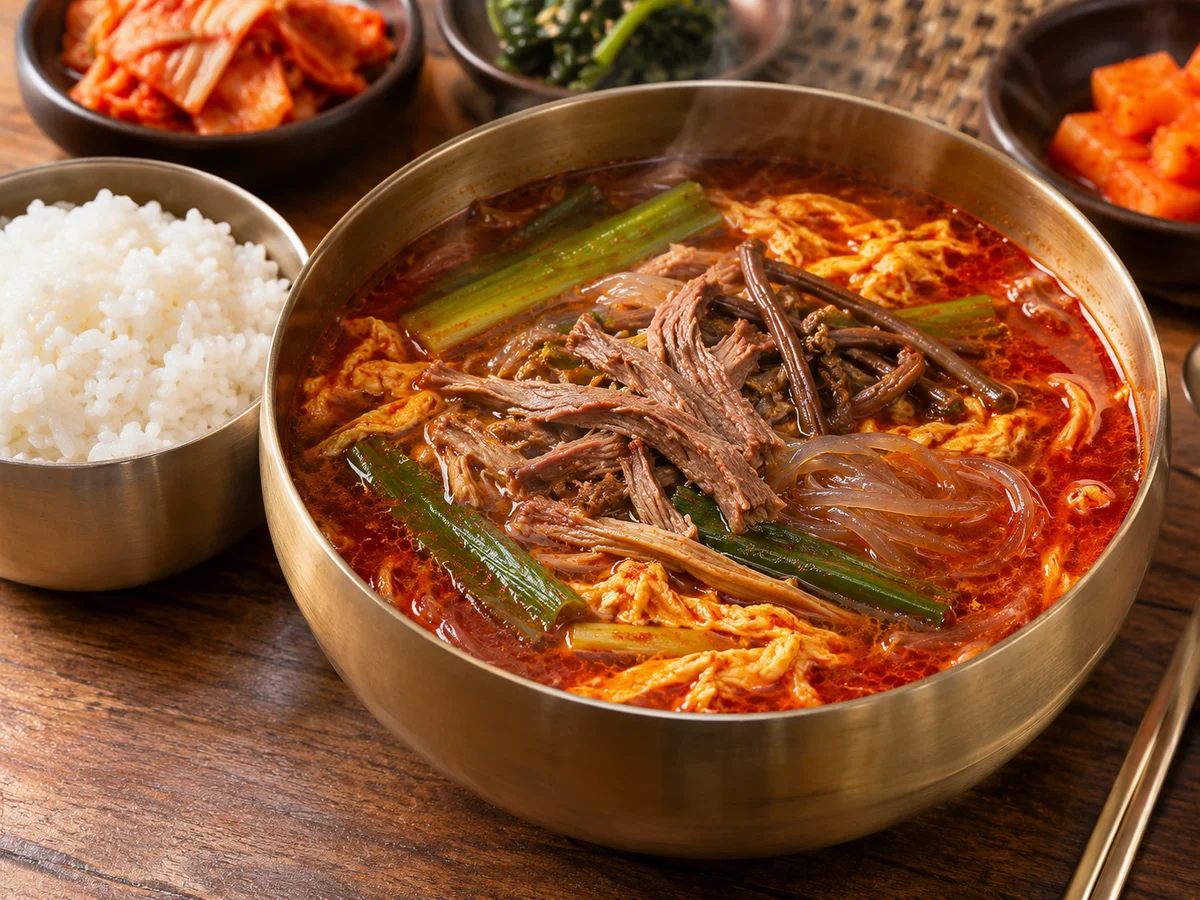
A completed bowl should show shredded beef, plenty of long green onion, soft egg ribbons, gosari and a modest amount of glass noodles in a deep red broth.
KOREAN FOOD · FROM HEAT TO FINISH
29 / 32
QUICK ANSWERS
A completed bowl should show shredded beef, plenty of long green onion, soft egg ribbons, gosari and a modest amount of glass noodles in a deep red broth.
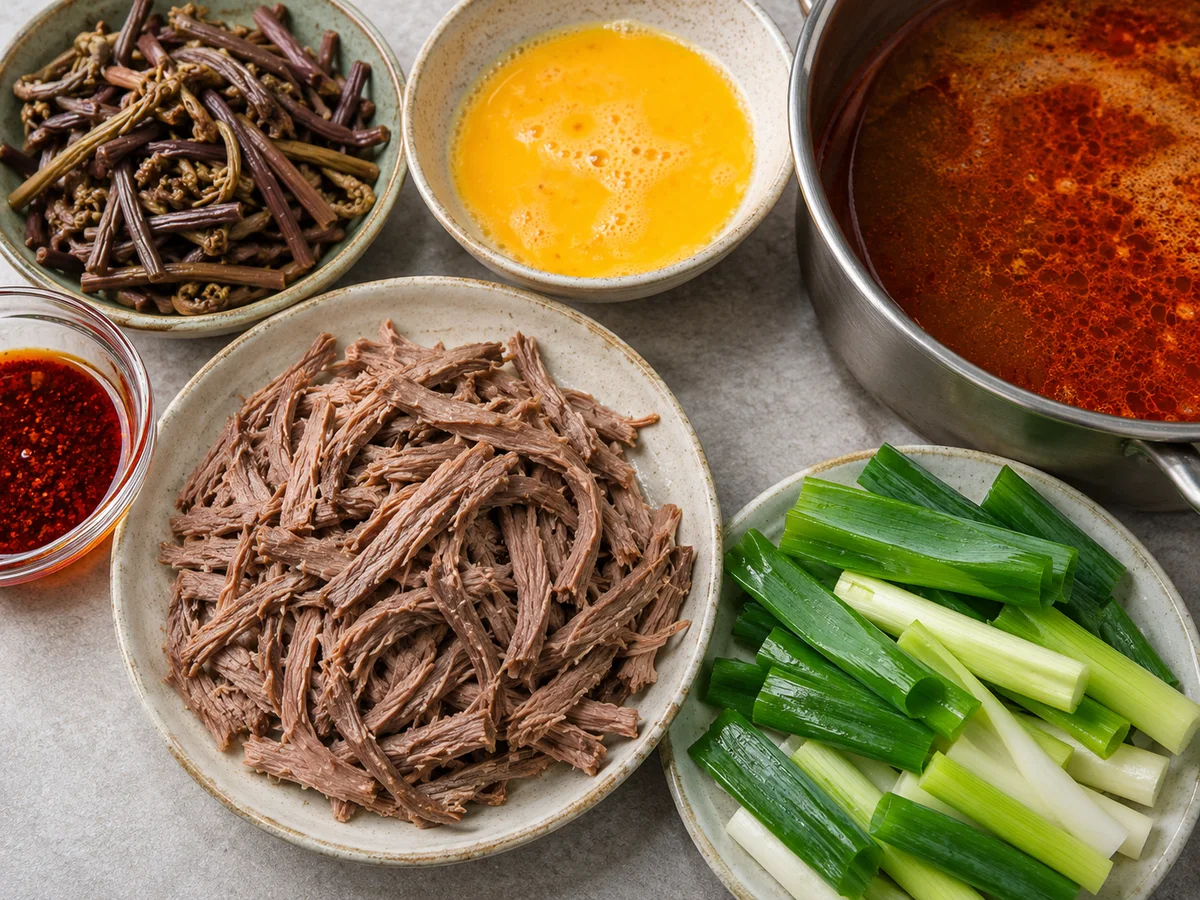
Pull the cooked beef along the grain and prepare long green-onion pieces, beaten egg, gosari, chili oil and broth separately. The soup may be cooked in a pot but is often served in a broad brass-toned metal bowl.
Eat a few spoonfuls of broth and beef first.
Kimchi and cubed-radish kkakdugi are the dependable partners.
01 · THE FINISHED BOWL
A completed bowl should show shredded beef, plenty of long green onion, soft egg ribbons, gosari and a modest amount of glass noodles in a deep red broth. The flavor is warming and savory, not simply punishingly hot.
By Mr. Ahn · Korean Office WorkerLast updated
02 · BEFORE THE HEAT
Pull the cooked beef along the grain and prepare long green-onion pieces, beaten egg, gosari, chili oil and broth separately. Gosari is common rather than mandatory, and this version does not include mung-bean sprouts.
03 · THE FIRST SIMMER
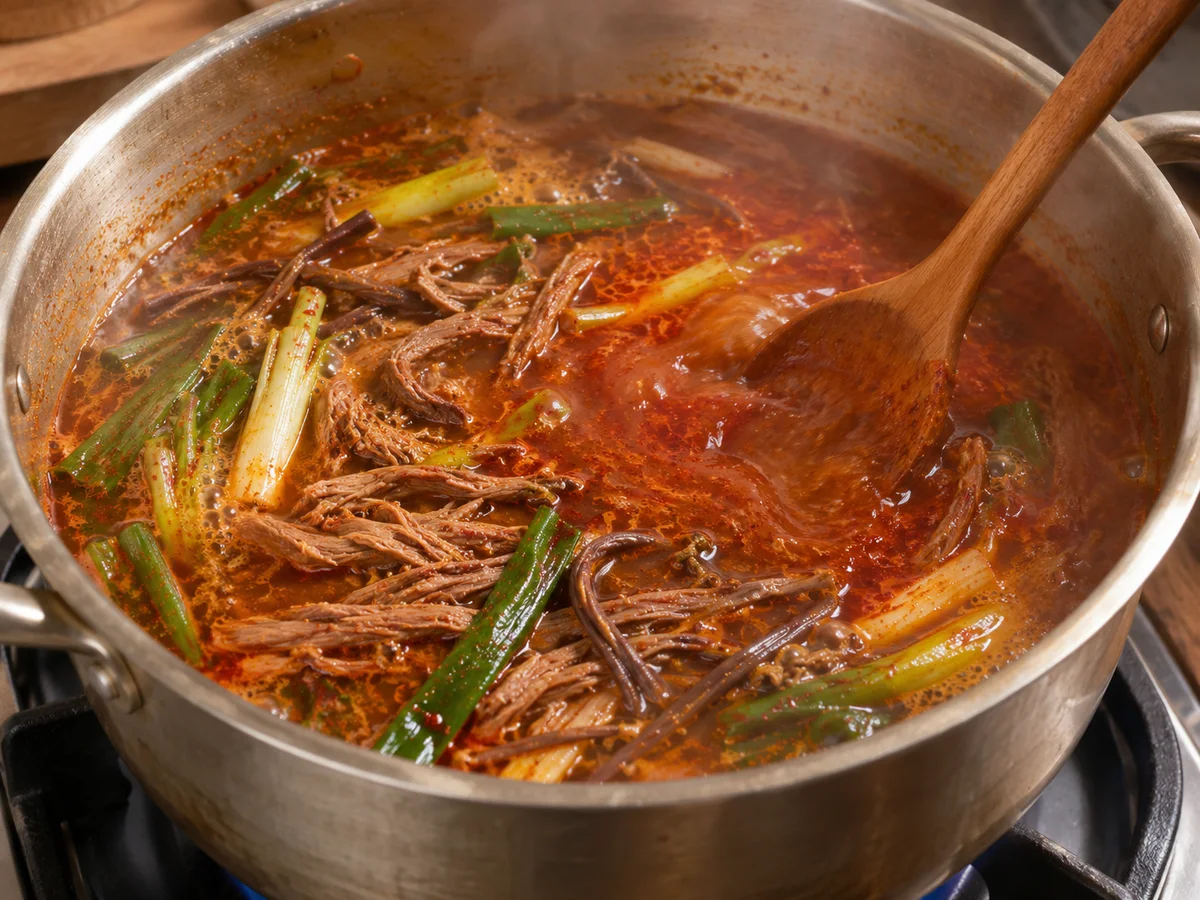
Simmer the shredded beef, green onion and gosari as gochugaru and chili oil color the broth. Let the savory base deepen before adding egg or noodles so the ingredients remain distinct.
04 · ALMOST READY
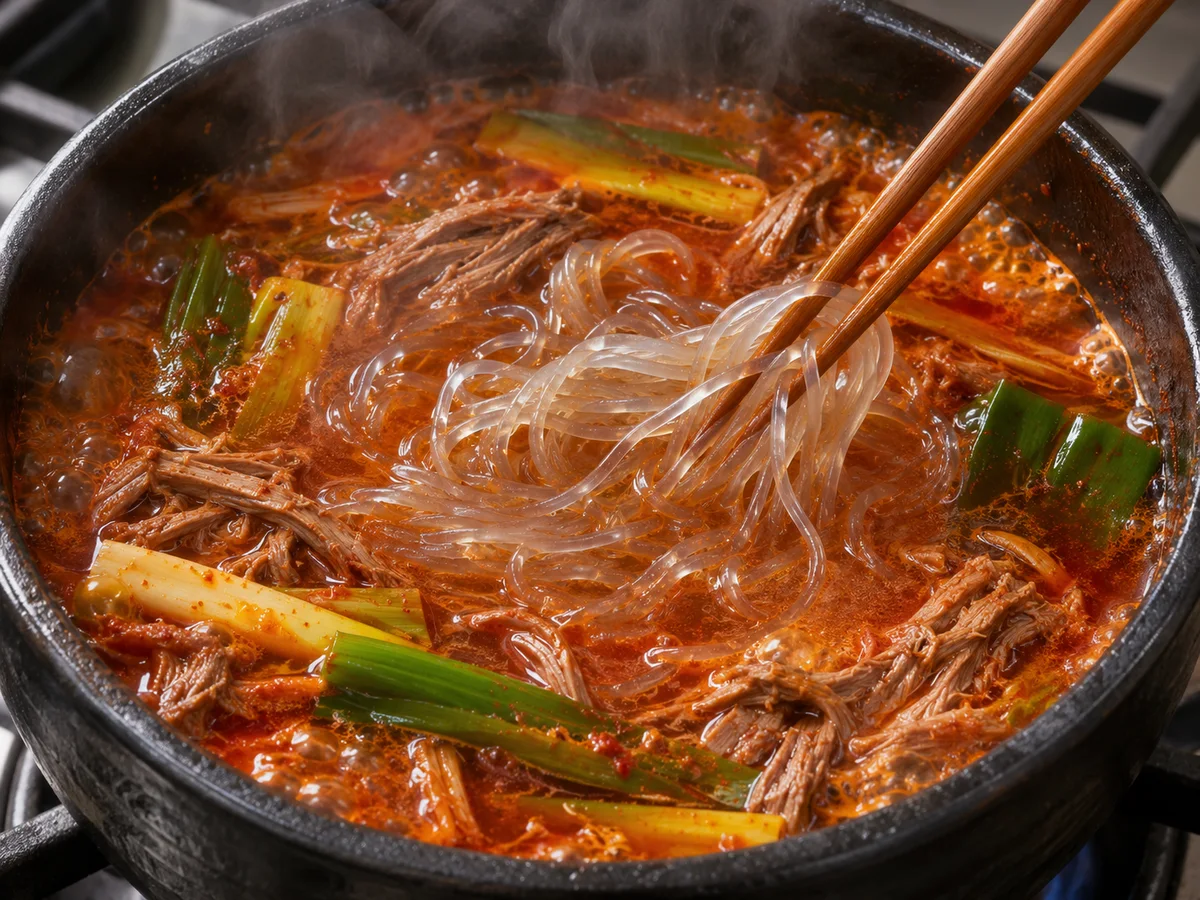
Pour in beaten egg without over-stirring, then add a modest amount of the round glass noodles used for japchae. They should soften in the broth without turning yukgaejang into a noodle soup.
05 · HOW IT ARRIVES
The soup may be cooked in a pot but is often served in a broad brass-toned metal bowl. A separate bowl of white rice arrives beside it; rice is not mixed into the soup by the kitchen.
06 · HOW KOREANS EAT IT
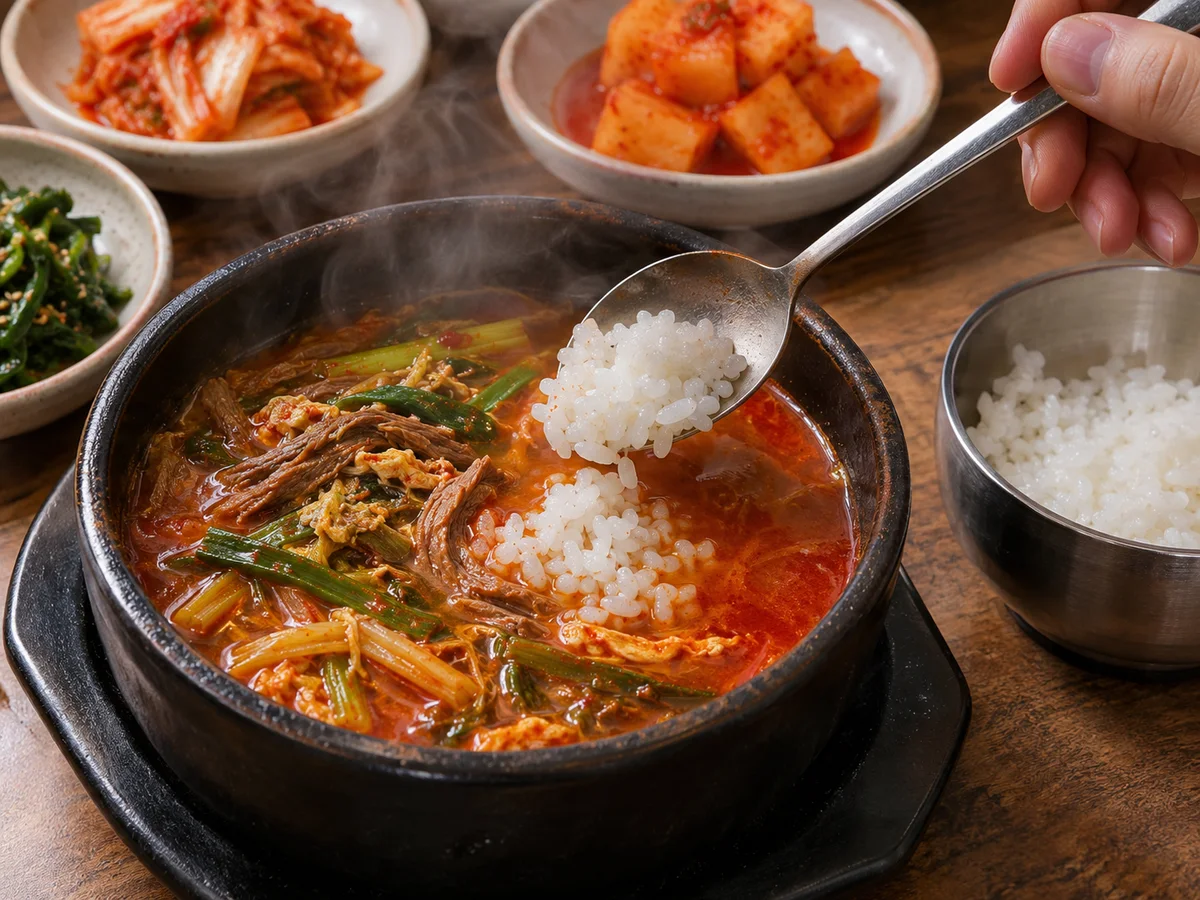
Eat a few spoonfuls of broth and beef first. Most diners then add some or all of the separate rice to the soup and eat it together, adjusting the amount so the broth does not become too thick too quickly.
07 · THE SIDE DISHES
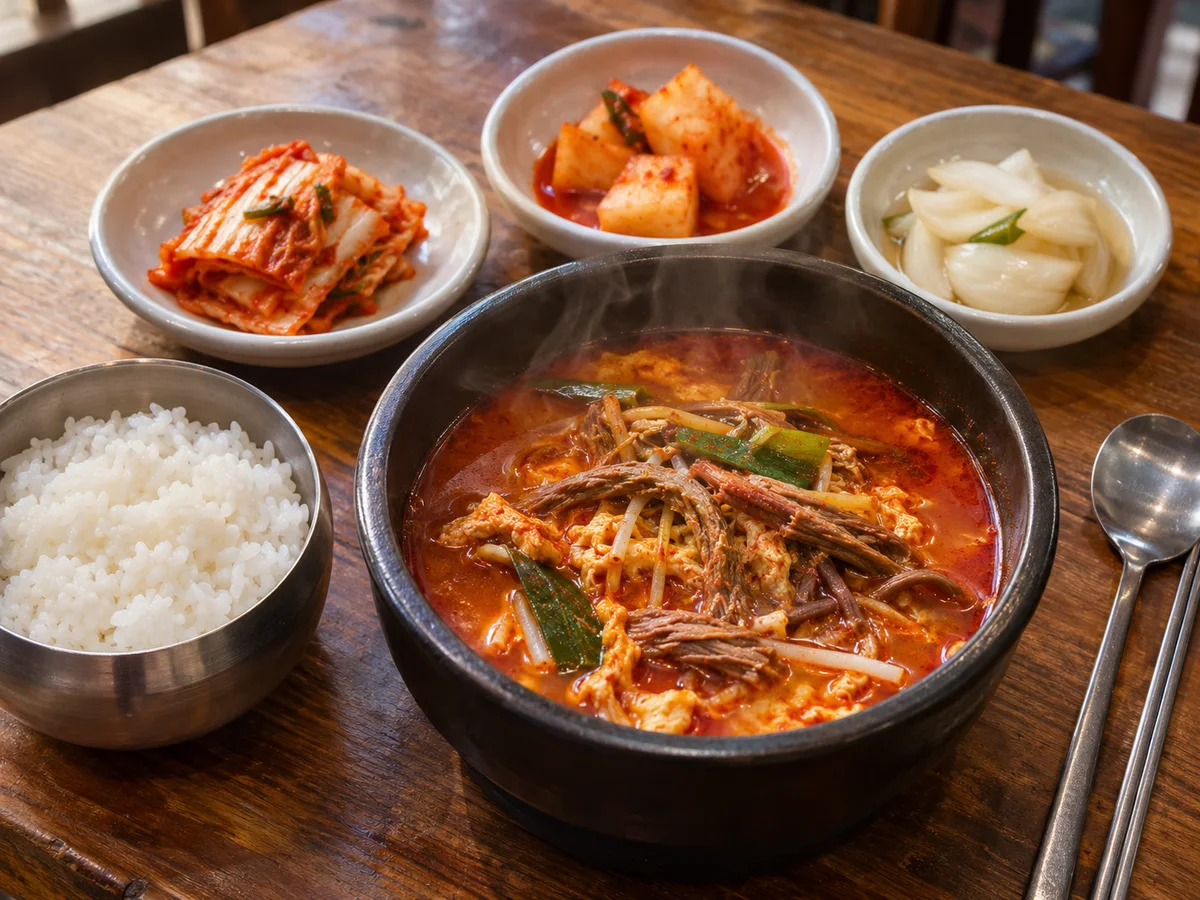
Kimchi and cubed-radish kkakdugi are the dependable partners. Depending on the restaurant, danmuji, lightly pickled onion or another simple banchan may appear, but the hot soup and rice remain the complete meal.
WHAT TO DRINK · WHAT COMES AFTER
Serve it separately, taste the broth first, then add as much rice as you want.
Cool, crunchy radish kimchi cuts through the hot beef broth.
A familiar sharp side bite between spoonfuls of soup and rice.
Some restaurants add a lightly sweet-sour onion side to reset the palate.
NEXT EXPERIENCE