 01
TABLE-SIDE COOKING
Dakgalbi: Spicy Iron-Pan Chicken
A complete guide to the iron-pan experience—what goes in first, how to wrap it, and why Koreans never waste the sauce.
EXPLORE THE KOREAN WAY → CHUSEOK AT HOMEA Korean holiday table, then and now.2026 ARCHIVE · CHUSEOK FOOD & TRADITIONSSONGPYEON · GALBIJJIM · JAPCHAE · JEONEXPLORE THE SEASONAL GUIDE →
KOREAN FOOD · BEYOND THE RECIPE
Today's trends, timeless traditions, and the real ways people cook, share, and eat across Korea.
HOW KOREANS EAT
CHOP. FOLD. SIZZLE.
THEN SAVE THE PAN FOR RICE.
EAT IT IN KOREA
What to order and how Koreans eat it. Each guide follows the heat, the eating order, the best bite, and the Korean-style finish.
01TABLE-SIDE COOKING
A complete guide to the iron-pan experience—what goes in first, how to wrap it, and why Koreans never waste the sauce.
EXPLORE THE KOREAN WAY → 02
GRILL & WRAP
How cross-cut soy-marinated short ribs are grilled, cut, eaten from the bone, and served over rice so the sweet soy glaze seasons every bite.
EXPLORE THE KOREAN WAY → 03
BROTH · DIP · FINISH
Swish marbled beef and vegetables, follow with noodles, then turn the seasoned broth into porridge.
EXPLORE THE KOREAN WAY →KOREAN TABLE TIP
 04
GRILL · CUT · SHARE
Sirloin, tenderloin, chuck flap, and brisket cook at different speeds—grill only what you are ready to eat.
EXPLORE THE KOREAN WAY → 05
RAW · CRISP · BUILD
Seasoned raw beef, rich salmon, pear, seaweed, and roe come together in a customizable Korean-style bite.
EXPLORE THE KOREAN WAY →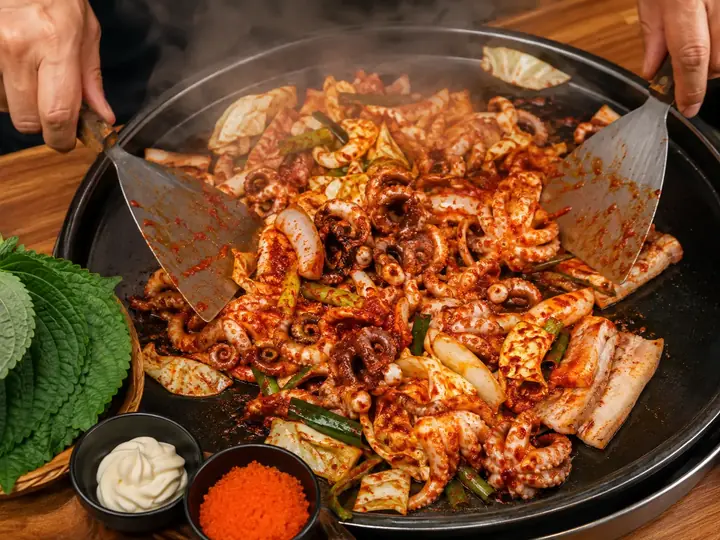 06
IRON-PAN HEAT
Fold baby octopus through fiery sauce, add pork belly for jjuksam, then soften the heat with perilla and mayo.
EXPLORE THE KOREAN WAY → 07
DUCK · TWO WAYS
Compare spicy hand-massaged duck with simply grilled slices, then wrap both with chives, garlic, and ssamjang.
EXPLORE THE KOREAN WAY → 08
THE NOODLE TABLE
Bibim-guksu, icy naengmyeon, creamy kongguksu, and warm janchi-guksu—choose the bowl for the day.
EXPLORE THE KOREAN WAY → 09
CRISP · DIP · FINISH
Let the beef intestines render until golden, cut them at the table, and save the savory fat for fried rice.
EXPLORE THE KOREAN WAY → 10
BRUSH · GRILL · WRAP
Try plain or lightly gochujang-seasoned eel with ginger, sauce, and leaf wraps, then finish with eel soup and rice.
EXPLORE THE KOREAN WAY → 11
CHICKEN HOT POT
Cut roasted chicken into bubbling broth, dip each piece in mustard-chive sauce, and finish with knife-cut noodles.
EXPLORE THE KOREAN WAY → 12
OPEN · BUBBLE · DIP
Scallops, clams, pen shell, and abalone cook in their own juices—with butter, cheese, or cho-gochujang added at the table.
EXPLORE THE KOREAN WAY → 13
CHARCOAL RIBS
Turn bone-in ribs over the flame, brush half with spicy glaze, and compare them with the garlic-salt version.
EXPLORE THE KOREAN WAY → 14
SLICE · WRAP · TOSS
Wrap tender pork with salted cabbage and radish kimchi, then reset the palate with sharp buckwheat noodles.
EXPLORE THE KOREAN WAY → 15
HOME-STYLE · PAN-FRIED
Lightly marinated beef, onions, carrots, mushrooms, and scallions stir-fried in one pan—a Korean home and lunchtime favorite.
EXPLORE THE KOREAN WAY → 16
BONE-BROTH TABLE
Lift tender pork from the bone, share potatoes and greens, and add sujebi or fried rice when the pot runs low.
EXPLORE THE KOREAN WAY → 17
SEAFOOD · HIGH HEAT
Octopus, crab, mussels, and shrimp are folded through spicy sauce and crisp bean sprouts, then cut for sharing.
EXPLORE THE KOREAN WAY → 18
MIX · SCOOP · POUR
Mix the toppings through the rice, scoop it out, then pour hot water over the scorched crust for nutty sungnyung.
EXPLORE THE KOREAN WAY → 19
BELT-SIDE DISCOVERY
Pick nigiri, seared beef, yukhoe gunkan, eel, egg, udon, and tempura as they pass—one small plate at a time.
EXPLORE THE KOREAN WAY → 20
SALT-PAN SEASON
Large prawns turn from gray to orange over foil and coarse salt; save the heads for a crisp, buttery final bite.
EXPLORE THE KOREAN WAY → 21
NOODLES · CLAMS · KIMCHI
Knife-cut noodles and plenty of Manila clams meet in a clear, refreshing broth, with fresh geotjeori on the side.
EXPLORE THE KOREAN WAY → 22
RIVER · VALLEY · POT
Finely ground freshwater fish blends into a rustic doenjang broth with tiny river shrimp and soft sujebi.
EXPLORE THE KOREAN WAY → 23
BEEF INTESTINE HOT POT
Simmer cleaned beef intestines with mushrooms, cabbage, perilla, and glass noodles, then finish the deep red broth with fried rice.
EXPLORE THE KOREAN WAY → 24
STREET FOOD · CHOP · MIX
Choose crisp Korean tempura, cut it into the tteokbokki pan, and coat every piece in the spicy-sweet sauce for Seoul-style twigim beombeok.
EXPLORE THE KOREAN WAY → 25
CHUSEOK · SLOW BRAISE
Braise bone-in beef with radish, carrot, mushrooms, chestnuts and jujubes until tender, then bring it to the center of the holiday table.
EXPLORE THE KOREAN WAY →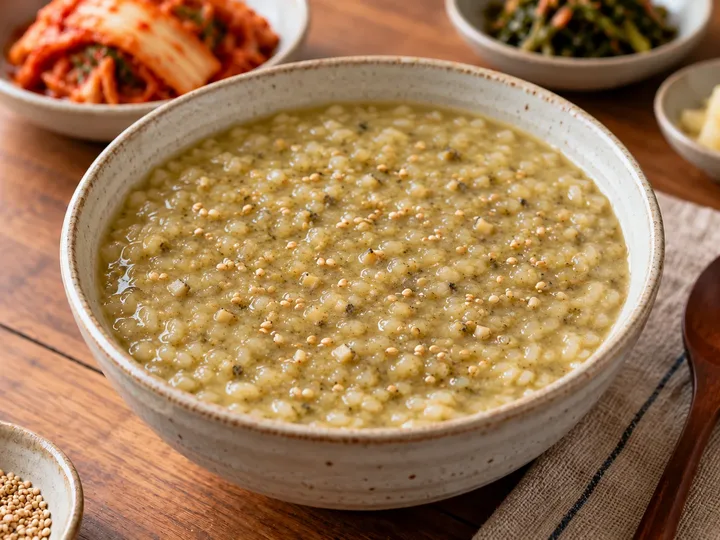 26
KOREAN PORRIDGE · RECOVERY MEAL
Start with Korea’s best-known porridge, then compare sweet pumpkin juk, winter-solstice red bean juk, beef-vegetable juk, chicken juk, and plain recovery porridge.
EXPLORE THE KOREAN WAY →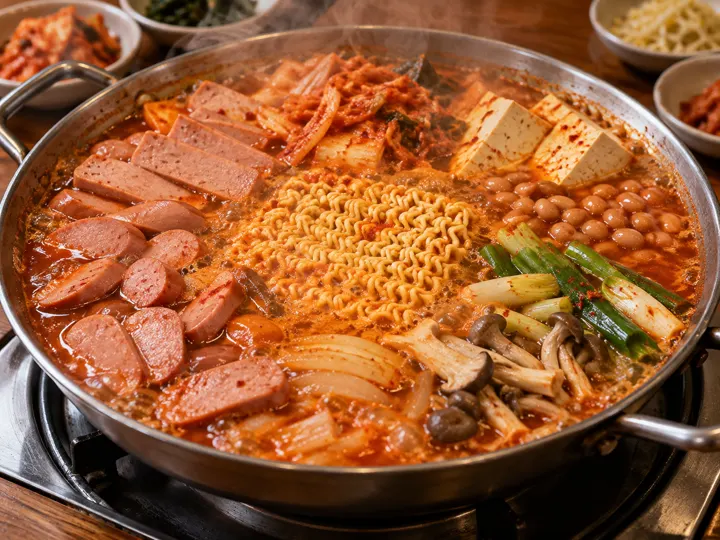 27
SHARED STEW · LATE-NIGHT CLASSIC
Order the right pot size, check the pork in ham and sausage, wait for a full boil, and eat the ramen before the broth turns too salty.
EXPLORE THE KOREAN WAY →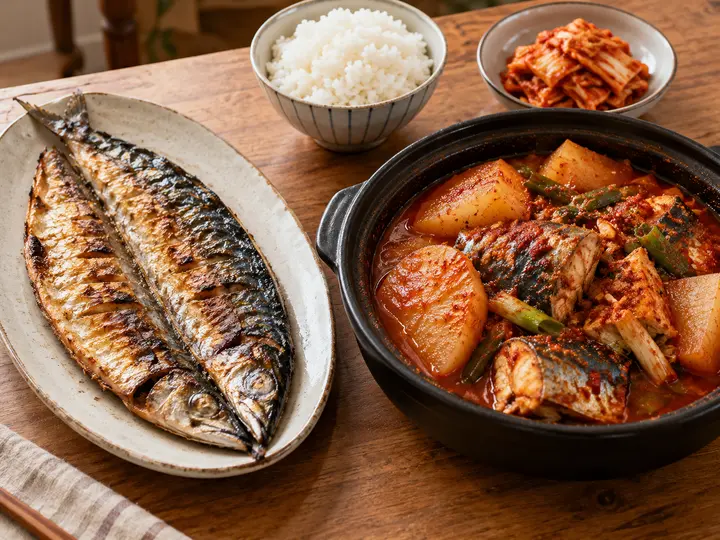 28
EVERYDAY FISH · GRILL & BRAISE
Compare crisp salt-grilled mackerel with the classic spicy braise over thick Korean radish, then learn how Korean families separate the bones.
EXPLORE THE KOREAN WAY →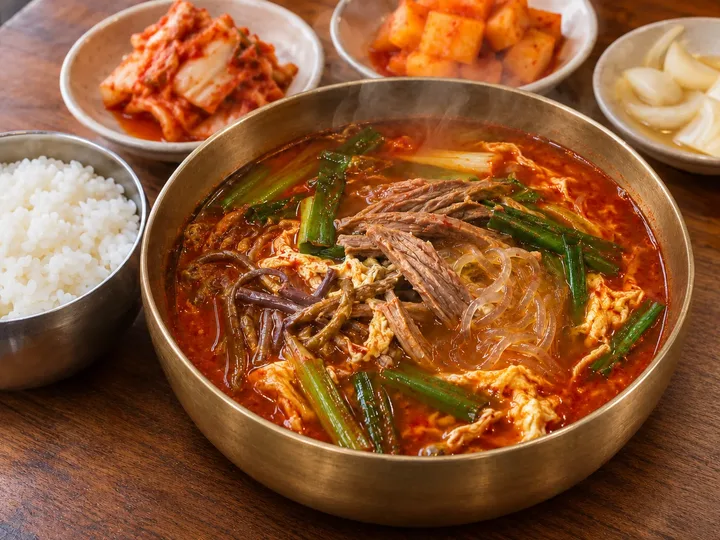 29
SPICY BEEF SOUP · RESTAURANT MEAL
Taste the broth first, then add the separately served rice to shredded beef, green onion, egg, gosari, and round glass noodles.
EXPLORE THE KOREAN WAY →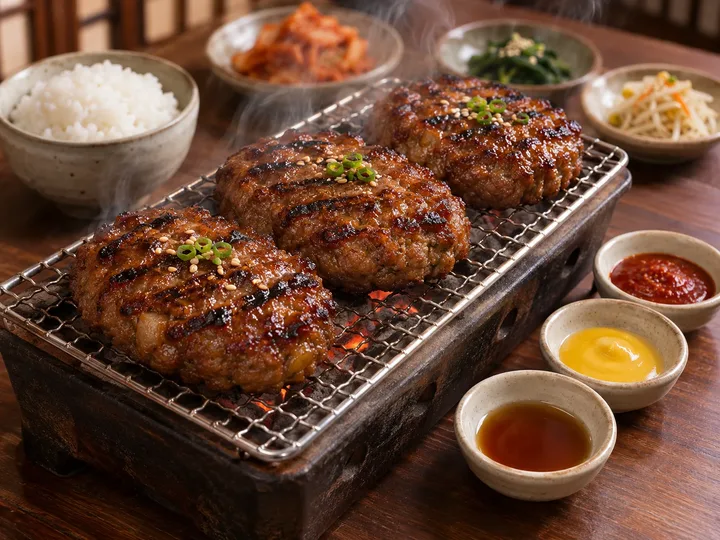 30
SPECIALTY GRILL · THREE SAUCES
Eat thick, juicy tteokgalbi hot from a tabletop rack, then compare chili, mustard, and soy-based dipping sauces.
EXPLORE THE KOREAN WAY →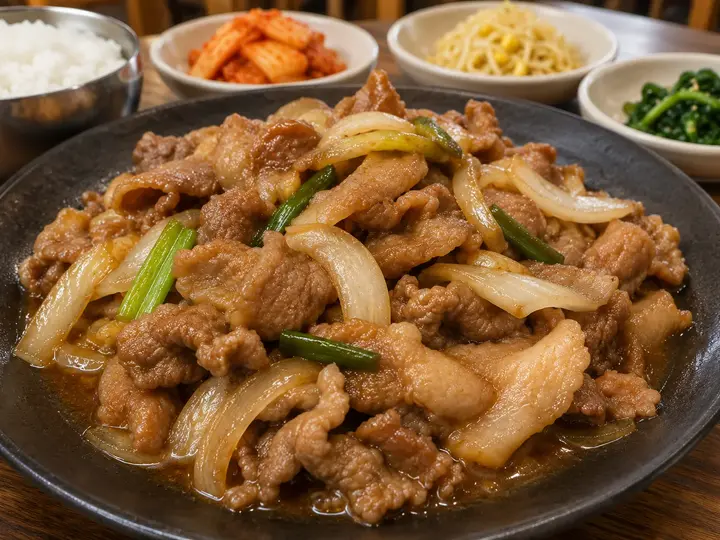 31
DRIVERS' RESTAURANT · SOY PORK
Compare today’s plate-style soy pork with the saucier ttukbaegi version, then eat it with rice, banchan, or a simple Korean wrap.
EXPLORE THE KOREAN WAY →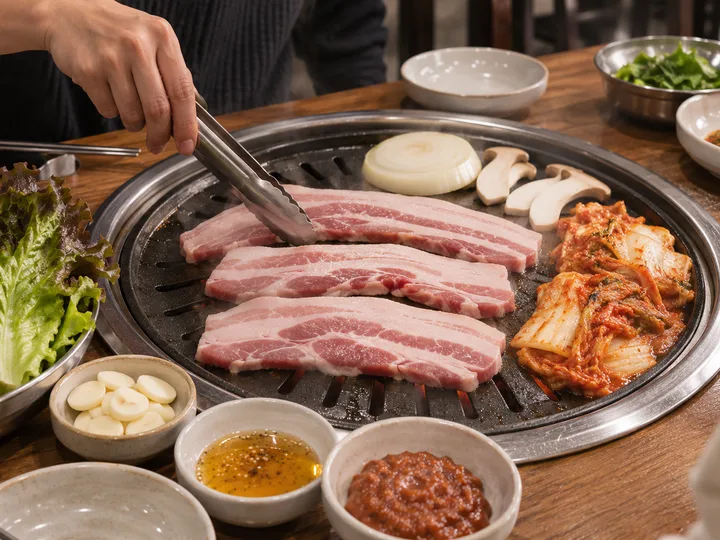 32
PORK BELLY · GRILL & WRAP
Grill fresh pork belly at the table, pair it with scallion salad and leaf wraps, then choose rice and doenjang jjigae or cold noodles to finish.
EXPLORE THE KOREAN WAY →HOW TO USE THE GUIDES
Start with the table-side story, check the eating order and regional notes, then jump to the practical home recipe whenever you are ready to cook.
ALL K-FOOD QUESTIONS
Search practical questions about ordering, etiquette, ingredients, spice and common food comparisons—in five languages.
BROWSE ALL K-FOOD QUESTIONS →