What is Sogogi Gui?
Sogogi gui means grilled beef in Korean: sogogi is beef and gui means grilled.
KOREAN FOOD · FROM HEAT TO FINISH
04 / 32
QUICK ANSWERS
Sogogi gui means grilled beef in Korean: sogogi is beef and gui means grilled.
Koreans eat beef at Hanwoo specialists, ordinary barbecue restaurants, butcher-restaurants, and all-you-can-eat shops. Taste the first piece with only coarse salt.
Taste a hot piece with salt or sesame-oil salt, follow it with warm rice, or make a lettuce wrap with garlic and ssamjang.
Many tables finish with doenjang-jjigae and rice, but icy mul-naengmyeon and spicy bibim-naengmyeon are just as familiar after grilled beef.
01 · WHAT IS SOGOGI GUI?
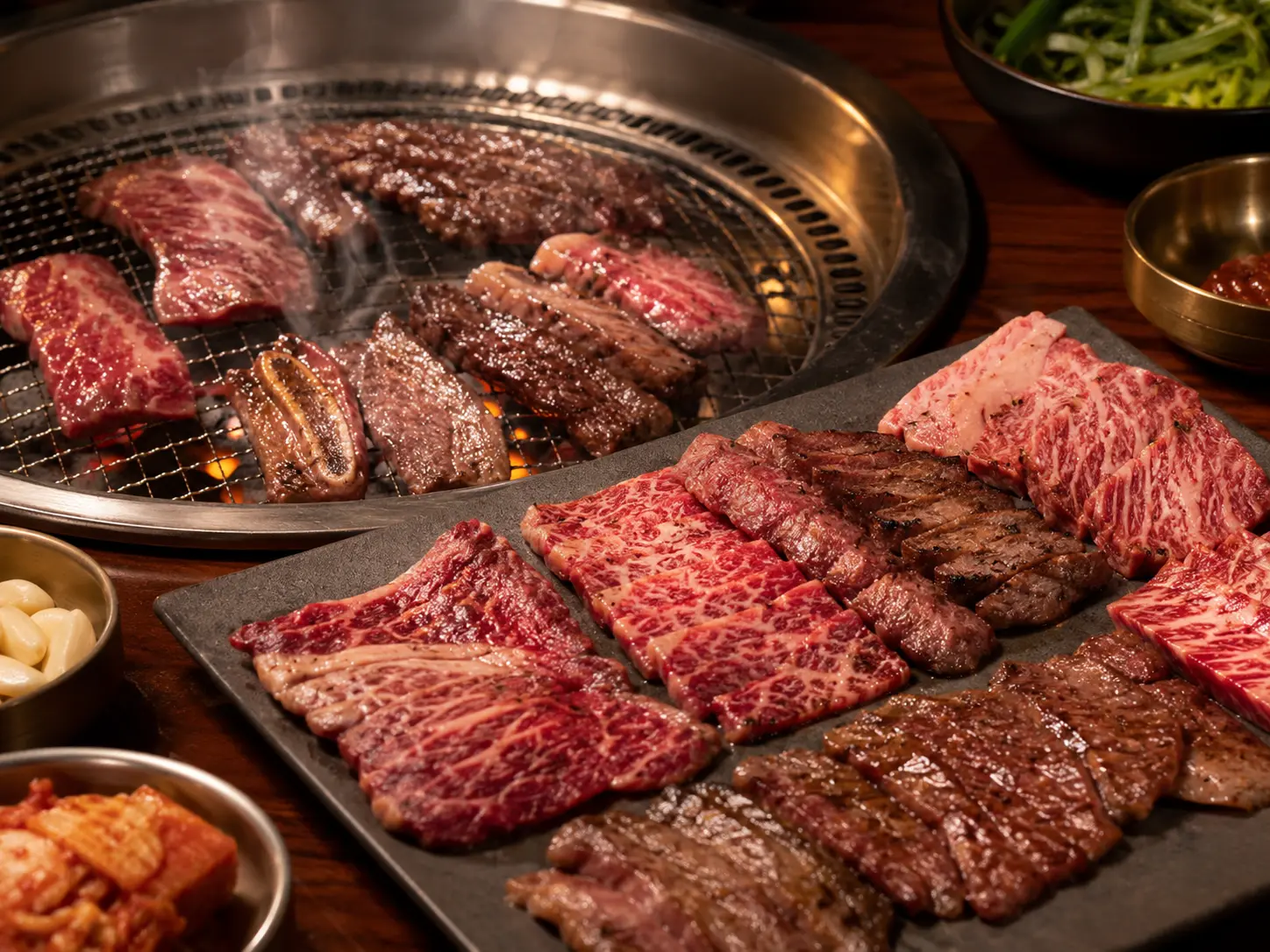
Sogogi gui means grilled beef in Korean: sogogi is beef and gui means grilled. Unlike bulgogi, which is usually thin and marinated, sogogi gui often features unseasoned or lightly seasoned cuts cooked at the table. It is a tasting sequence rather than one large steak, so diners compare tenderness, marbling, chew, and charcoal aroma while every bite is hot.
By Mr. Ahn · Korean Office WorkerLast updated
02 · BEFORE THE FIRE
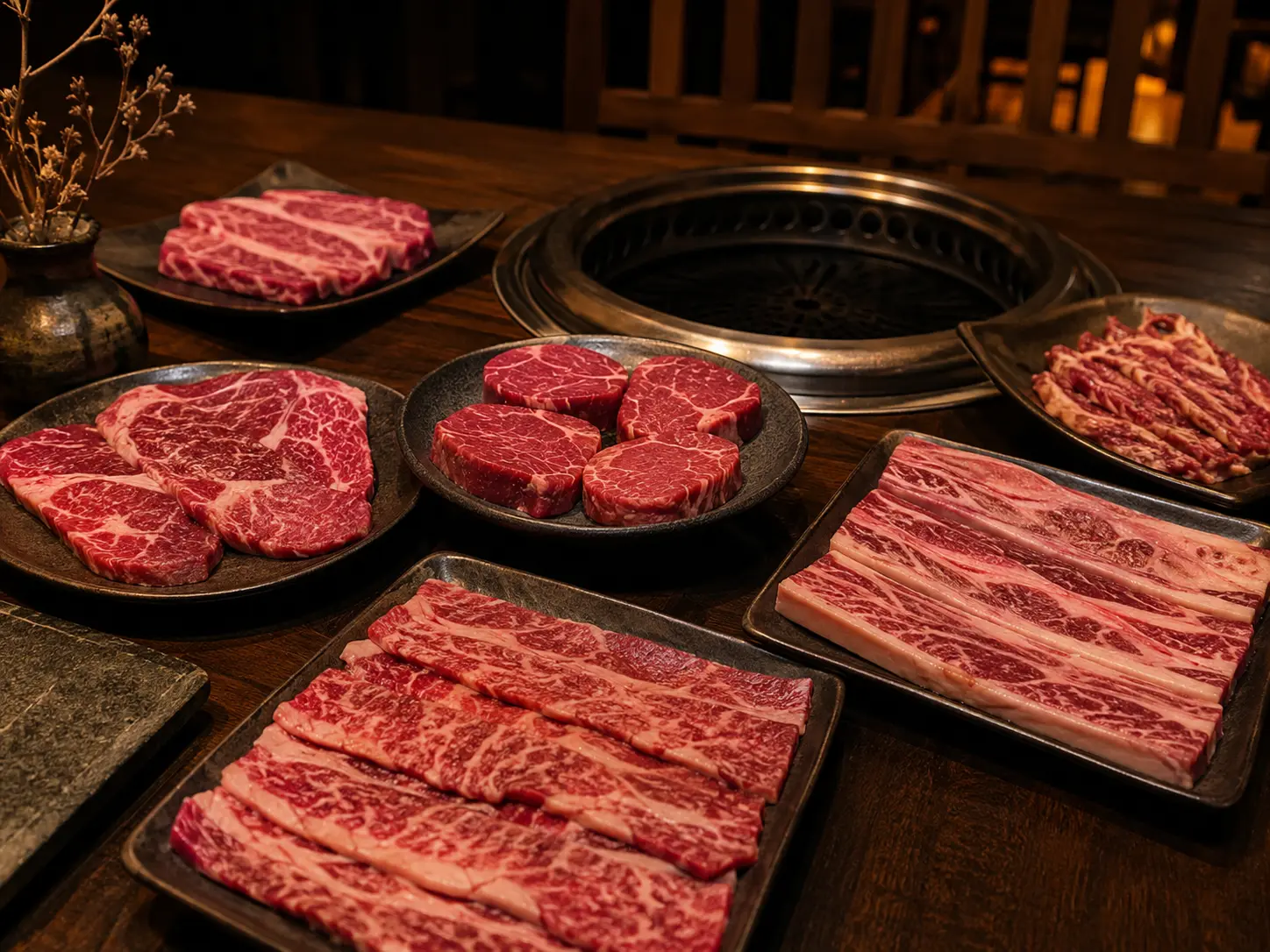
Koreans eat beef at Hanwoo specialists, ordinary barbecue restaurants, butcher-restaurants, and all-you-can-eat shops. Premium Hanwoo offers higher grades and more special cuts at a higher price, while supermarkets commonly sell short rib meat, highly marbled chuck flap, and skirt meat for cooking at home. Australian and American beef can offer good-value cuts at a lower price than Hanwoo.
03 · FIRST CONTACT
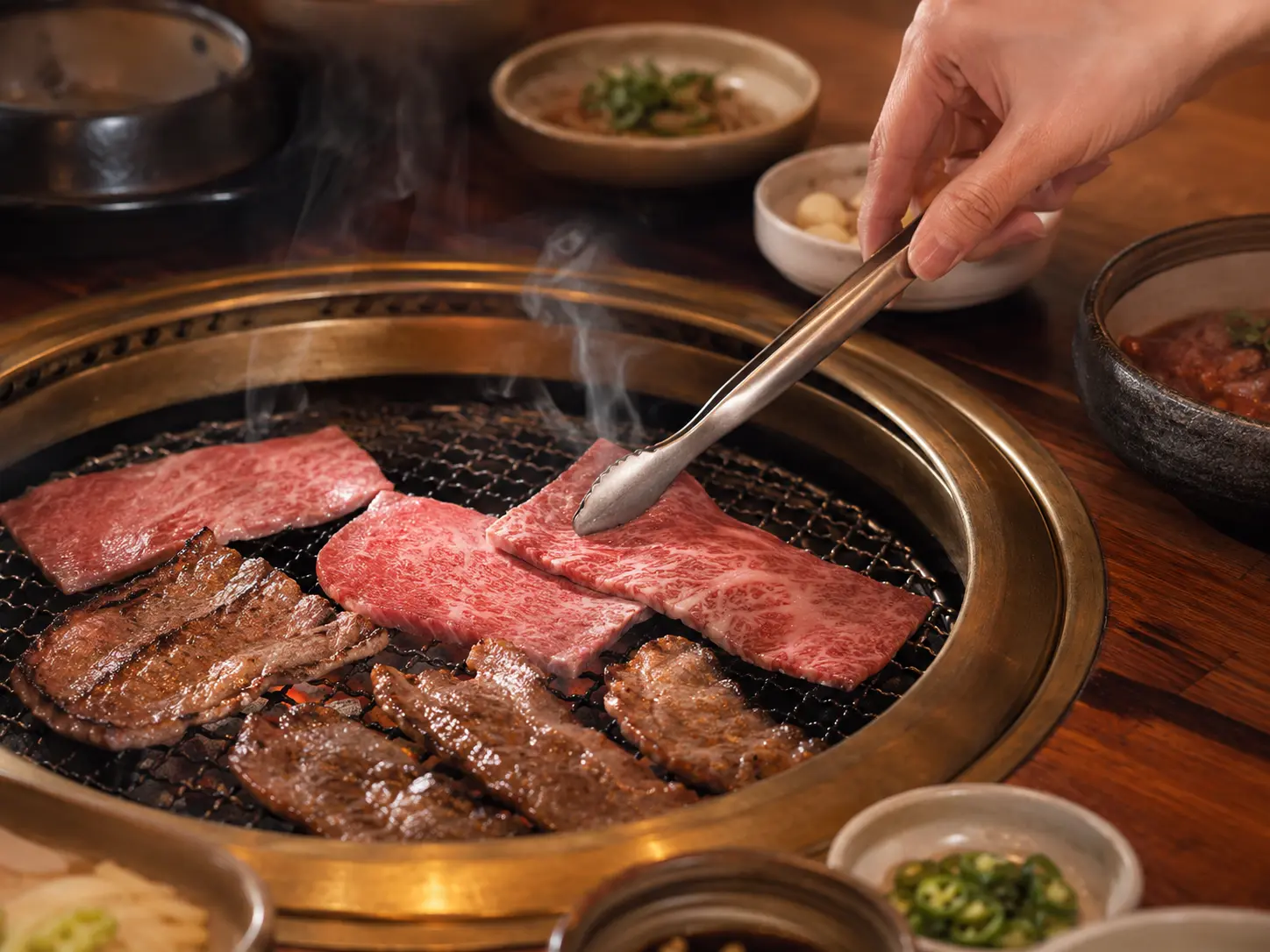
Cook delicate lean cuts before heavily marbled ones coat the grill with fat. Sear quickly, turn when juices rise, and move finished pieces away from the strongest heat.
04 · CUT, TURN, SHARE
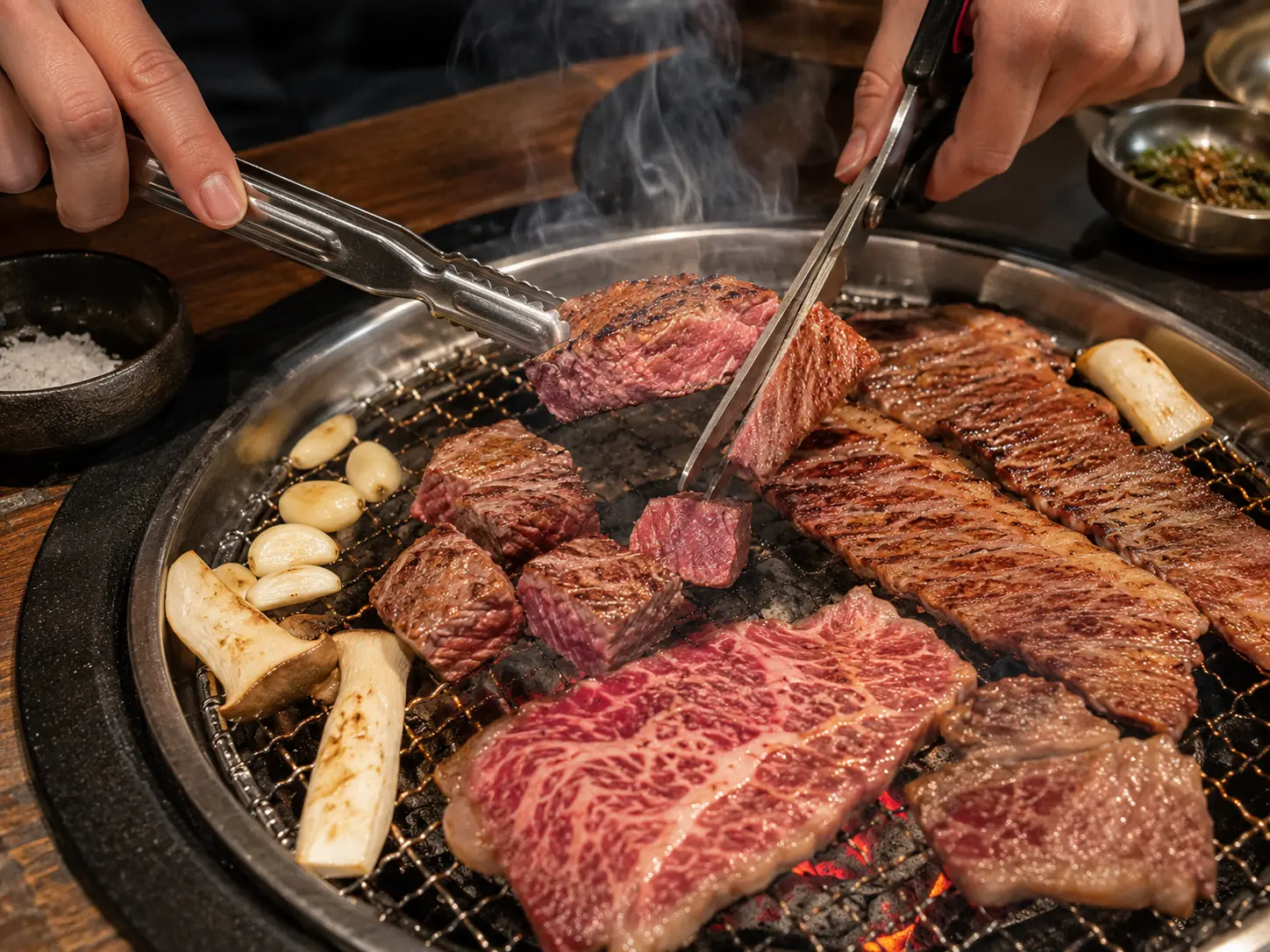
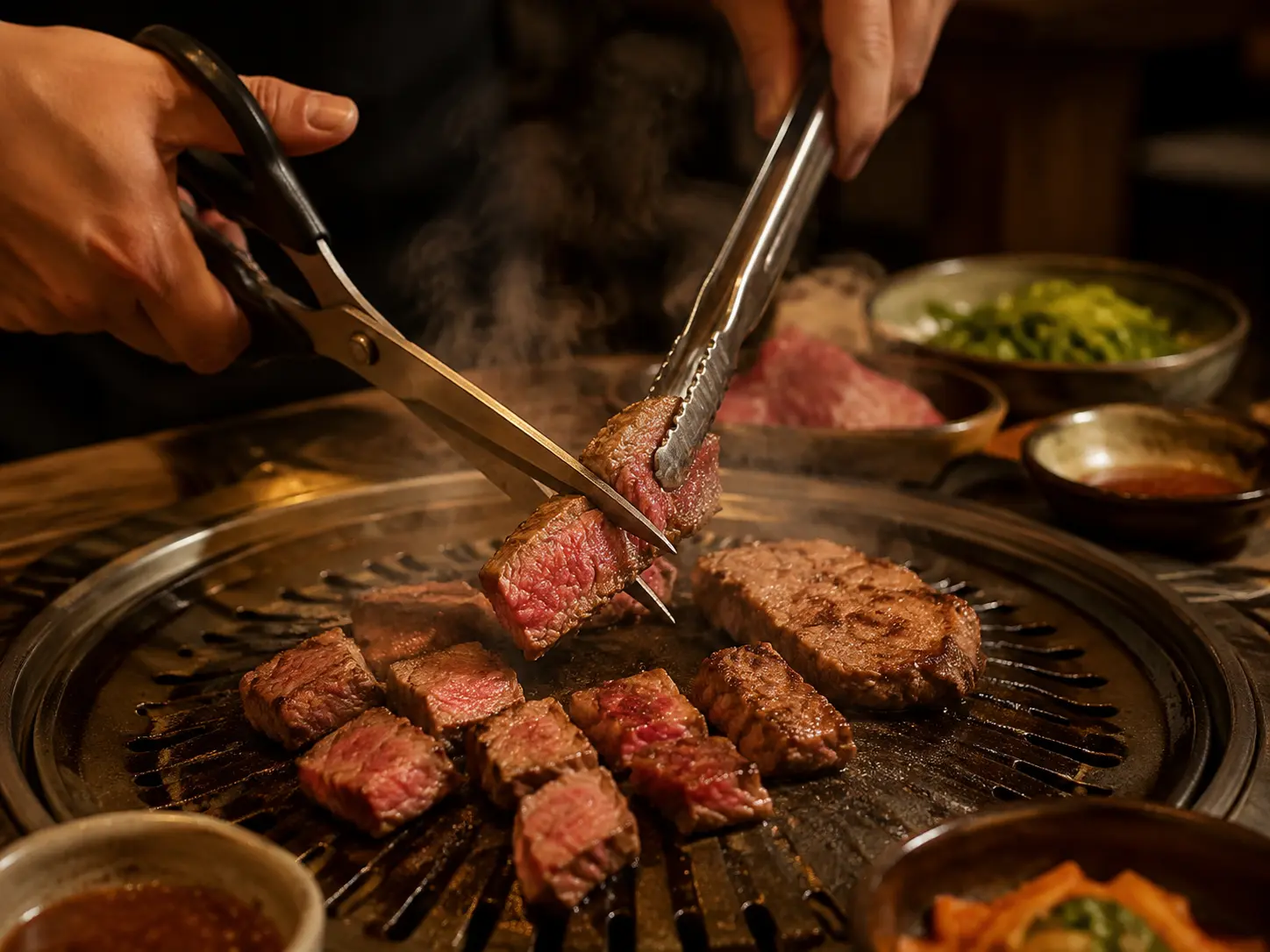
Use tongs for raw meat and separate tongs or chopsticks for cooked pieces. Scissors help divide thick cuts after searing without losing their juices on the board.
05 · READY TO SHARE
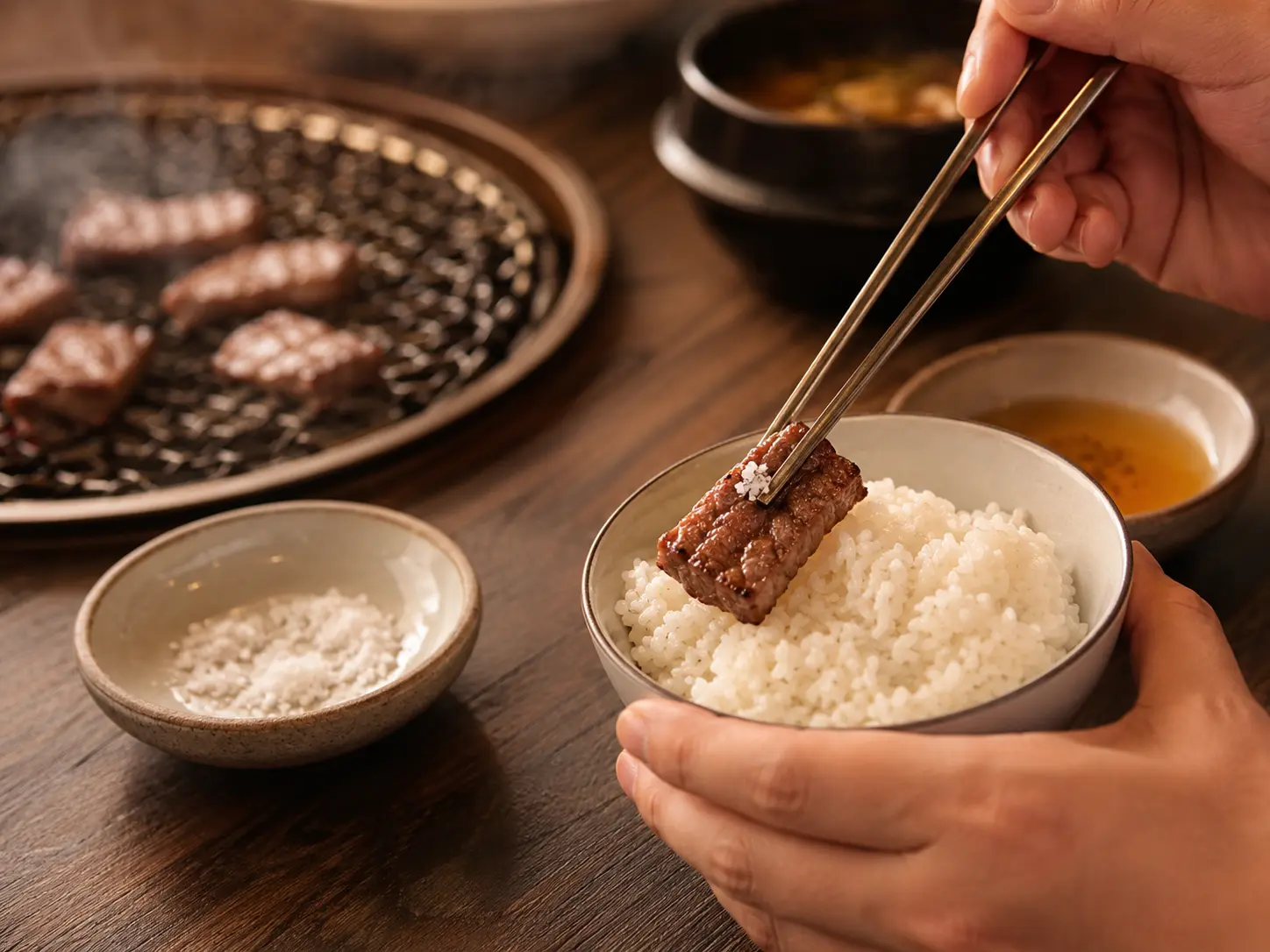
Taste the first piece with only coarse salt. Then try sesame oil salt, wasabi, or pickled onion—the seasoning should reveal the beef, not cover it.
06 · BUILD THE BITE
Taste a hot piece with salt or sesame-oil salt, follow it with warm rice, or make a lettuce wrap with garlic and ssamjang. There is no single required bite: premium cuts may be tasted simply first, while wraps remain a familiar part of the shared table.
07 · CHOOSE THE FINISH
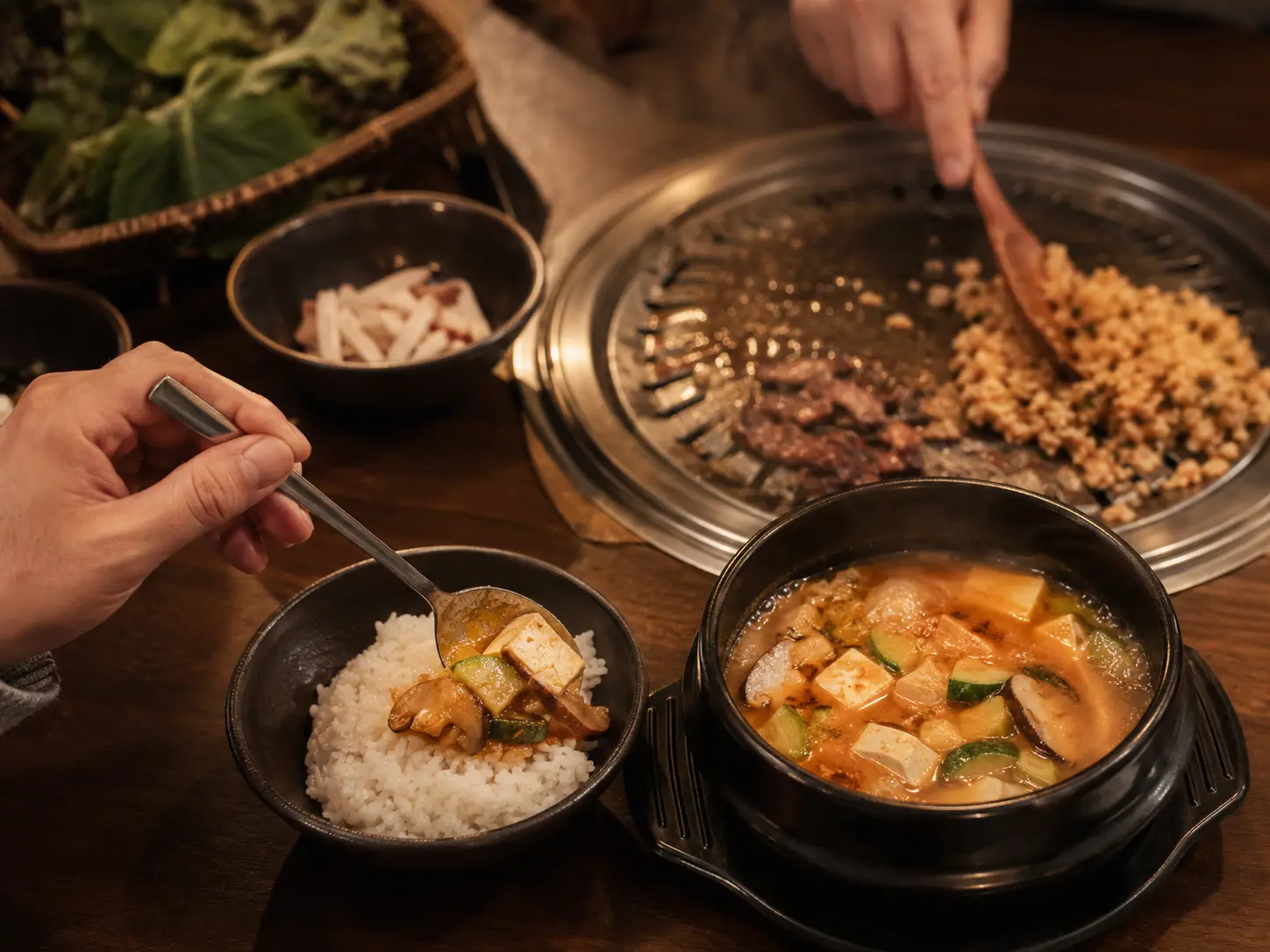
Many tables finish with doenjang-jjigae and rice, but icy mul-naengmyeon and spicy bibim-naengmyeon are just as familiar after grilled beef. Some restaurants also serve a small bowl of somyeon—thin wheat noodles in broth—sized as a light final course.
WHAT TO DRINK · WHAT COMES AFTER
A small chilled pour is the familiar partner for rich grilled beef.
Whisky, soda, and citrus keep heavily marbled cuts feeling light.
Roasted grain notes sit quietly beside charcoal and beef.
A small sweet coffee is an informal Korean restaurant finish.
WHERE TO EXPERIENCE IT
One pick from the food’s best-known regional home, plus one accessible Seoul choice. Check the latest listing before visiting.
REGIONAL PICK
Hoengseong · Gangwon-do
A long-running local restaurant for Hoengseong beef grill and beef meals.
OPEN IN GOOGLE MAPS ↗SEOUL PICK
Majang-dong · Seoul
Seoul’s best-known market destination for choosing and grilling fresh Korean beef.
OPEN IN GOOGLE MAPS ↗Coming to Korea? Use these as carefully selected starting points—and enjoy the dish where its local story feels most alive.
MAKE IT AT HOME
INGREDIENTS
COOKING METHOD
Bring the beef out 15 minutes before cooking and pat the surface dry.
Heat a heavy pan or grill until hot. Mix sesame oil with salt for dipping.
Cook a few pieces at a time, turning when the first side browns. Use a thermometer when needed; doneness varies by cut.
Rest thicker cuts briefly, slice across the grain, and eat immediately with garlic, mushrooms, or a small wrap.
HOME NOTEStart with lean cuts and finish with highly marbled cuts so their richness does not hide the earlier flavors.
NEXT EXPERIENCE