CLEAN AND SEPARATE
Scrub the shells, loosen the abalone with a spoon and remove the hard mouth. Keep the green-brown innards if fresh; they give Jeju-style porridge its distinctive color and depth.
JUK · 죽
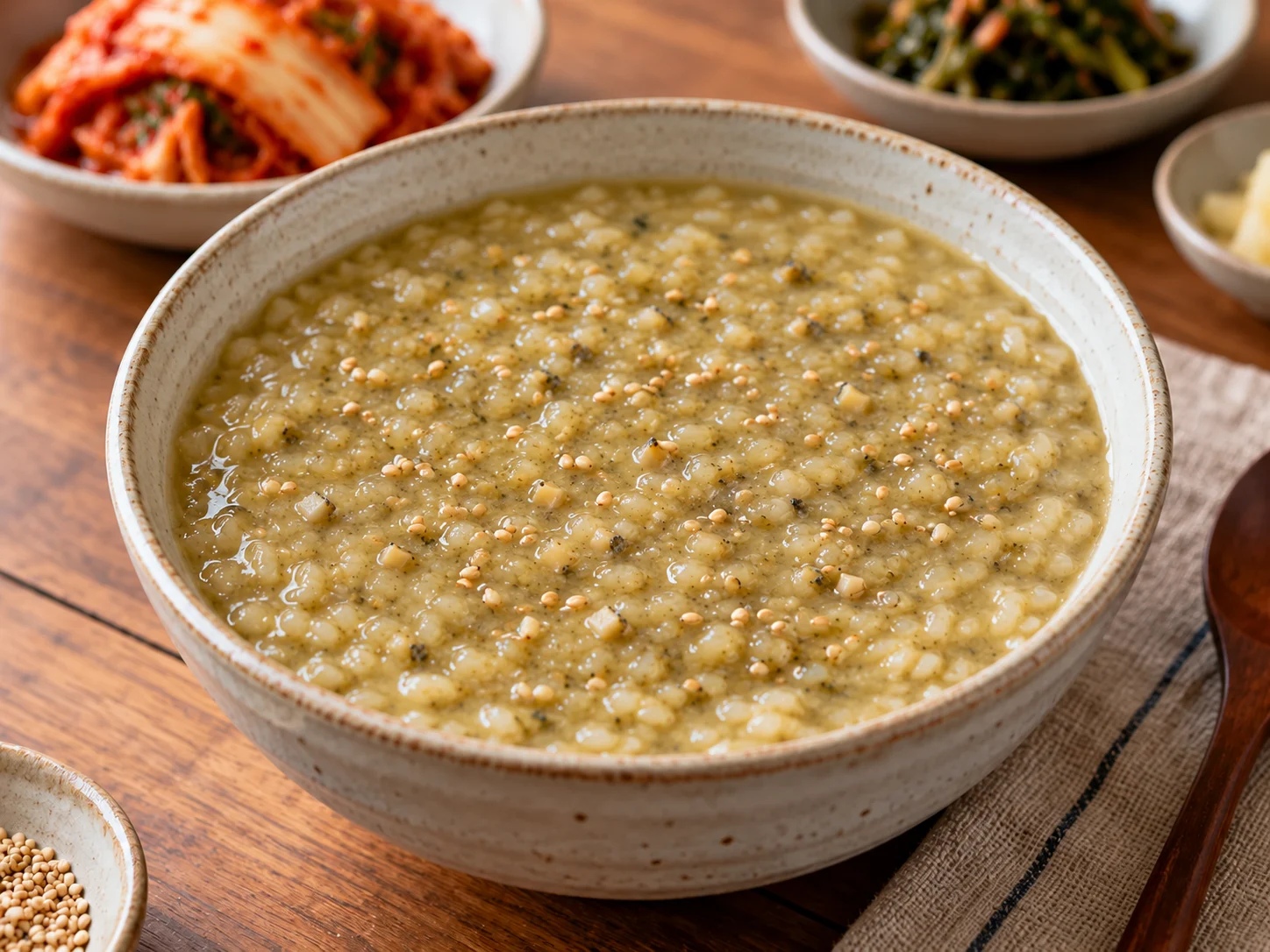
Korea’s best-known premium porridge: slow-cooked rice, tender abalone and the deep ocean flavor of abalone innards. It is ordered for breakfast, recovery or a gentle but special meal.
WHAT YOU NEED
Measured for 2 servings. Prepare and cut everything before the pot goes on the heat.
COOK IN ORDER
Scrub the shells, loosen the abalone with a spoon and remove the hard mouth. Keep the green-brown innards if fresh; they give Jeju-style porridge its distinctive color and depth.
Slice the flesh thinly across the muscle. Chop the innards finely or blend them with a spoonful of water so they mix evenly.
Warm sesame oil over medium-low heat. Stir the drained rice for 3 minutes, then add the innards and most of the sliced abalone for 1 minute.
Add the water in stages. Simmer 30 to 35 minutes, stirring the bottom often, until the grains bloom and the porridge turns creamy.
Add the reserved abalone for the final 3 minutes. Season lightly with soup soy sauce and salt; do not hide the seafood flavor.
HOW TO KNOW IT IS READY
The grains should be swollen and soft but still visible. The porridge should fall slowly from a spoon, while the abalone remains tender rather than rubbery.
THE KOREAN TABLE
At a Korean juk specialty shop such as Bonjuk, one bowl is normally a full individual meal and may arrive with small dishes of jangjorim, kimchi, salted seafood or dongchimi. Stir the bowl first because the sesame oil and abalone can settle. The darker green-brown version usually contains more innards; the color is intentional, not a sign that it is old.
LEFTOVERS
Cool quickly and refrigerate for up to 2 days. Reheat slowly with a splash of water because rice porridge thickens considerably overnight. Stir often and heat seafood leftovers thoroughly; do not repeatedly reheat the whole batch.