What is Sogogi Shabu-Shabu?
Korean shabu-shabu is usually enjoyed at a specialist restaurant, where every round is prepared for the table.
KOREAN FOOD · FROM HEAT TO FINISH
03 / 32
QUICK ANSWERS
Korean shabu-shabu is usually enjoyed at a specialist restaurant, where every round is prepared for the table.
Many restaurants provide a self-service bar with napa cabbage, leafy greens, mushrooms, noodles, other add-ins, and sometimes desserts. Lift each slice as soon as it is tender.
Touch the beef to the sauce rather than soaking it.
Cook noodles once the vegetables and beef are gone.
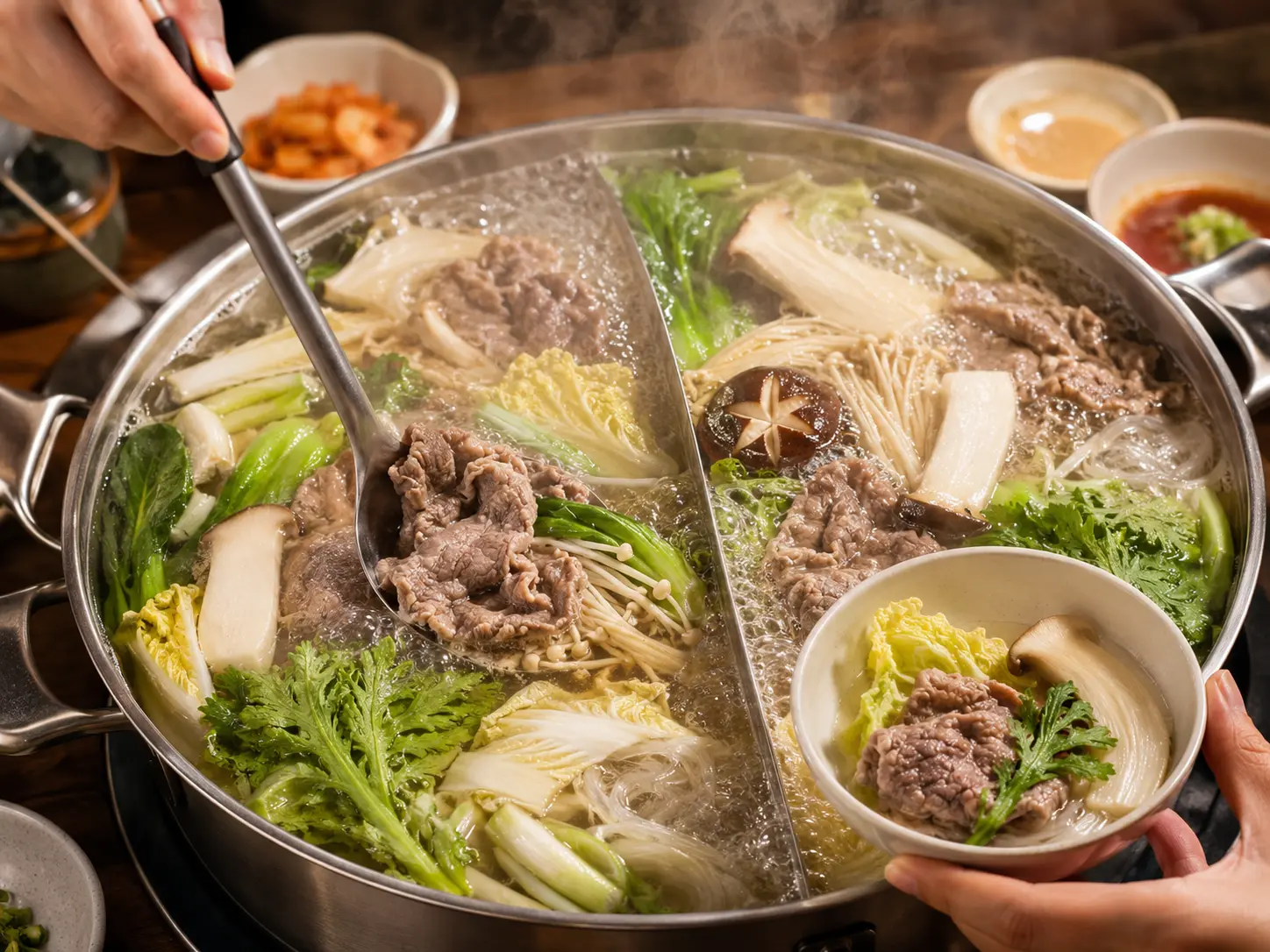
01 · THE SPECIALIST RESTAURANT
Korean shabu-shabu is usually enjoyed at a specialist restaurant, where every round is prepared for the table. Thin beef and vegetables cook first, kalguksu absorbs the seasoned broth next, and rice turns what remains into soft porridge.
By Mr. Ahn · Korean Office WorkerLast updated
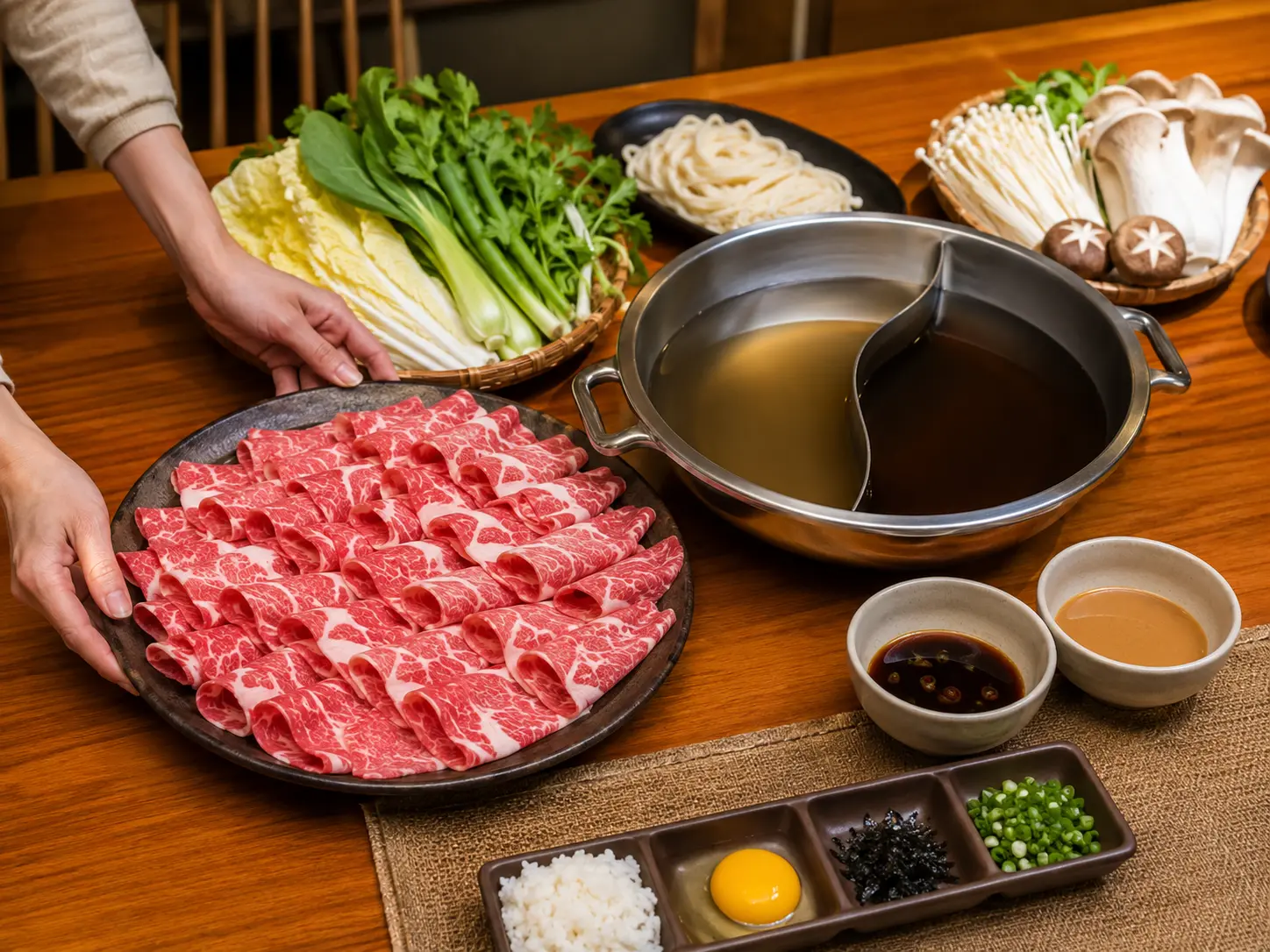
02 · THE SELF-SERVICE BAR
Many restaurants provide a self-service bar with napa cabbage, leafy greens, mushrooms, noodles, other add-ins, and sometimes desserts. Take small amounts at first, then return for more as the broth develops and the table discovers its favorite combination.
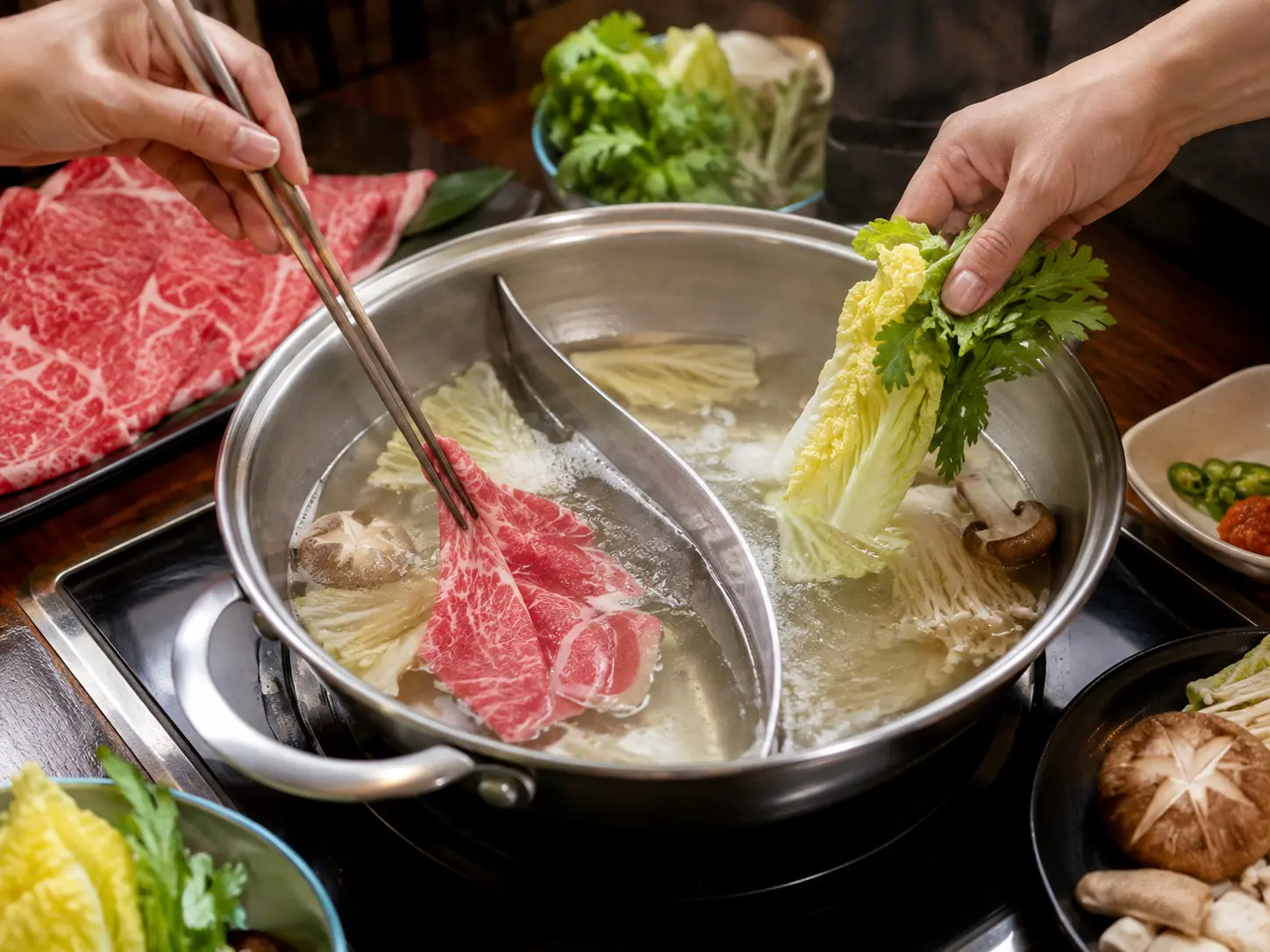
03 · THE FIRST ROUND
Begin with cabbage stems and firm mushrooms. Add leaves after the broth returns to a simmer, then swish only a few beef slices at a time so the pot stays hot and clear.
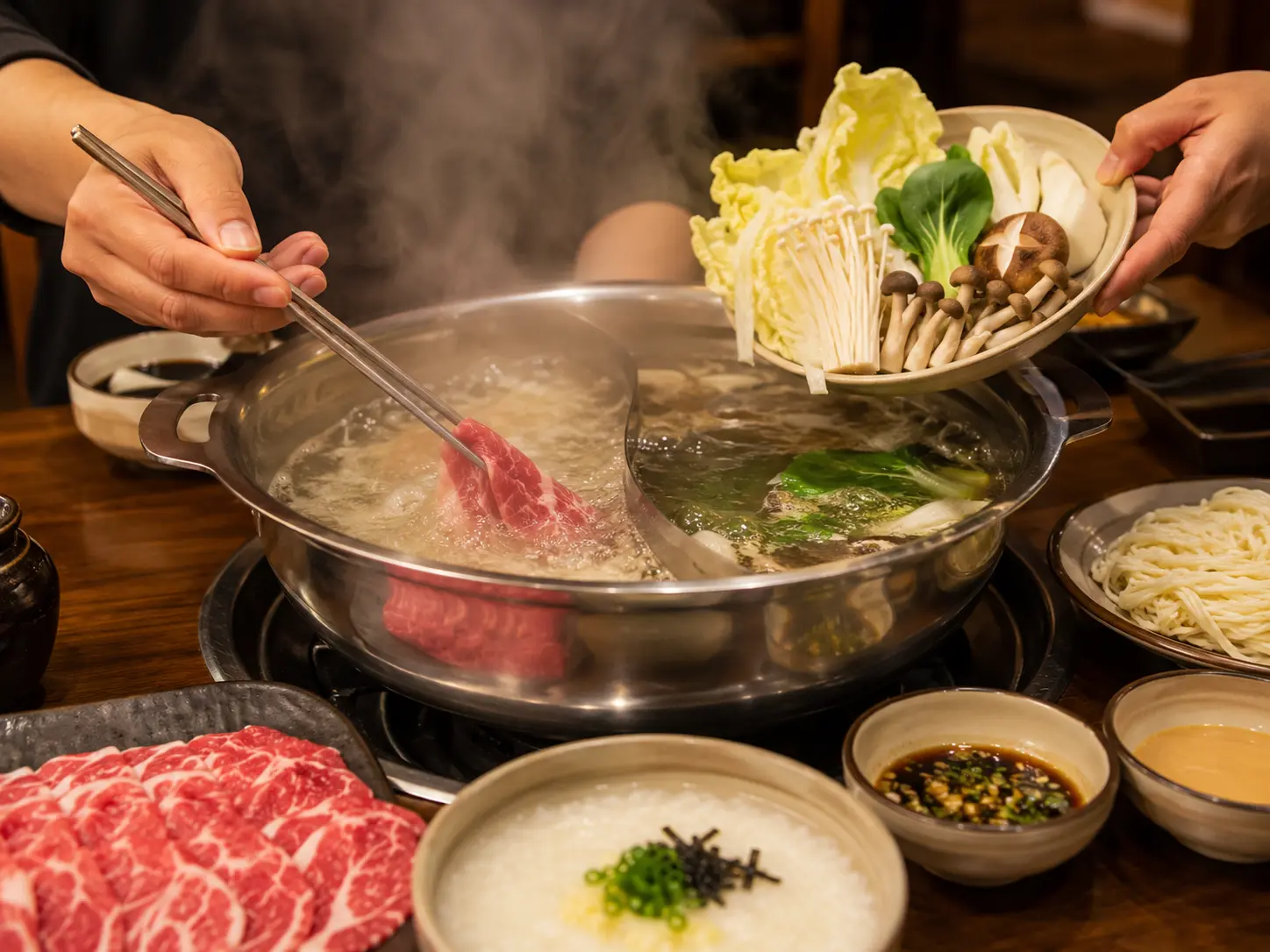
04 · SWISH, DIP, SHARE
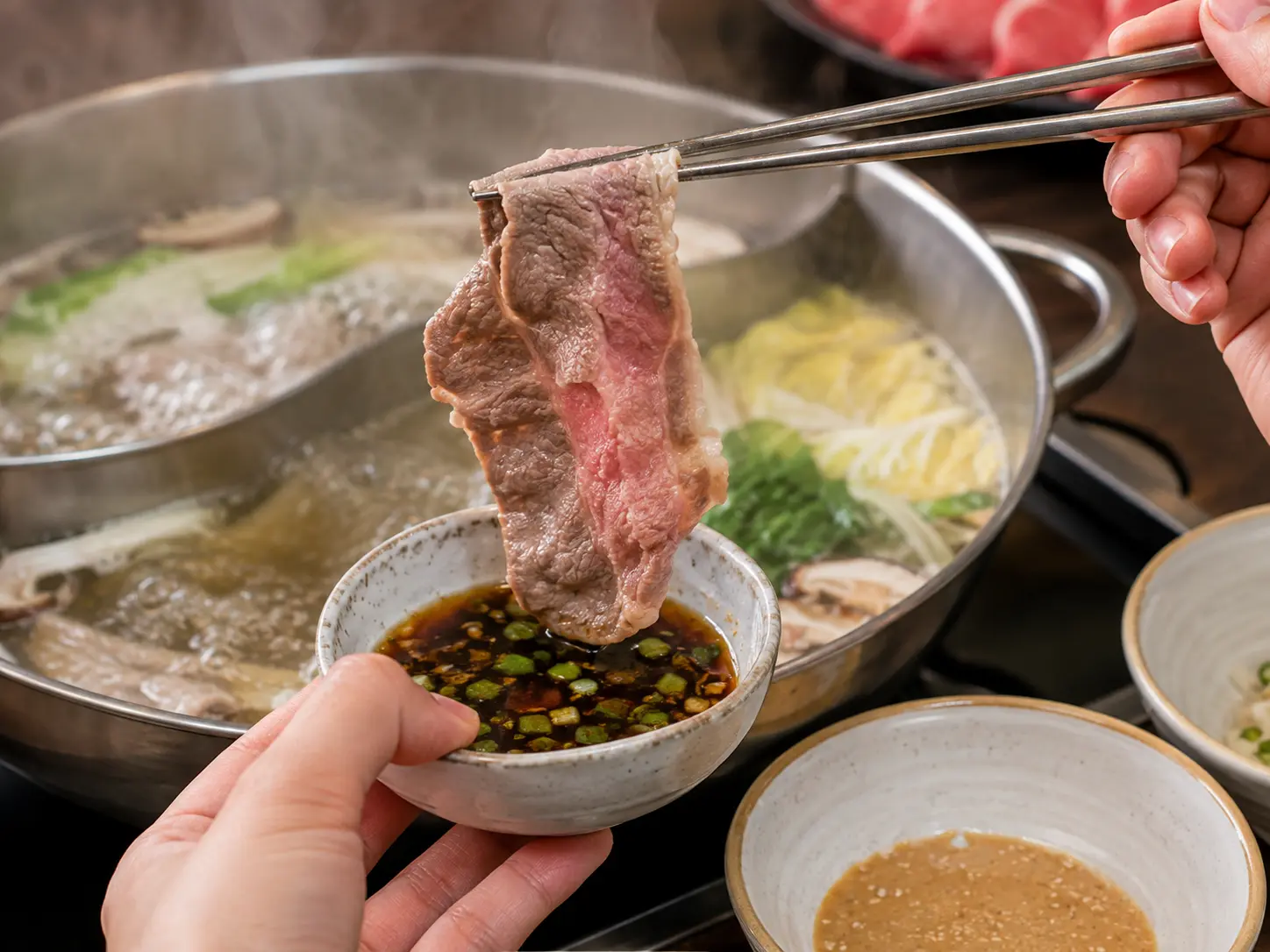
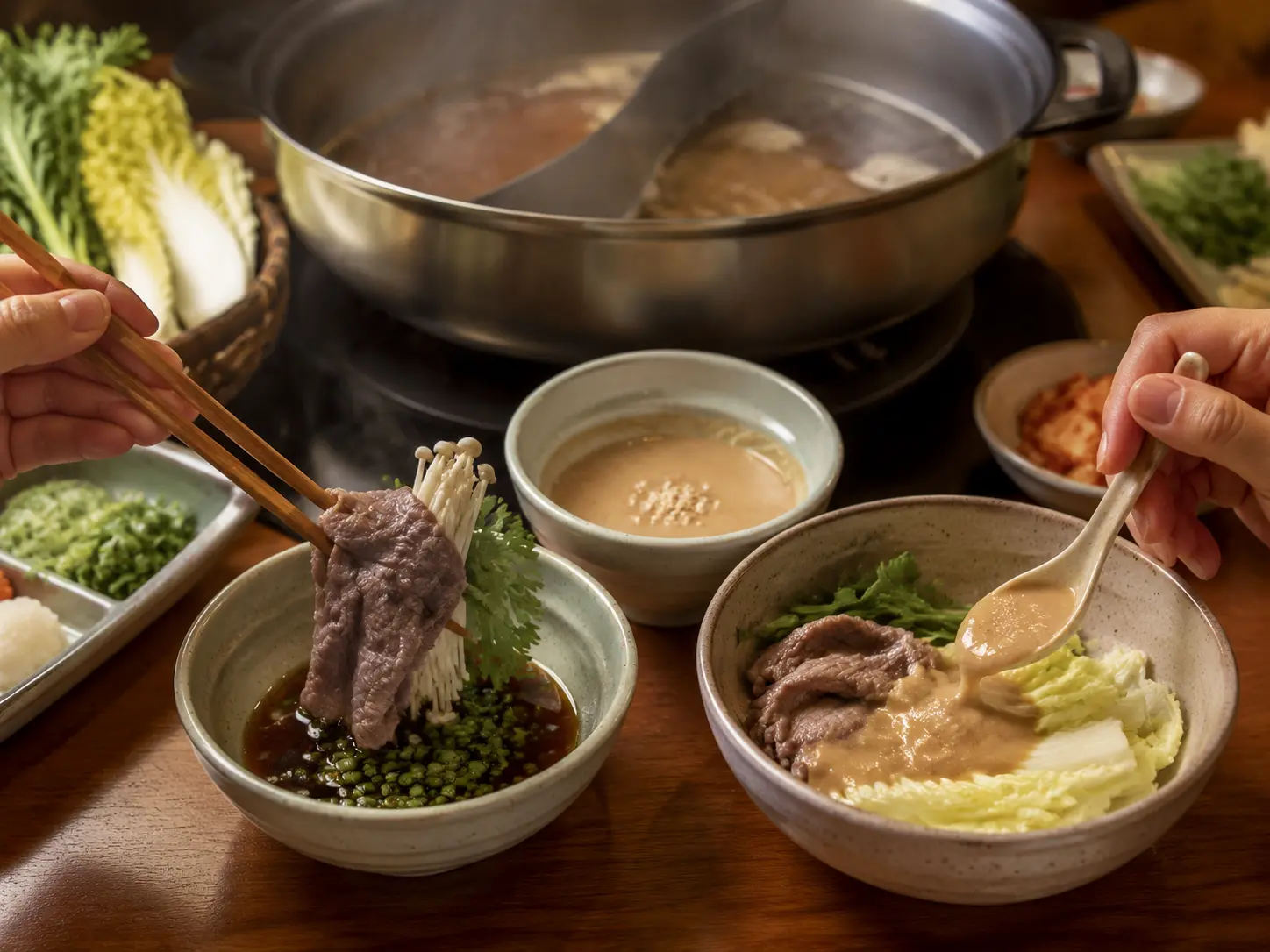
Move a thin beef slice through the broth until it changes color; it cooks quickly and becomes firm if forgotten in the pot. Pair it with vegetables and choose from the restaurant's sauces, which may include chili, mustard, soy-based, or nutty soybean-sesame styles.
05 · READY TO EAT
Lift each slice as soon as it is tender. Beef left boiling in the pot becomes firm; the pleasure is cooking and eating in a continuous rhythm.
06 · DIP WITH RESTRAINT
Touch the beef to the sauce rather than soaking it. Add scallions, grated radish, mustard, or chili to your own bowl and keep the shared pot balanced.
07 · THE FINAL POT
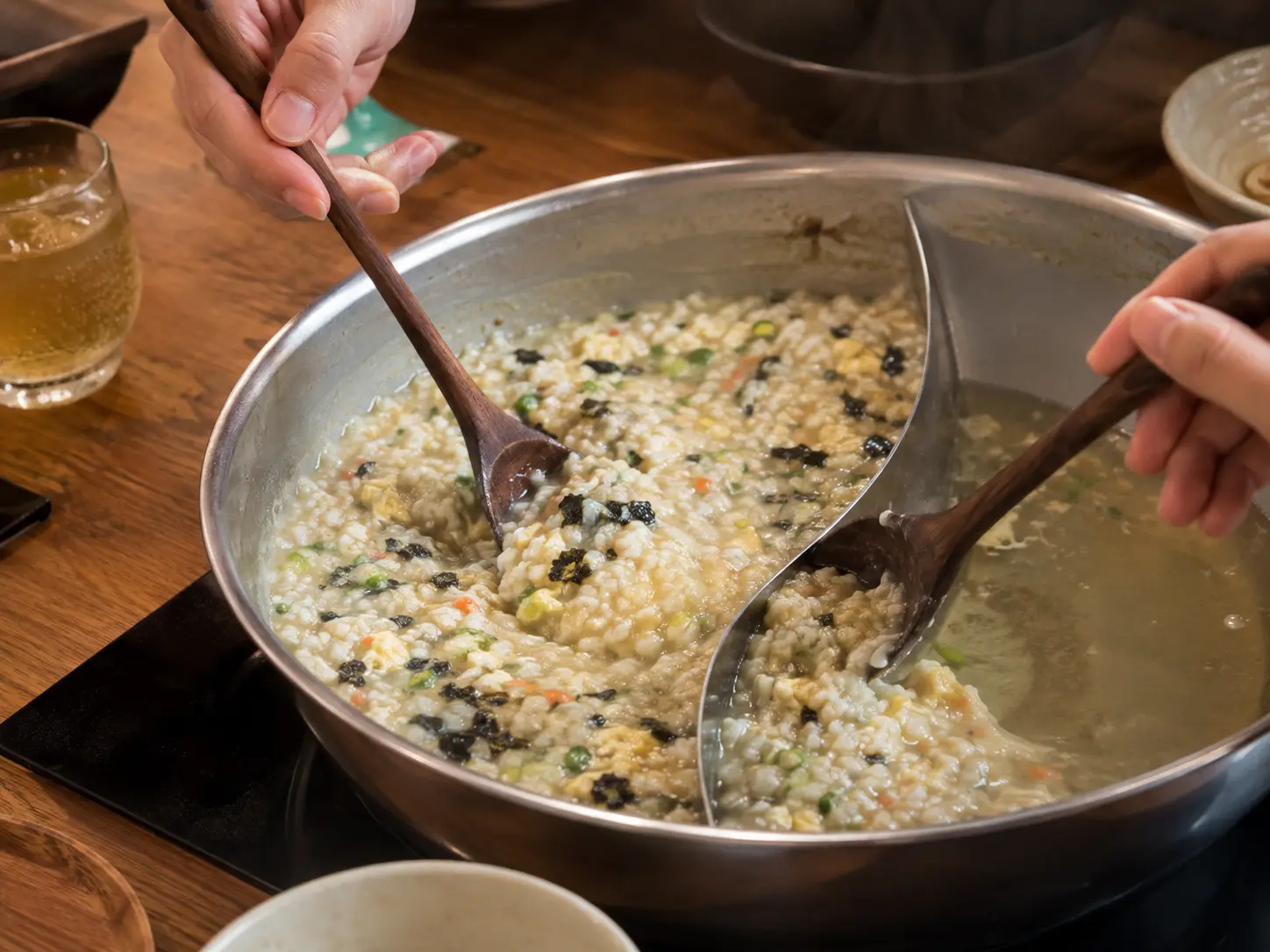
Cook noodles once the vegetables and beef are gone. For the last round, reduce the broth and stir in rice, egg, seaweed, and scallions until creamy.
WHAT TO DRINK · WHAT COMES AFTER
A light lager stays out of the way of the delicate broth and marbled beef.
A small glass of clear Korean rice wine works especially well with clean broth.
Roasted barley tea is gentle enough to drink throughout every course.
Chilled plum tea gives a bright, lightly sweet finish after the porridge.
WHERE TO EXPERIENCE IT
One pick from the food’s best-known regional home, plus one accessible Seoul choice. Check the latest listing before visiting.
REGIONAL PICK
Ilsan · Goyang
The flagship for the mushroom-and-water-parsley shabu meal ending with noodles and rice.
OPEN IN GOOGLE MAPS ↗SEOUL PICK
Gangseo-gu · Seoul
A locally famous Seoul interpretation of the spicy mushroom shabu-kalguksu sequence.
OPEN IN GOOGLE MAPS ↗Coming to Korea? Use these as carefully selected starting points—and enjoy the dish where its local story feels most alive.
MAKE IT AT HOME
INGREDIENTS
COOKING METHOD
Season the stock with soy sauce, garlic, and gochugaru, then bring it to a lively simmer.
Add mushrooms and cabbage first. Swish beef slices in the broth only until just cooked.
After most beef and vegetables are eaten, loosen the noodles into the boiling broth and cook until tender.
Leave a little broth, add rice and beaten egg, and stir over low heat for a soft final porridge.
HOME NOTEKeep raw beef utensils separate from the chopsticks used for eating.
NEXT EXPERIENCE