What is Budae Jjigae?
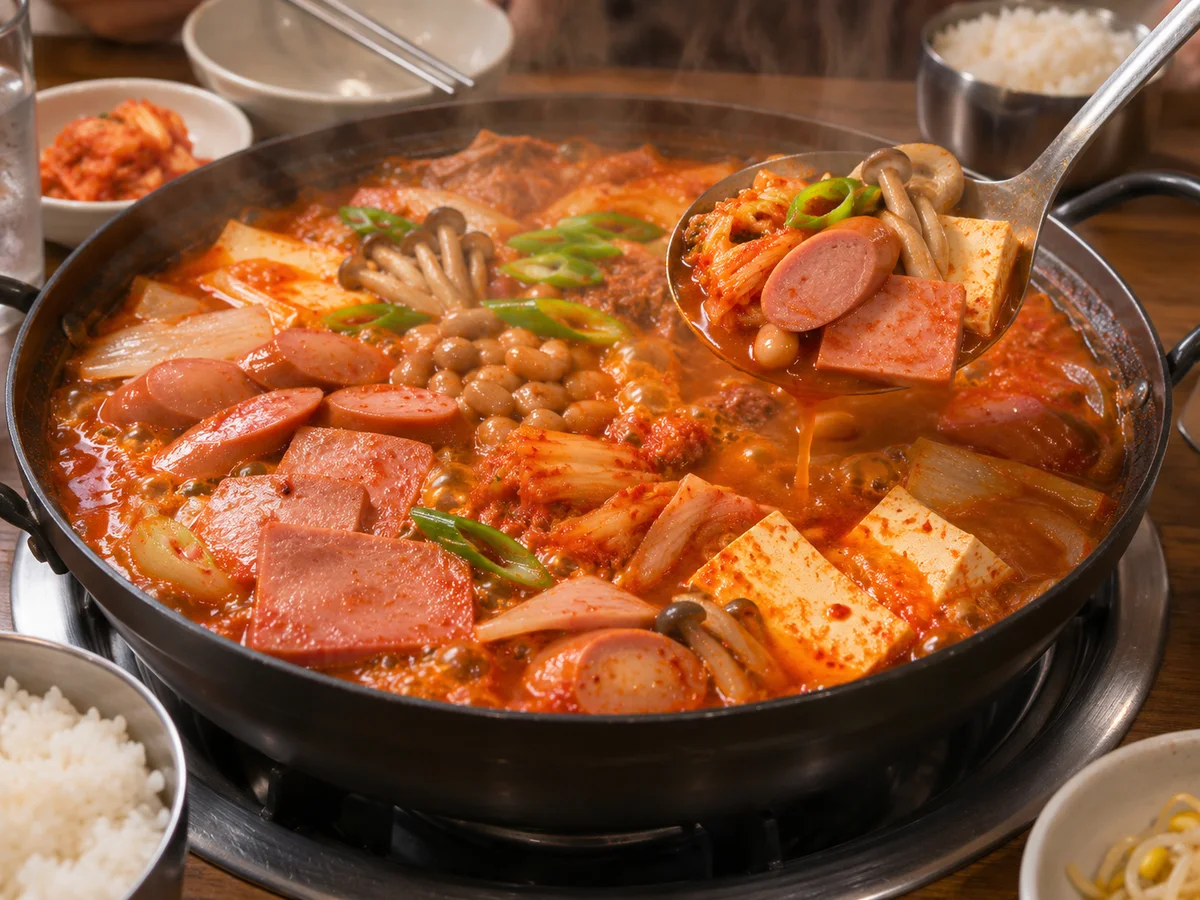
A ready pot brings ham, sausage and baked beans together in a bubbling red broth.
KOREAN FOOD · FROM HEAT TO FINISH
27 / 32
QUICK ANSWERS
A ready pot brings ham, sausage and baked beans together in a bubbling red broth.
The uncooked pot arrives with luncheon meat, sausage and baked beans arranged before the broth boils. Lower the heat and ladle broth, sausage, ham and baked beans into individual bowls.
Do not expect cheese in the basic budae jjigae.
Leave enough broth for instant noodles, then add them only when the pot is boiling strongly.
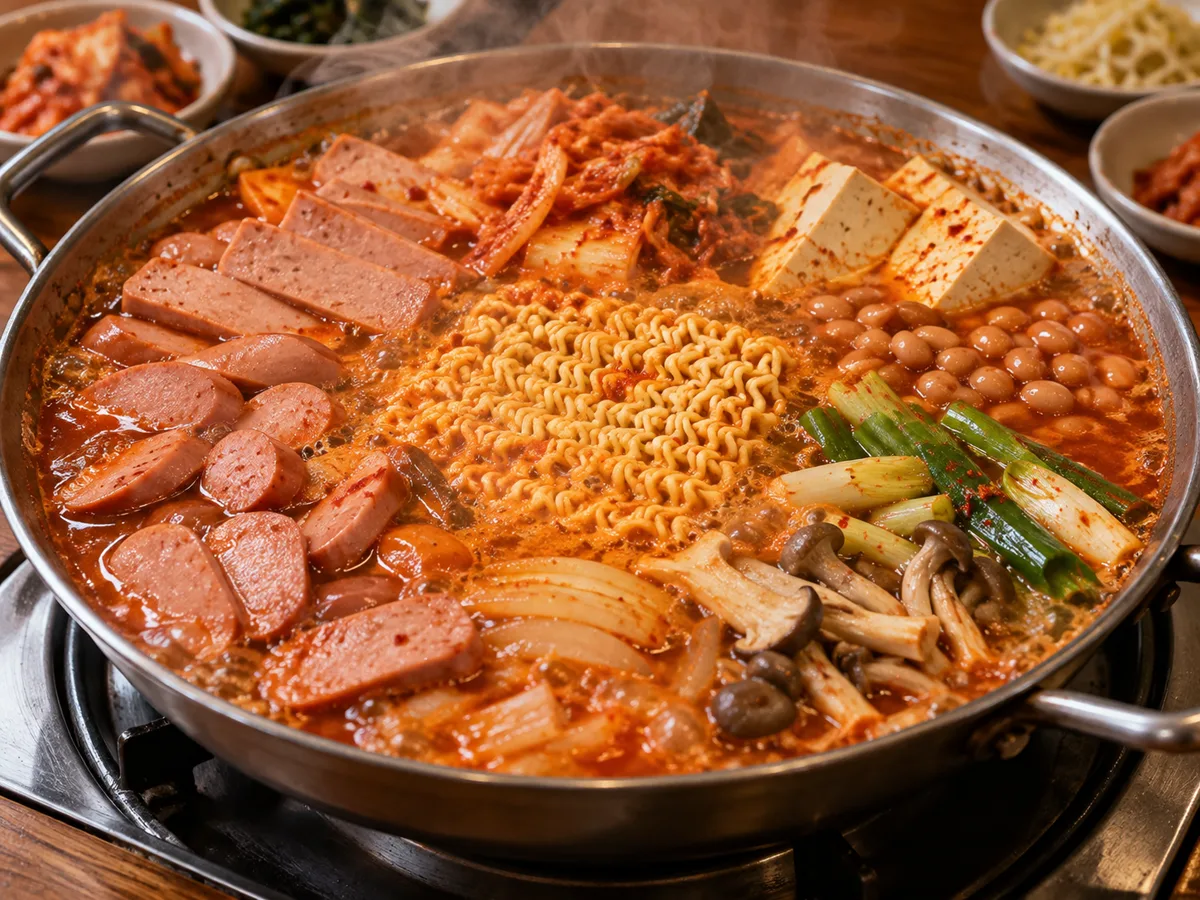
01 · THE FINISHED POT
A ready pot brings ham, sausage and baked beans together in a bubbling red broth. Tofu and kimchi depend on the restaurant or the order, and cheese is not part of the standard pot.
By Mr. Ahn · Korean Office WorkerLast updated
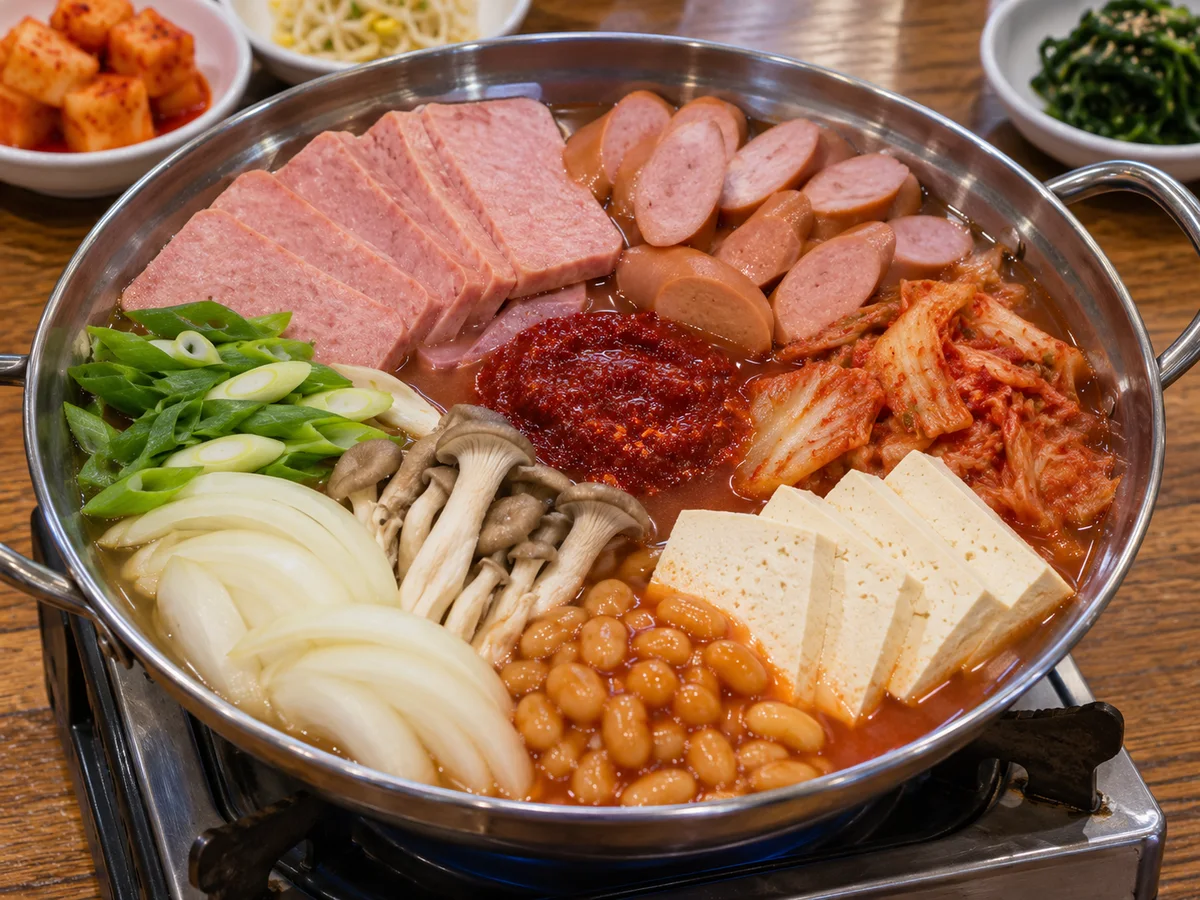
02 · BEFORE THE HEAT
The uncooked pot arrives with luncheon meat, sausage and baked beans arranged before the broth boils. Tofu or kimchi may be included or selected depending on the restaurant, so check the menu before ordering additions.
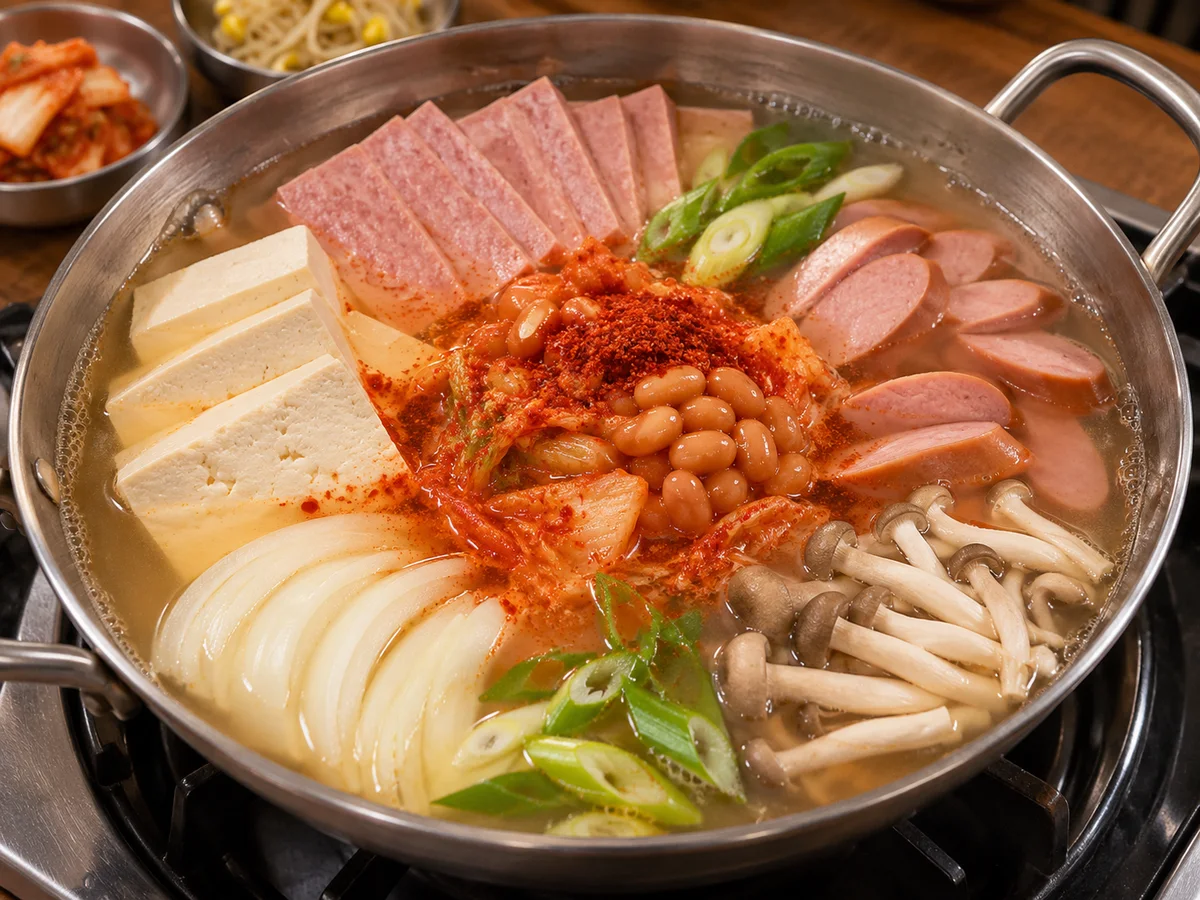
03 · THE FIRST SIMMER
As the broth begins to bubble, the seasoning dissolves and the vegetables release moisture. Most ham and sausage contain pork, so diners avoiding pork should confirm every ingredient before the pot is heated.
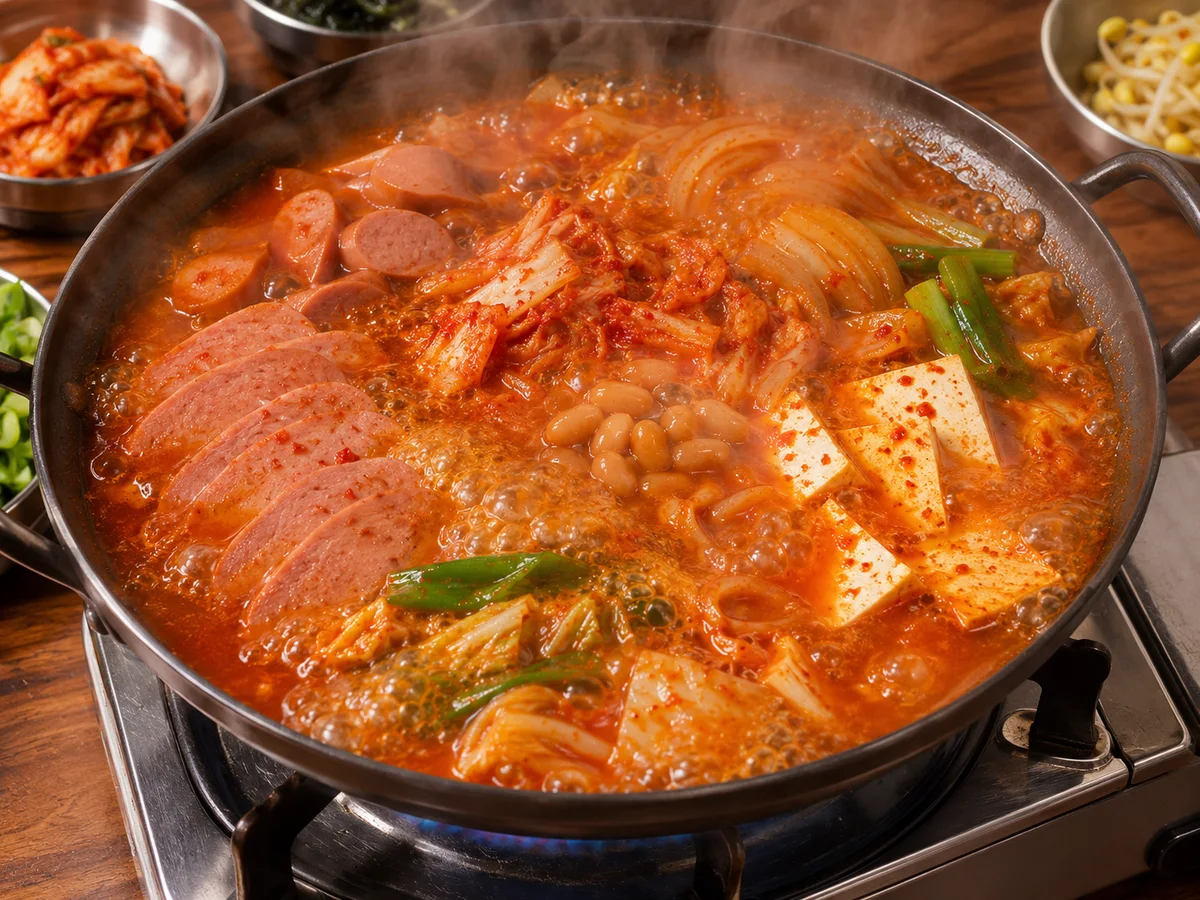
04 · ALMOST READY
Let the pot cook at the table for about 8–12 minutes and follow the staff's cue. The meat and any selected vegetables or tofu should be hot through and the broth evenly red before everyone starts sharing.
05 · READY TO SHARE
Lower the heat and ladle broth, sausage, ham and baked beans into individual bowls. Add tofu or kimchi only when they are part of your pot, and keep the broth gently bubbling as everyone eats.
06 · KNOW THE POT
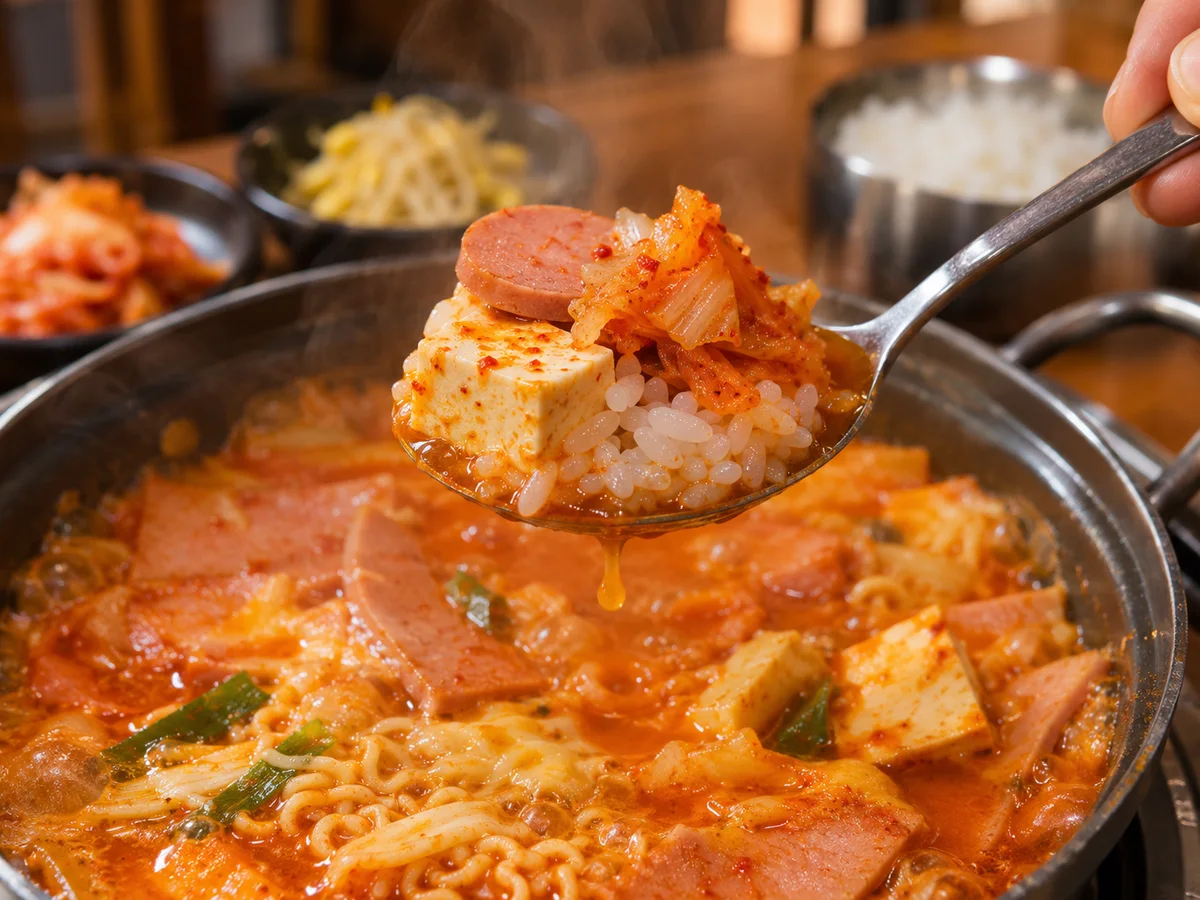
Do not expect cheese in the basic budae jjigae. The familiar richness comes from the ham, sausage, baked beans and seasoned broth rather than melted cheese.
07 · SAVE THE BROTH
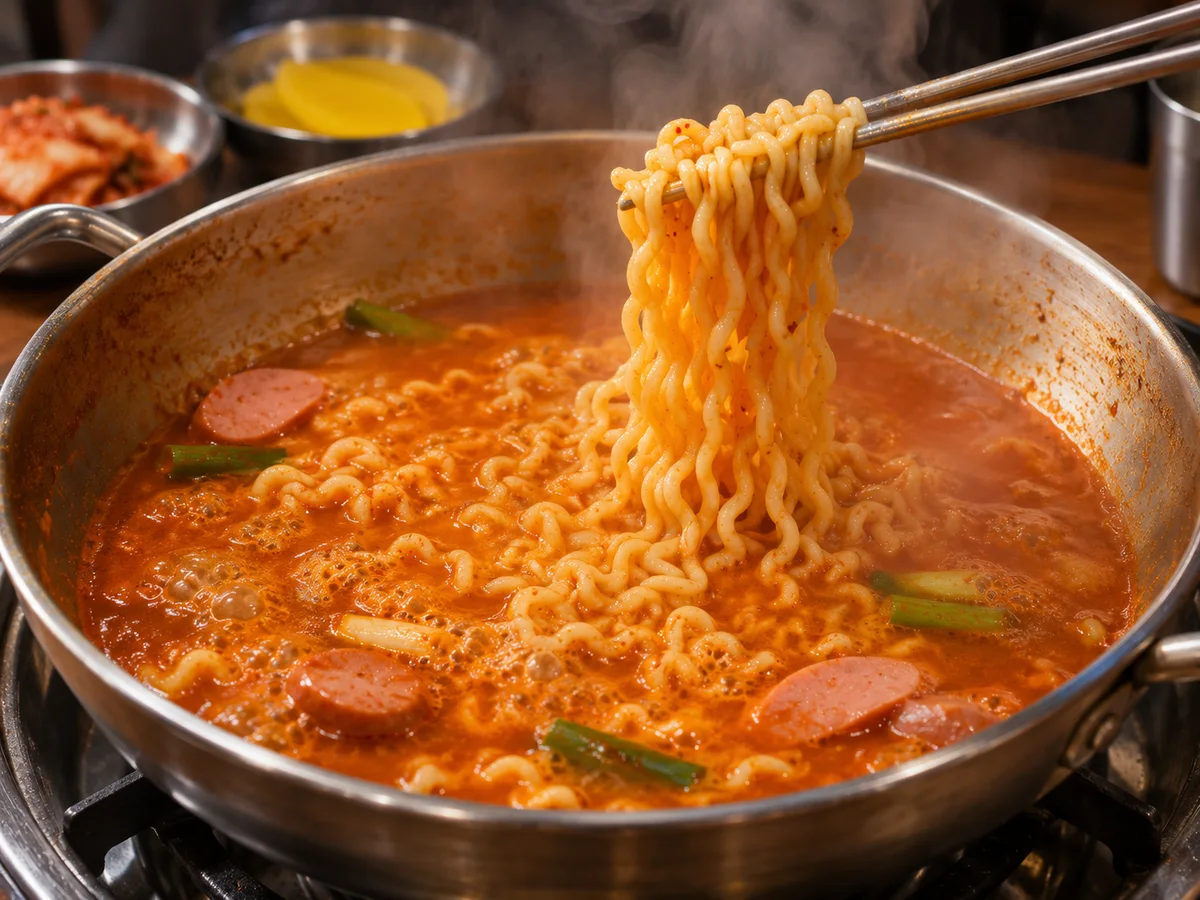
Leave enough broth for instant noodles, then add them only when the pot is boiling strongly. Eat the ramen as soon as it softens so it stays springy; fried rice is not a universal finish for budae jjigae.
WHAT TO DRINK · WHAT COMES AFTER
A cold pour stands up to the salty, spicy broth.
Light carbonation refreshes between rich bites.
Roasted tea gives the table a calm, unsweetened counterpoint.
Cold dairy softens the lingering chili and salt.
WHERE TO EXPERIENCE IT
One pick from the food’s best-known regional home, plus one accessible Seoul choice. Check the latest listing before visiting.
ORIGIN CITY PICK
Uijeongbu · Gyeonggi-do
The best-known historic destination for comparing old-school army-stew restaurants in one walkable area.
OPEN IN GOOGLE MAPS ↗SEOUL AREA PICK
Euljiro · Seoul
A central, visitor-friendly area with many shared-pot specialists; compare current menus and reviews before choosing.
OPEN IN GOOGLE MAPS ↗Coming to Korea? Use these as carefully selected starting points—and enjoy the dish where its local story feels most alive.
MAKE IT AT HOME
INGREDIENTS
COOKING METHOD
Mix the seasoning ingredients with 60 ml of the stock. Slice the kimchi, meats, tofu, onion, mushrooms, and scallions into shareable pieces.
Arrange kimchi and onion across the base of a wide shallow pot. Place luncheon meat, sausage, tofu, mushrooms, and beans in separate sections above them.
Spoon the seasoning into the center and pour in enough stock to come about halfway up the ingredients. Bring to a full boil over medium-high heat.
Boil for 5 minutes, then gently loosen the ingredients. Reduce to a steady simmer and cook until the sausage is hot throughout and the kimchi is tender.
Taste before adding salt. Add more stock or water if the broth already tastes concentrated; processed meat will continue seasoning it.
Add rice cakes first if using. Add ramen only when the pot is boiling, and cook for 3–4 minutes. Lay cheese on top during the final minute if wanted.
Keep the pot at a low simmer while serving with rice. Cool leftovers promptly, remove noodles when possible, refrigerate up to two days, and reheat to a full simmer with a little water.
HOME NOTEProcessed meats commonly contain pork or pork fat. Check every label if pork is a concern; for a pork-free meal, a different stew is usually safer than trying to modify a restaurant pot.
NEXT EXPERIENCE