What is Dakgalbi?
Dakgalbi is not just spicy chicken.
KOREAN FOOD · FROM HEAT TO FINISH
01 / 25
QUICK ANSWERS
Dakgalbi is not just spicy chicken.
Chicken thigh, cabbage, sweet potato, onion, rice cakes, perilla leaves, and gochujang sauce begin in separate layers. Dakgalbi tastes best straight from the pan.
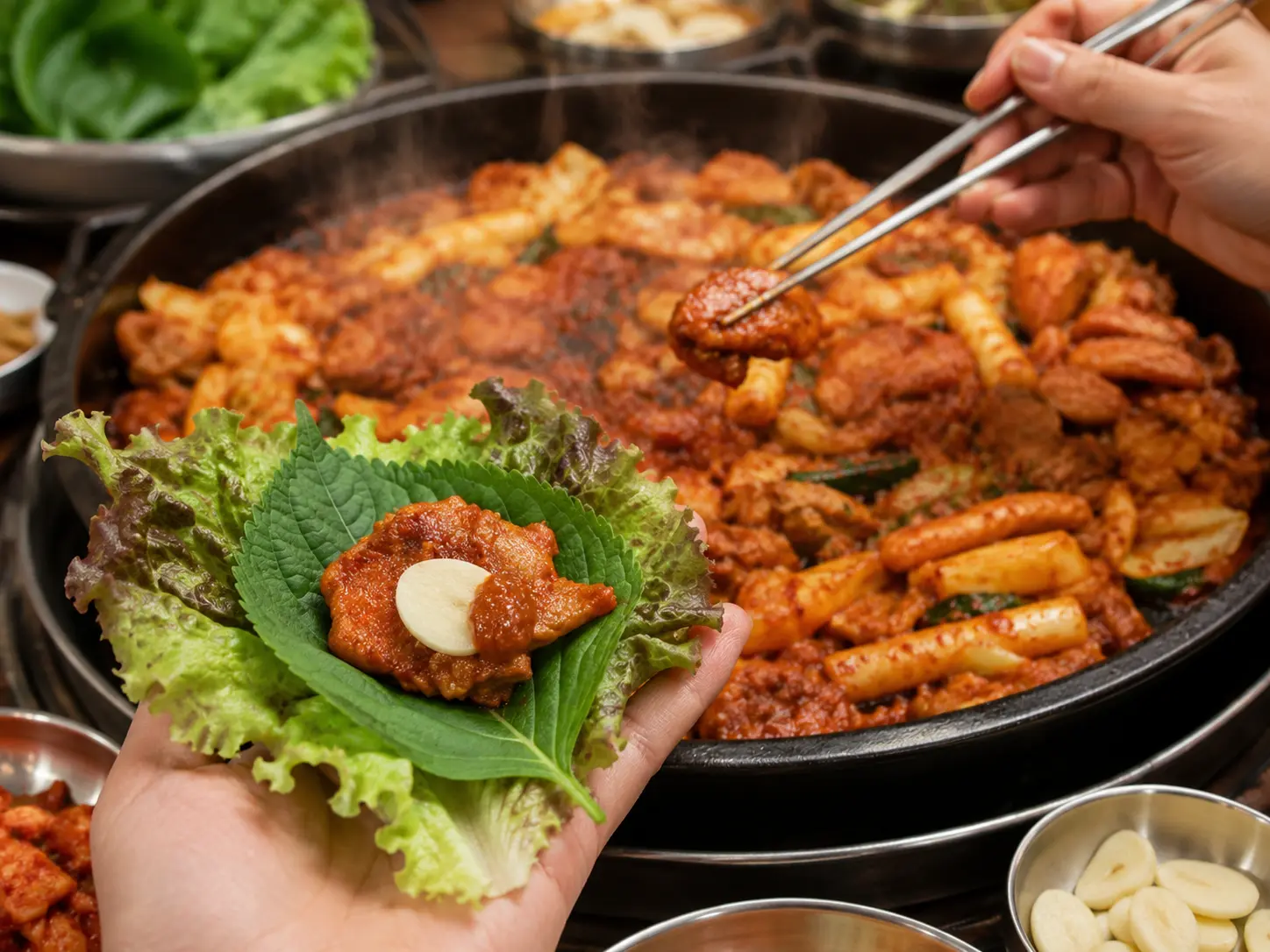
Layer lettuce or perilla with one piece of chicken, a little cabbage, garlic, and only a small dab of ssamjang.
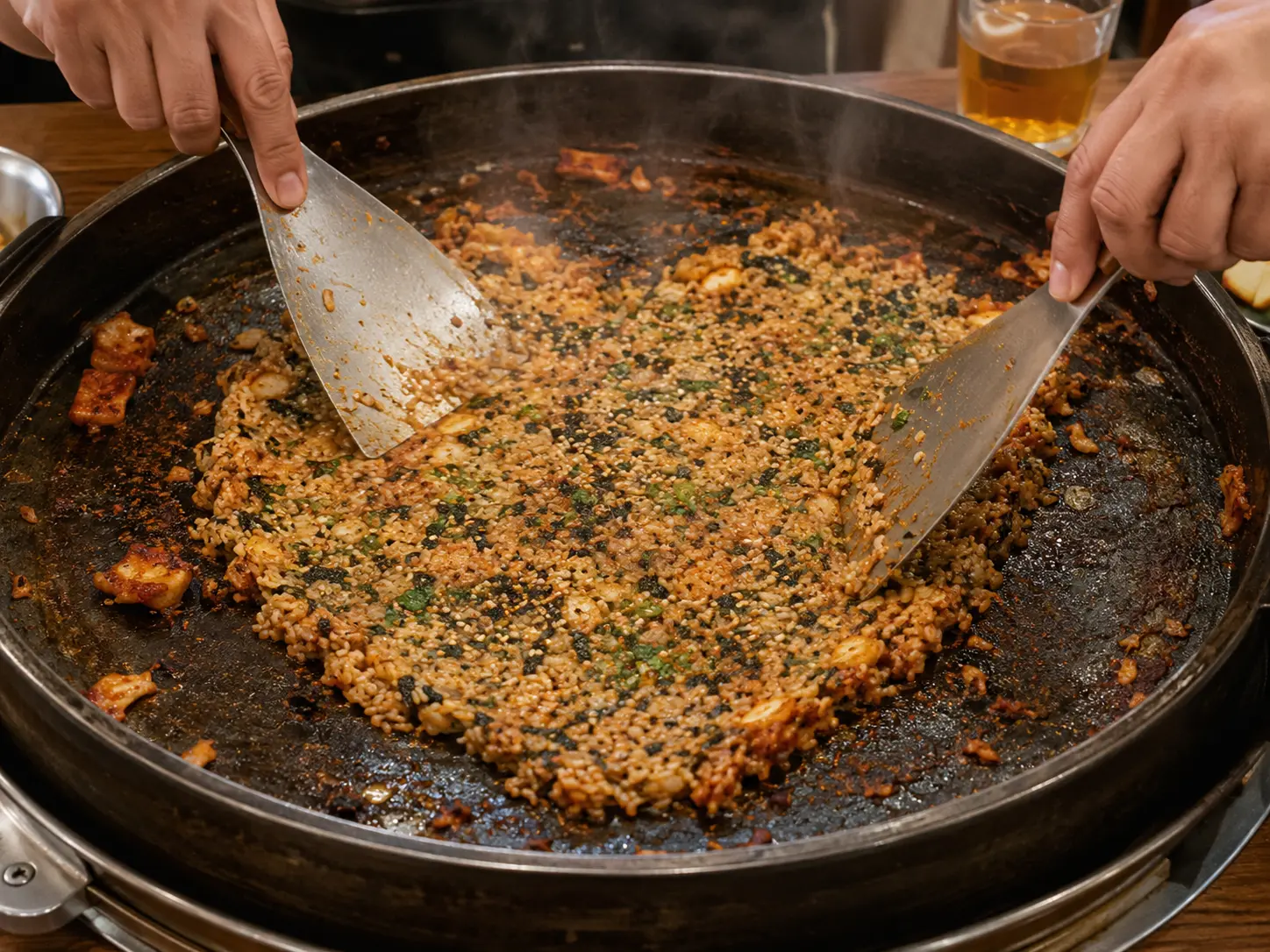
Leave a spoonful of chicken and sauce, then press in rice, seaweed, sesame oil, and scallions.
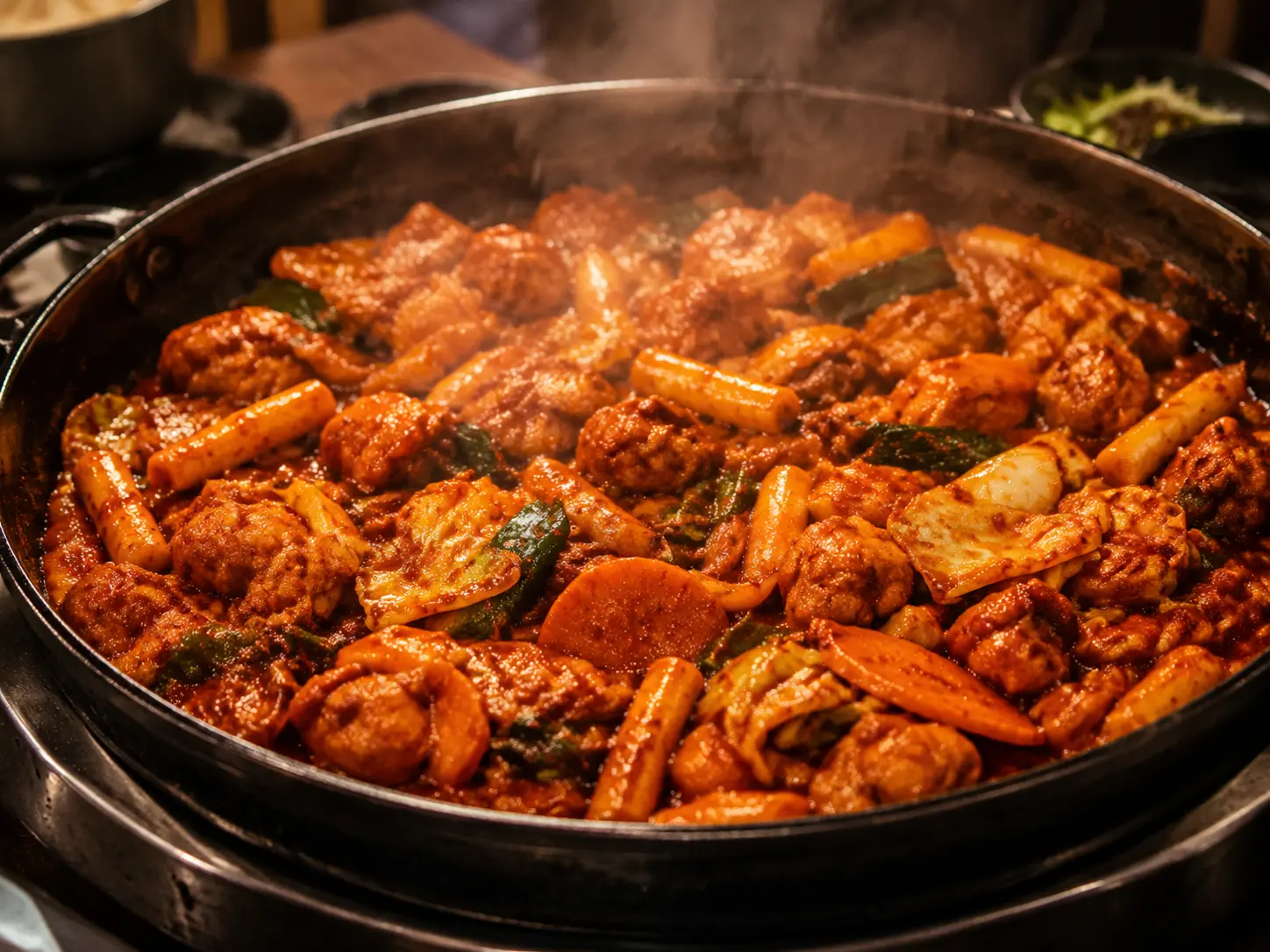
01 · THE DESTINATION
Dakgalbi is not just spicy chicken. It is a meal that changes in front of you—first a crowded pan of chicken and vegetables, then a sizzling shared dish, and finally fried rice that catches every last drop of sauce.
By Eat Korean Style Editorial TeamLast updated August 14, 2026
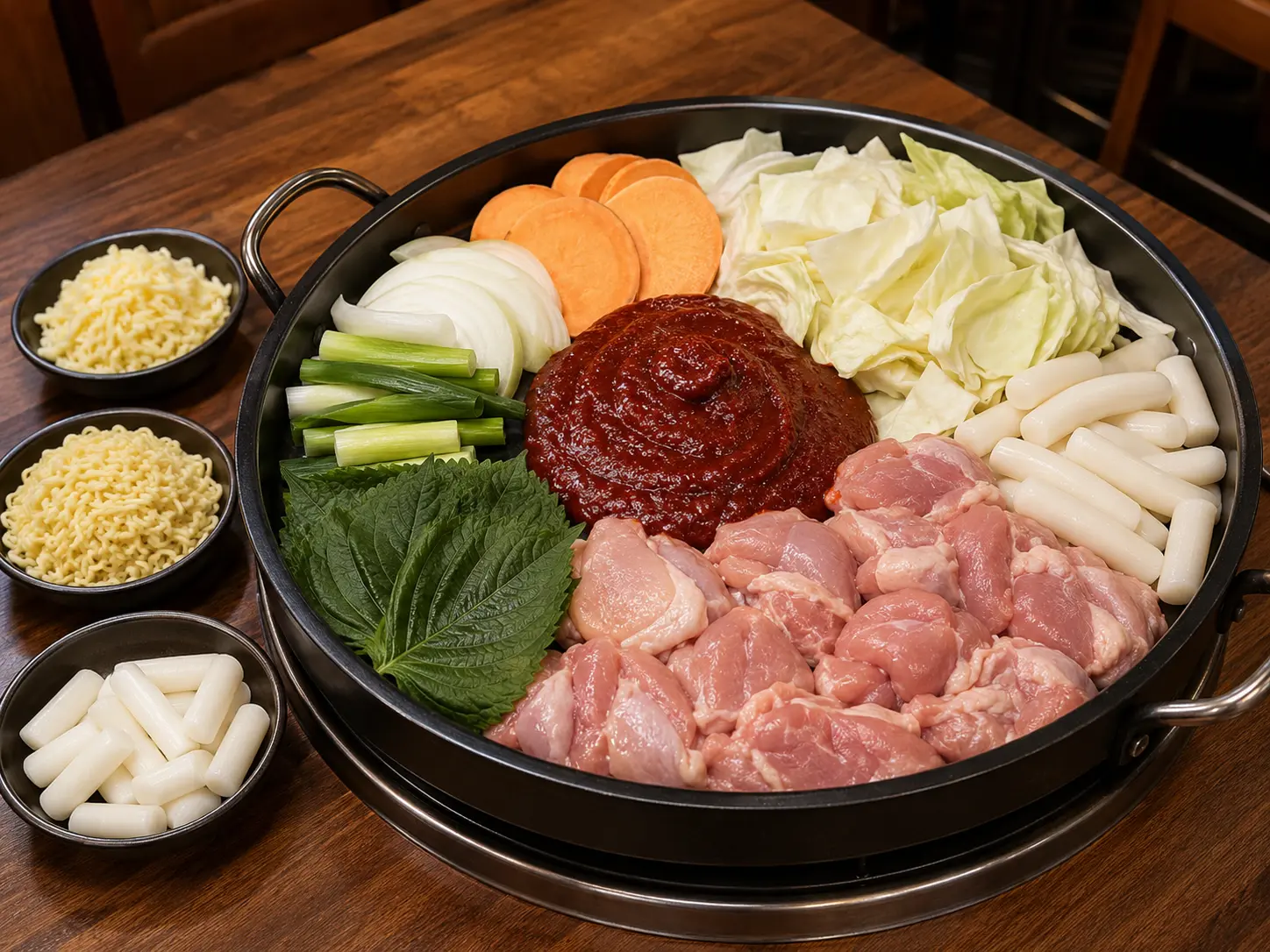
02 · BEFORE THE HEAT
Chicken thigh, cabbage, sweet potato, onion, rice cakes, perilla leaves, and gochujang sauce begin in separate layers. Boneless chicken thigh stays juicy; outside Korea, napa cabbage can join green cabbage and any firm sweet potato works well.
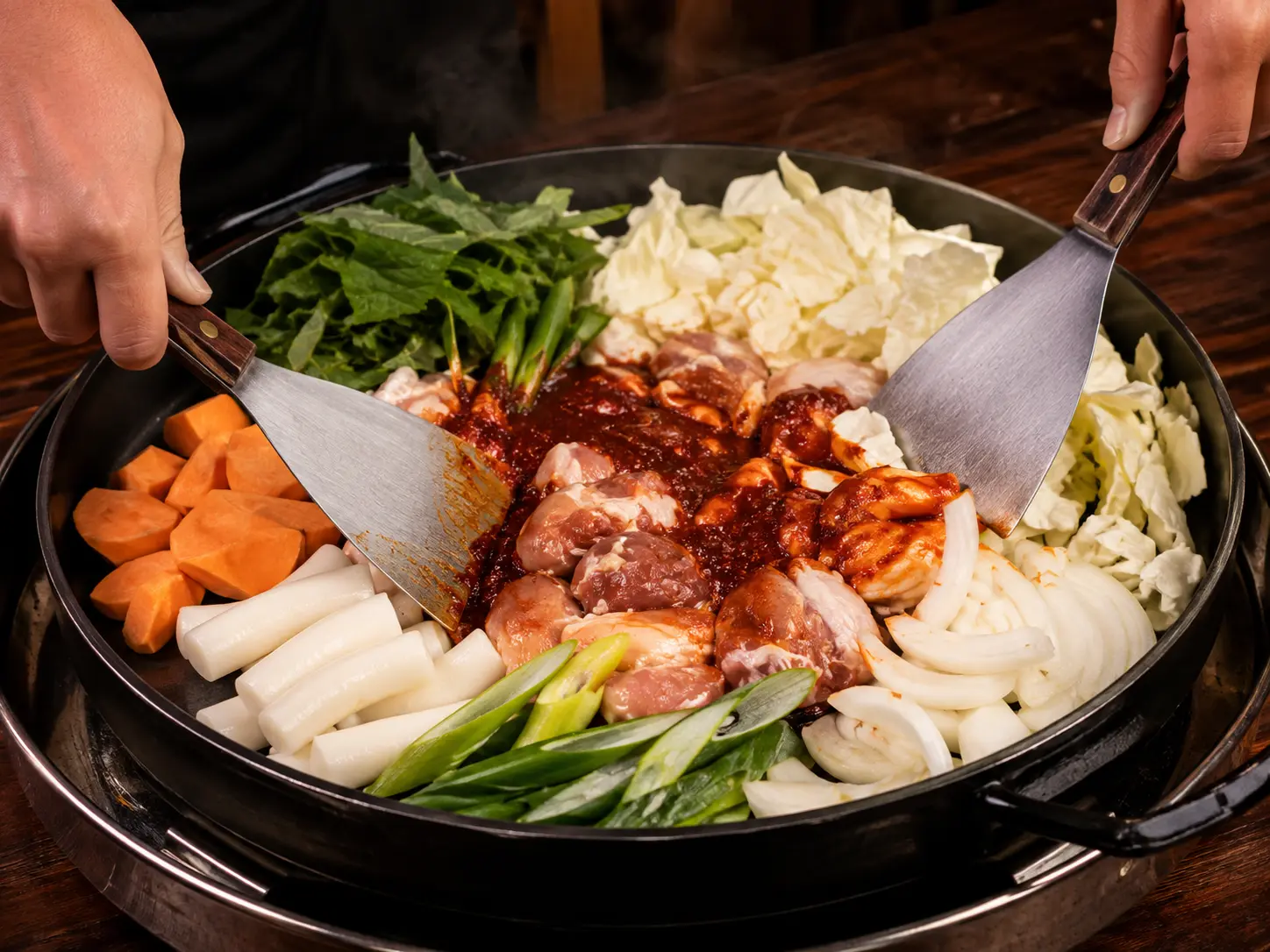
03 · THE FIRST MIX
Start over medium heat. Fold from the edges instead of stirring constantly, so the vegetables release moisture without breaking apart and the sauce slowly reaches every piece.
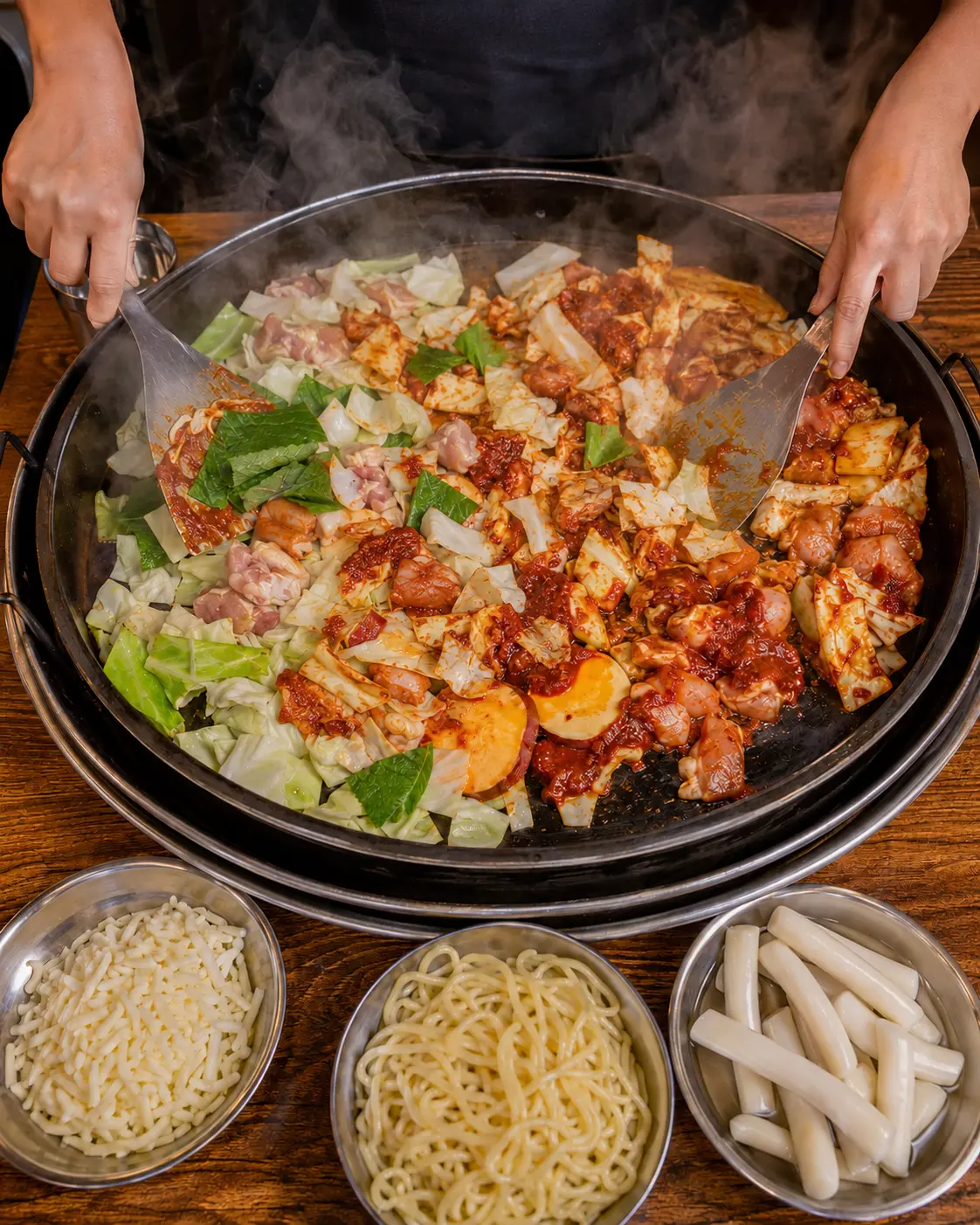
04 · HALFWAY THERE
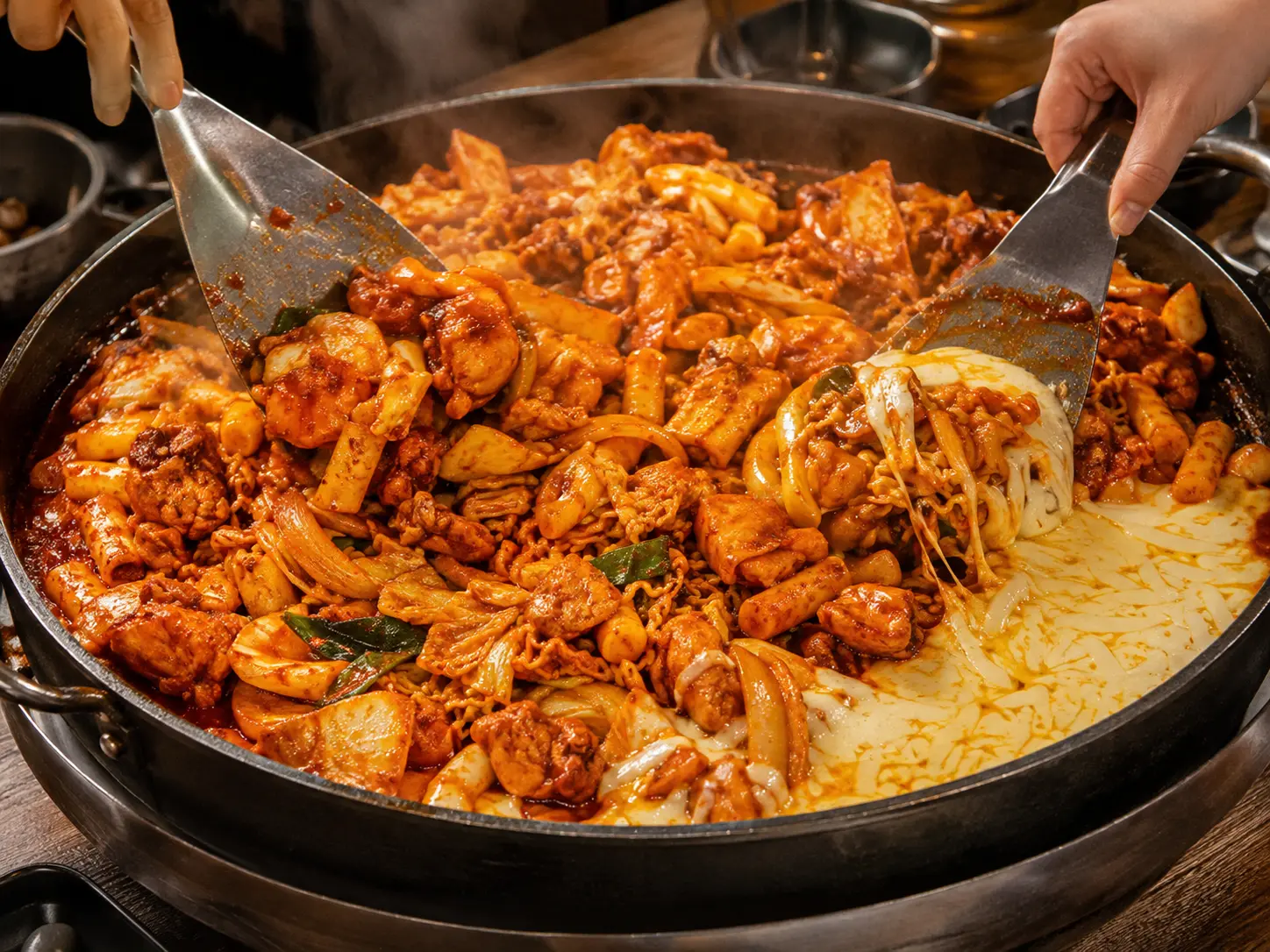
When the chicken is nearly cooked and the cabbage has softened, add rice cakes first, then cooked ramen. Keep cheese to one side so each person can choose a clean spicy bite or a creamy one.
05 · READY TO SHARE
Dakgalbi tastes best straight from the pan. Lower the heat, leave it at the center of the table, and serve a little at a time while the sauce continues to caramelize underneath.
06 · BUILD THE BITE
Layer lettuce or perilla with one piece of chicken, a little cabbage, garlic, and only a small dab of ssamjang. Make it small enough to eat in one bite—the leaf should brighten the pan, not hide it.
07 · SAVE THE PAN
Leave a spoonful of chicken and sauce, then press in rice, seaweed, sesame oil, and scallions. Spread it thin, wait for crisp edges, and scrape the pan clean together.
WHAT TO DRINK · WHAT COMES AFTER
A cold lager cuts through the sweet heat. Mix beer with a small shot of soju for the classic shared-table option.
Serve chilled maesil-cha when you want something sweet, tart, and alcohol-free.
A simple cone cools the spice without turning the meal into a formal dessert course.
A small, sweet instant coffee is a familiar after-restaurant finish in Korea.
WHERE TO EXPERIENCE IT
One pick from the food’s best-known regional home, plus one accessible Seoul choice. Check the latest listing before visiting.
REGIONAL PICK
Chuncheon · Gangwon-do
A long-established Chuncheon favorite near Soyang Dam for iron-pan dakgalbi.
OPEN IN GOOGLE MAPS ↗SEOUL PICK
Yongsan · Seoul
A celebrated Seoul destination for classic Chuncheon-style dakgalbi.
OPEN IN GOOGLE MAPS ↗Coming to Korea? Use these as carefully selected starting points—and enjoy the dish where its local story feels most alive.
MAKE IT AT HOME
INGREDIENTS
COOKING METHOD
Whisk the sauce ingredients. Cut the chicken into 4 cm pieces, coat it with half the sauce, cover, and refrigerate for at least 30 minutes.
Cut the cabbage, sweet potato, and onion into sturdy bite-size pieces. If the rice cakes are hard, soak them in warm water for 10 minutes, then drain.
Lightly oil a wide pan. Arrange the sweet potato, onion, cabbage, chicken, remaining sauce, and water. Cover and bring to a simmer over medium-high heat for 3–4 minutes.
Lower to medium heat. Fold the ingredients from the edges every few minutes and cook for 12–15 minutes. Add the rice cakes once the sweet potato begins to soften.
Add cooked ramen during the final 3–4 minutes. Put cheese on one side, if using. Cook until the chicken reaches 74°C / 165°F and no pink remains.
Lower the heat and eat from the pan. Leave a little chicken, vegetables, and sauce for the finish.
Add rice, chopped kimchi, seaweed, scallions, and a few drops of sesame oil. Press it thinly over medium heat for 3–5 minutes, until the bottom begins to crisp.
HOME NOTEDakgalbi is a Chuncheon regional specialty. At home, a wide skillet works well—the important part is keeping the pan for the final fried rice.
NEXT EXPERIENCE