What is Guksu & Naengmyeon?
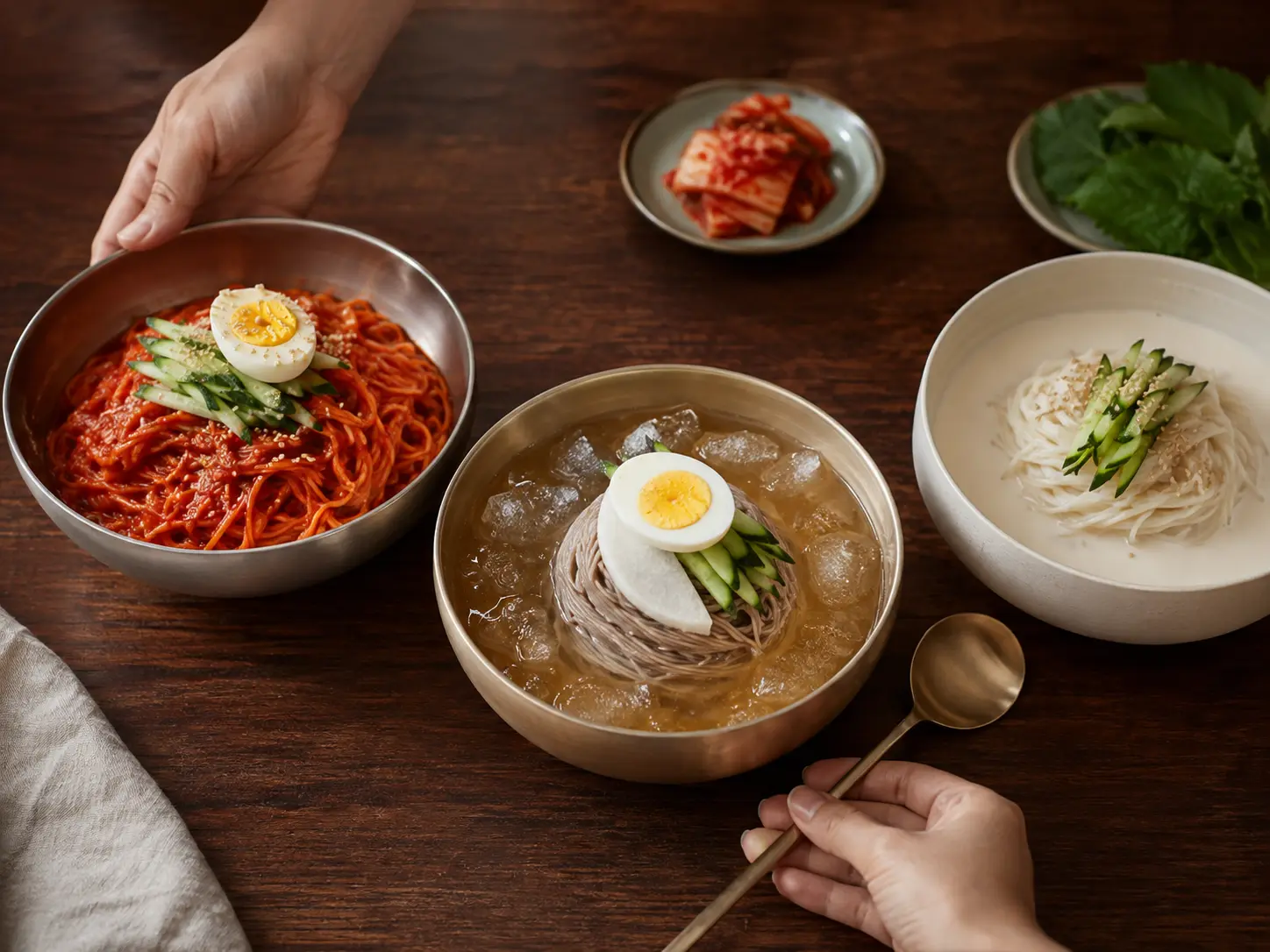
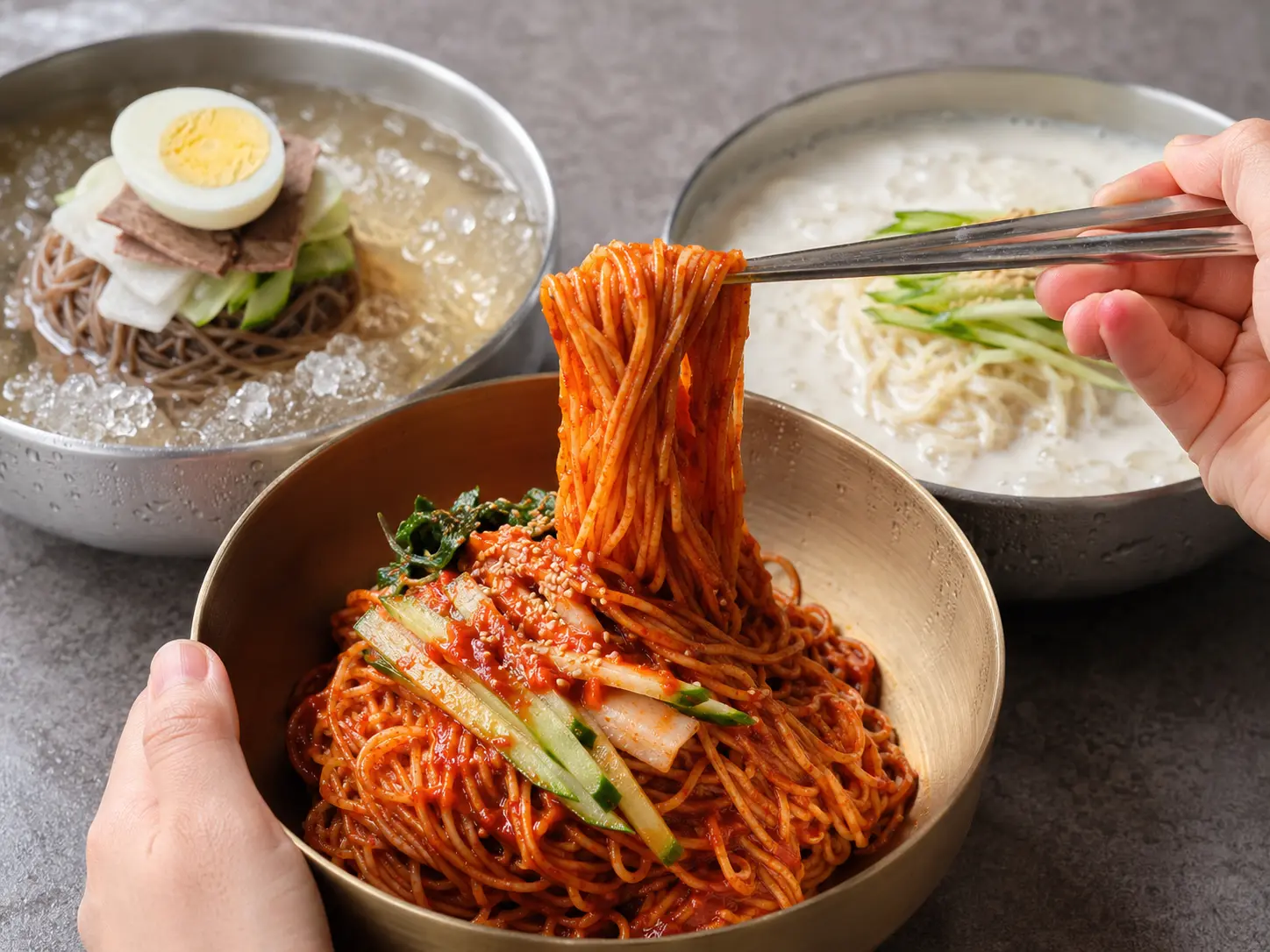
Korean noodles are not one dish but a way to answer the day: spicy bibim-guksu for appetite, icy mul-naengmyeon for heat, creamy kongguksu for deep summer, and warm janchi-guksu when comfort matters.
KOREAN FOOD · FROM HEAT TO FINISH
08 / 25
QUICK ANSWERS
Korean noodles are not one dish but a way to answer the day: spicy bibim-guksu for appetite, icy mul-naengmyeon for heat, creamy kongguksu for deep summer, and warm janchi-guksu when comfort matters.
Prepare chewy wheat or buckwheat noodles, then choose the base: gochujang-vinegar sauce, chilled beef broth with ice, or unsweetened soy milk. Lift a small bundle and eat while the noodles are springy.
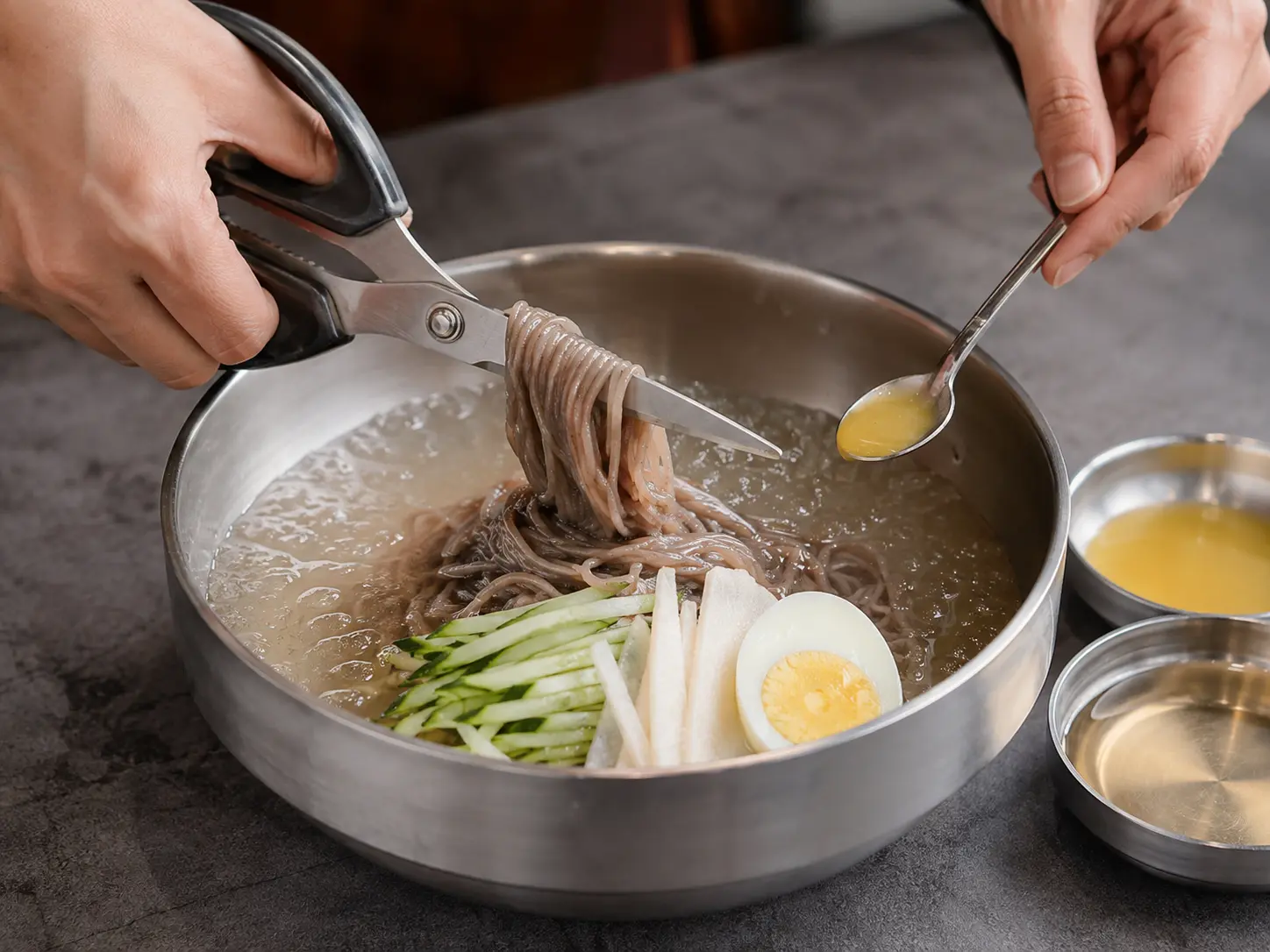
Cut naengmyeon only once or twice if the strands are difficult to manage.
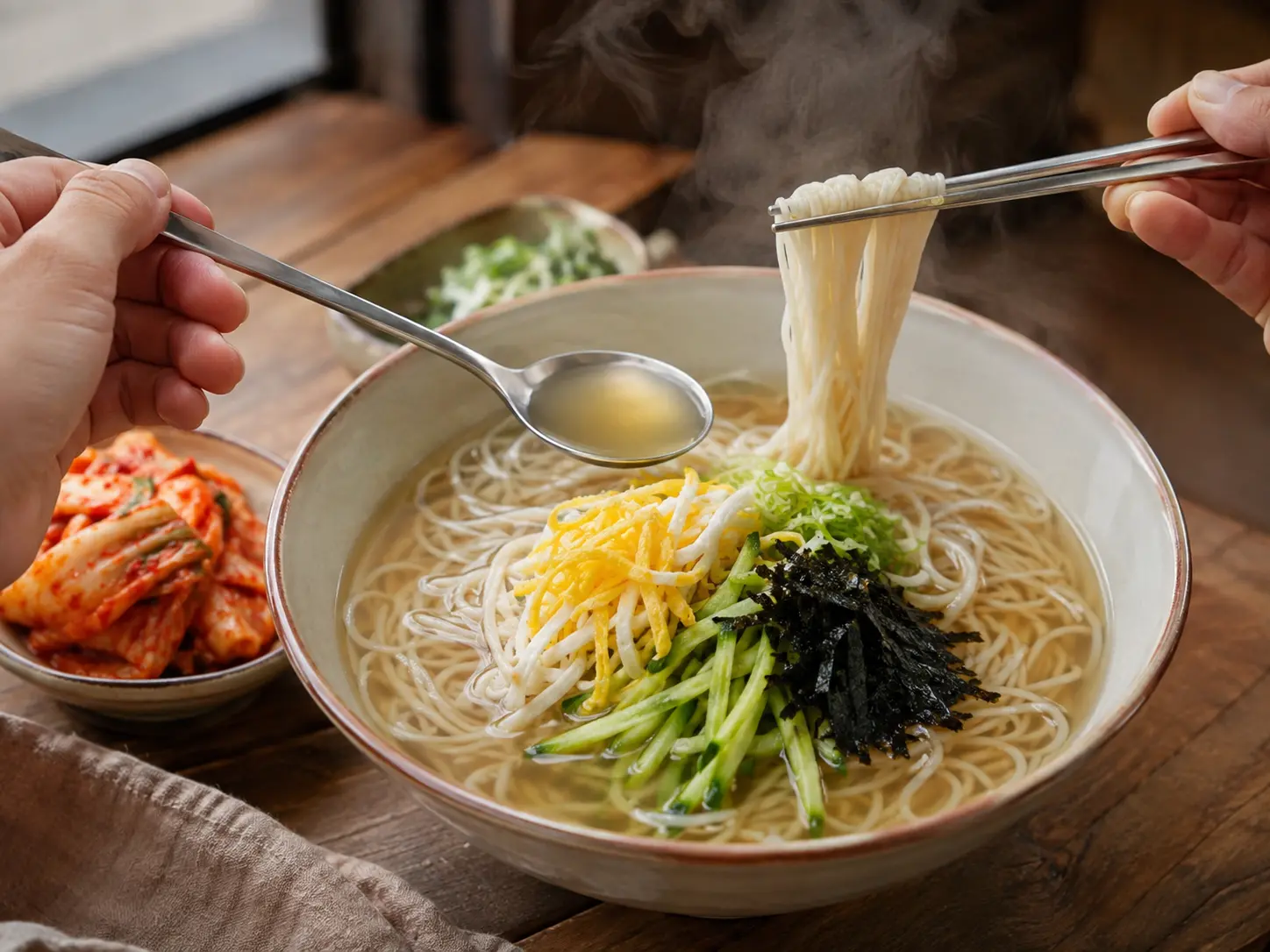
Thin noodles in clear anchovy-kelp broth are topped with zucchini, egg, seaweed, and scallions.
01 · CHOOSE THE WEATHER
Korean noodles are not one dish but a way to answer the day: spicy bibim-guksu for appetite, icy mul-naengmyeon for heat, creamy kongguksu for deep summer, and warm janchi-guksu when comfort matters.
By Eat Korean Style Editorial TeamLast updated August 14, 2026
02 · BUILD THE BASE
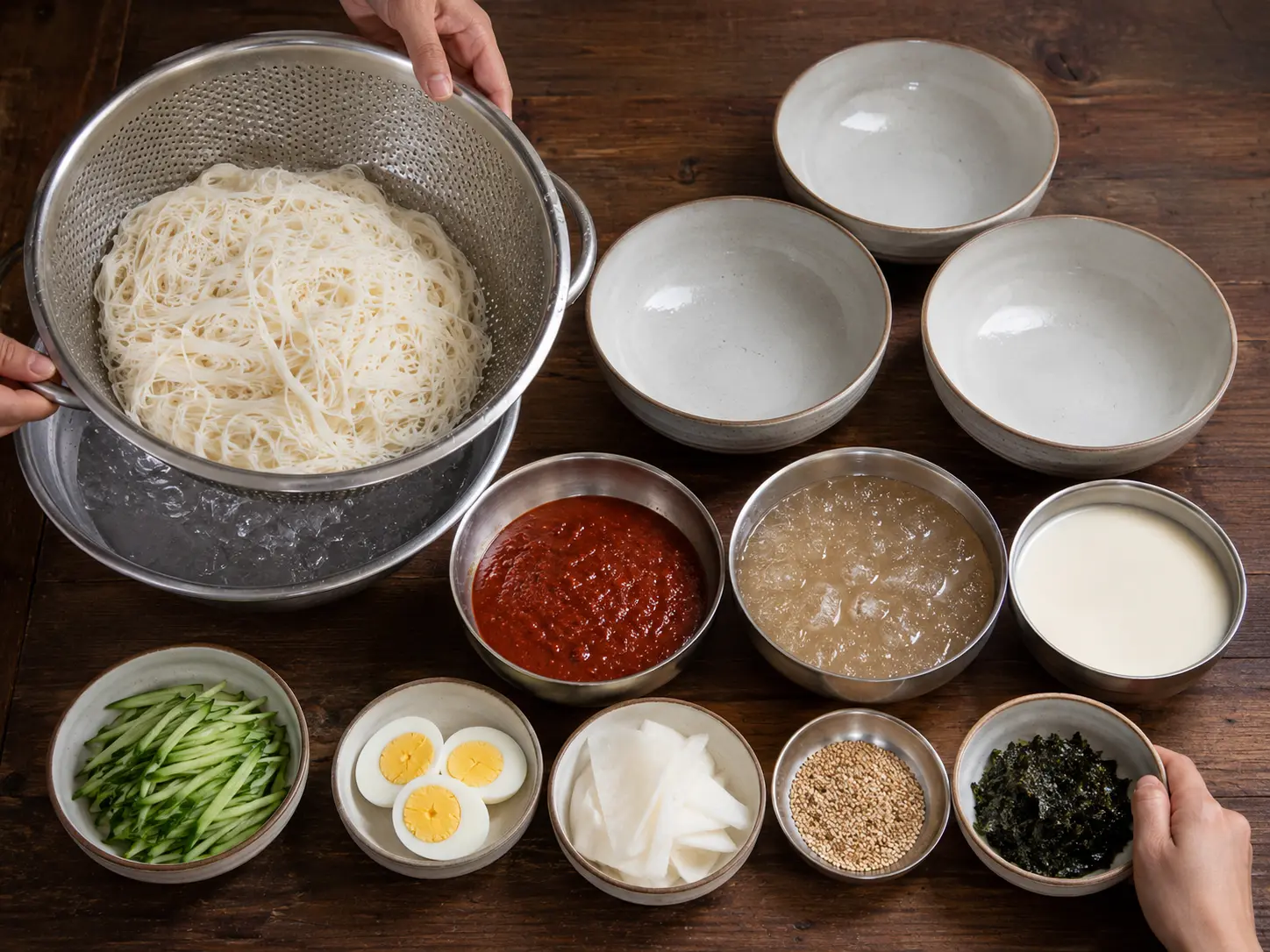
Prepare chewy wheat or buckwheat noodles, then choose the base: gochujang-vinegar sauce, chilled beef broth with ice, or unsweetened soy milk. Cucumber, boiled egg, sesame, and kimchi bring freshness and contrast.
03 · ASSEMBLE AT THE LAST SECOND
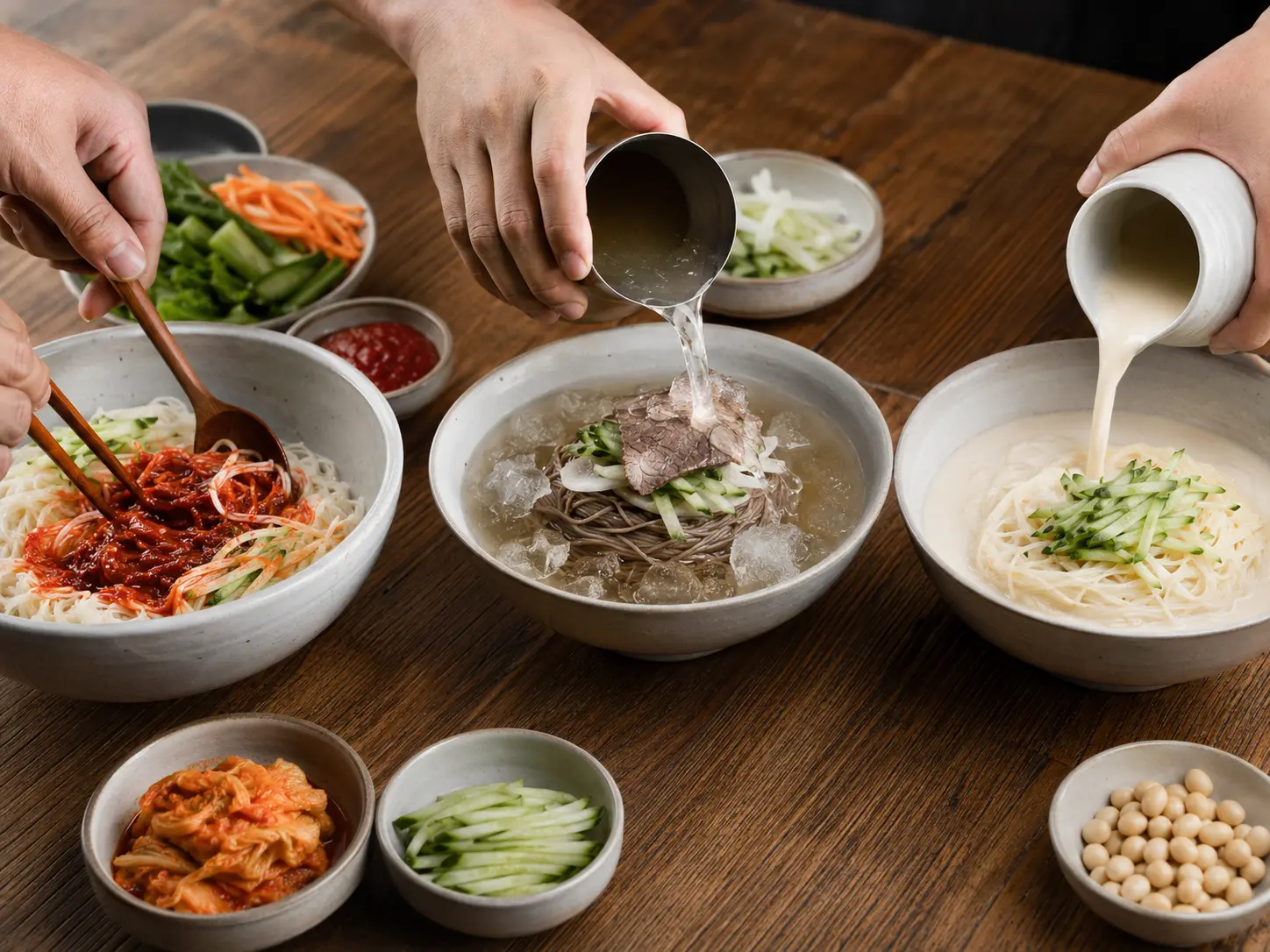
Rinse cooked noodles until no warmth remains and squeeze out excess water. Mix bibim-guksu immediately, pour naengmyeon broth over ice, and keep kongguksu chilled so each bowl stays clean and lively.
04 · THREE SUMMER RITUALS
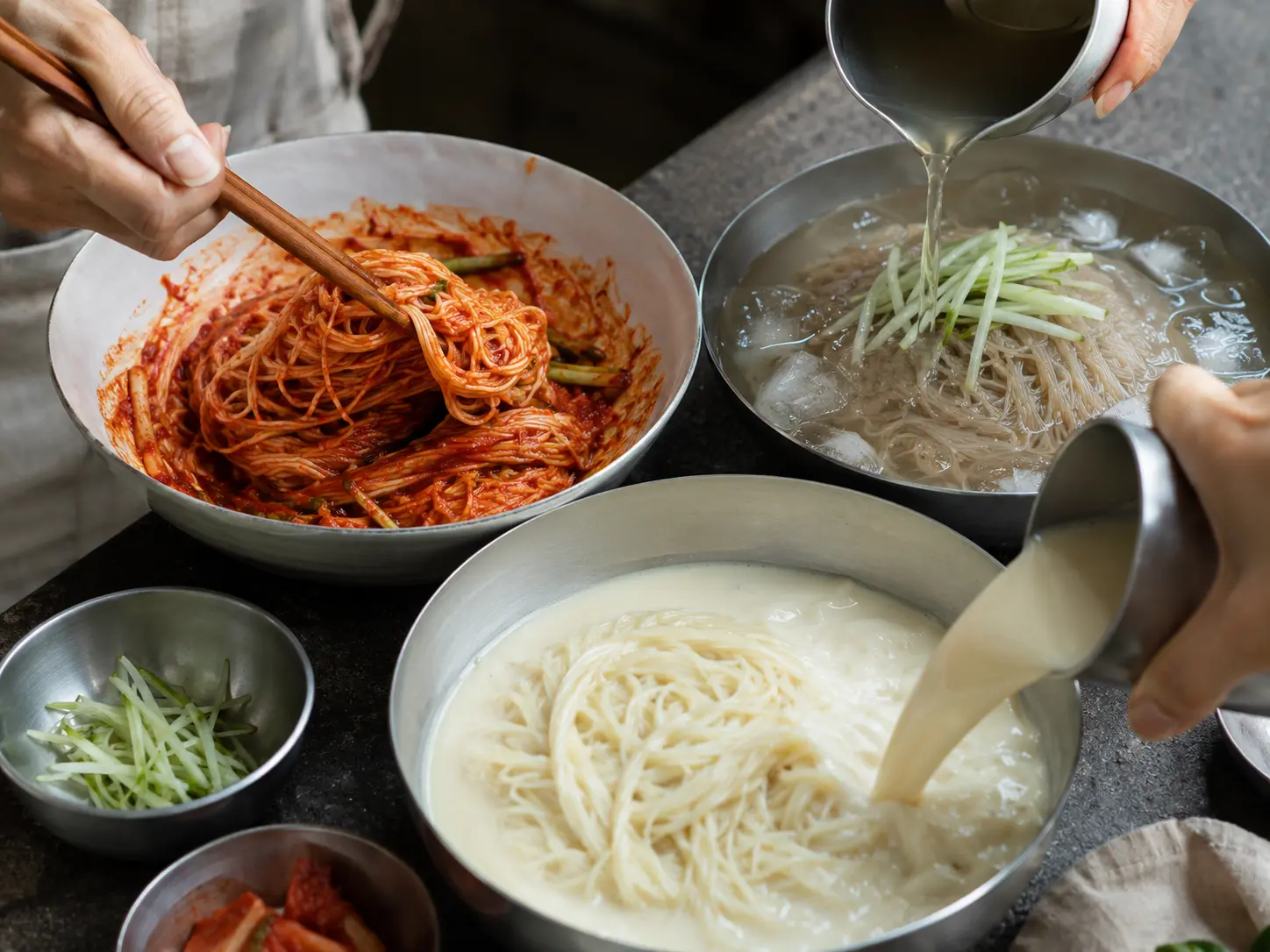
Toss spicy noodles from the bottom, loosen icy noodles in their broth, and stir kongguksu gently. Taste the plain soybean broth first, then season it to your preference: add one spoonful of sugar for the southern-style bowl, or half a spoonful of salt for the Seoul-style bowl. The author’s pick? Sugar—it makes the cold, nutty soybean broth especially delicious. 🙂
05 · READY TO EAT
Lift a small bundle and eat while the noodles are springy. Pair spicy noodles with crisp cucumber, naengmyeon with a slice of beef or pear, and kongguksu with kimchi for a sharp counterpoint.
06 · ADJUST YOUR BOWL
Cut naengmyeon only once or twice if the strands are difficult to manage. Add vinegar around the broth and mustard in tiny amounts; too much hides the clean stock and buckwheat aroma.
07 · WHEN THE DAY TURNS COOL
Thin noodles in clear anchovy-kelp broth are topped with zucchini, egg, seaweed, and scallions. Serve with seasoned soy sauce and kimchi for a simple bowl long associated with gatherings and celebrations.
WHAT TO DRINK · WHAT COMES AFTER
A crisp beer settles the heat of bibim-guksu without weighing down the meal.
A small chilled glass pairs naturally when noodles follow grilled meat.
Roasted barley tea stays clean beside both icy broth and creamy soy milk.
A light melon-flavored ice bar keeps the playful summer mood going.
WHERE TO EXPERIENCE IT
One pick from the food’s best-known regional home, plus one accessible Seoul choice. Check the latest listing before visiting.
SEOUL LANDMARK PICK
Myeongdong · Seoul
A landmark near major visitor sights for kalguksu, dumplings, and spicy fresh kimchi.
OPEN IN GOOGLE MAPS ↗SEOUL LOCAL PICK
Ojang-dong · Seoul
A longtime local favorite in Seoul’s naengmyeon alley for spicy Hamheung-style noodles.
OPEN IN GOOGLE MAPS ↗Coming to Korea? Use these as carefully selected starting points—and enjoy the dish where its local story feels most alive.
MAKE IT AT HOME
INGREDIENTS
COOKING METHOD
Chill the unsweetened soy milk thoroughly. Blend it briefly with the sesame seeds for a nuttier broth, then return it to the refrigerator.
Cut the cucumber into fine strips, slice the tomato, and halve the boiled eggs. Keep every topping cold.
Boil the noodles according to the package directions until springy, usually 4–6 minutes.
Rinse the noodles repeatedly under very cold water, rubbing them gently to remove surface starch, then drain well.
Divide the noodles between two chilled bowls and pour over the cold soybean broth.
Add cucumber, tomato, and egg. Serve immediately with kimchi on the side.
HOME NOTESeason the plain soybean broth to your taste: add 1 teaspoon of sugar for a southern-style touch, or 1/2 teaspoon of salt for a Seoul-style taste. The author recommends sugar. :)
NEXT EXPERIENCE