What is Samgyeopsal?
Fresh samgyeopsal is the everyday standard.
KOREAN FOOD · FROM HEAT TO FINISH
32 / 32
QUICK ANSWERS
Fresh samgyeopsal is the everyday standard.
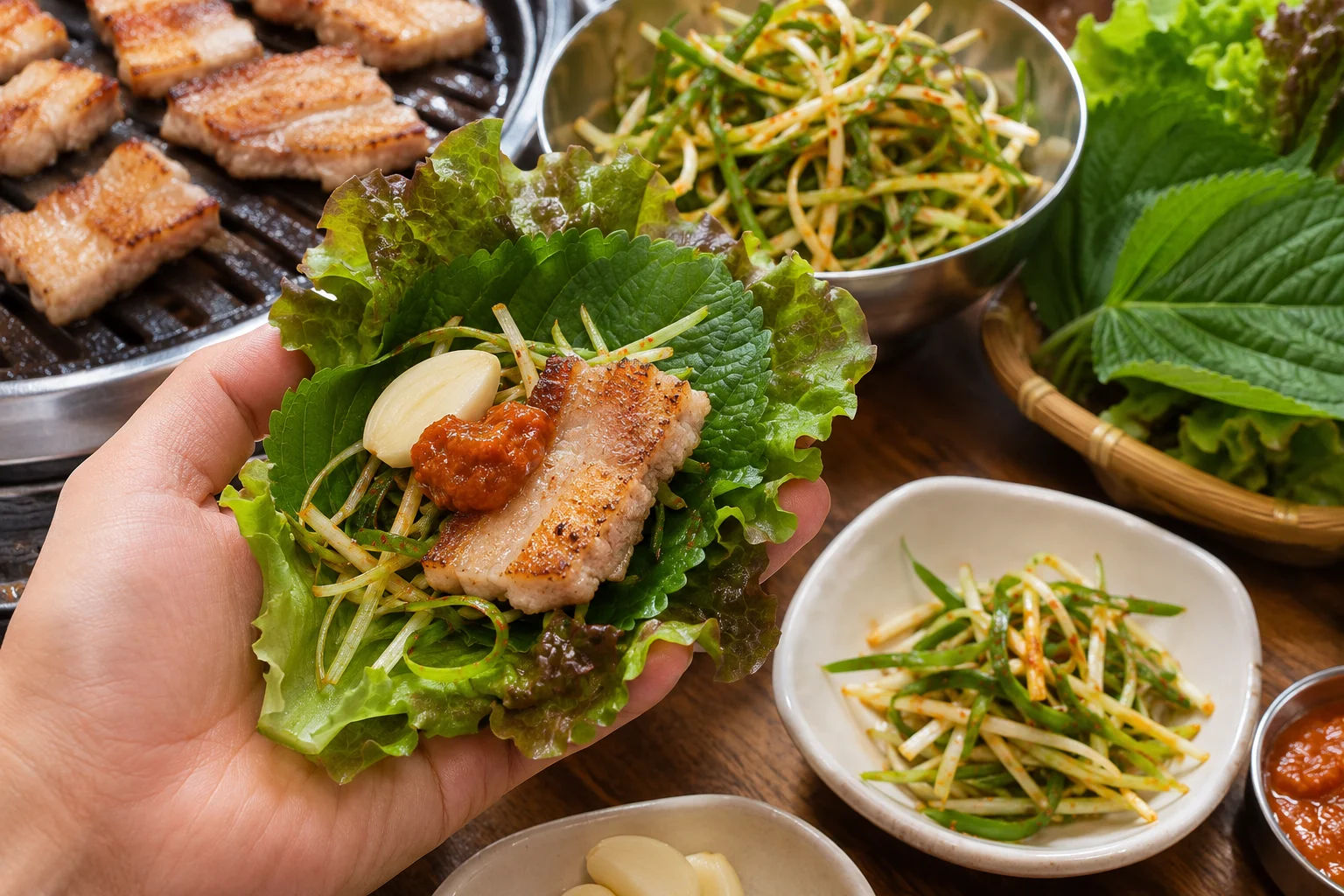
A table commonly begins with two portions, then adds one portion at a time. Place one piece of pork on lettuce or perilla with a little ssamjang and raw or grilled garlic.
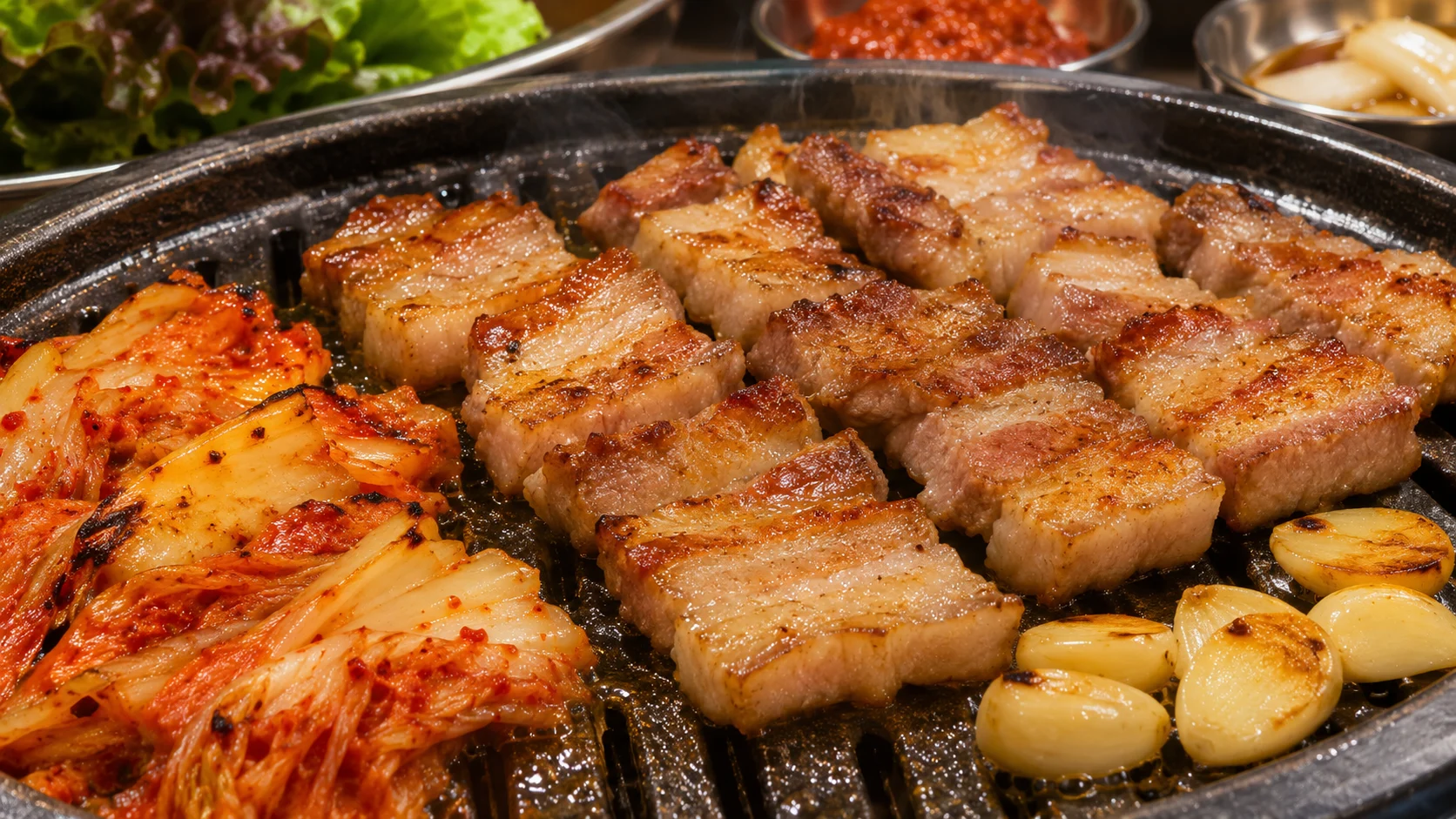
Eat the pork when the outside is browned and lightly crisp but the fat and center still taste juicy.
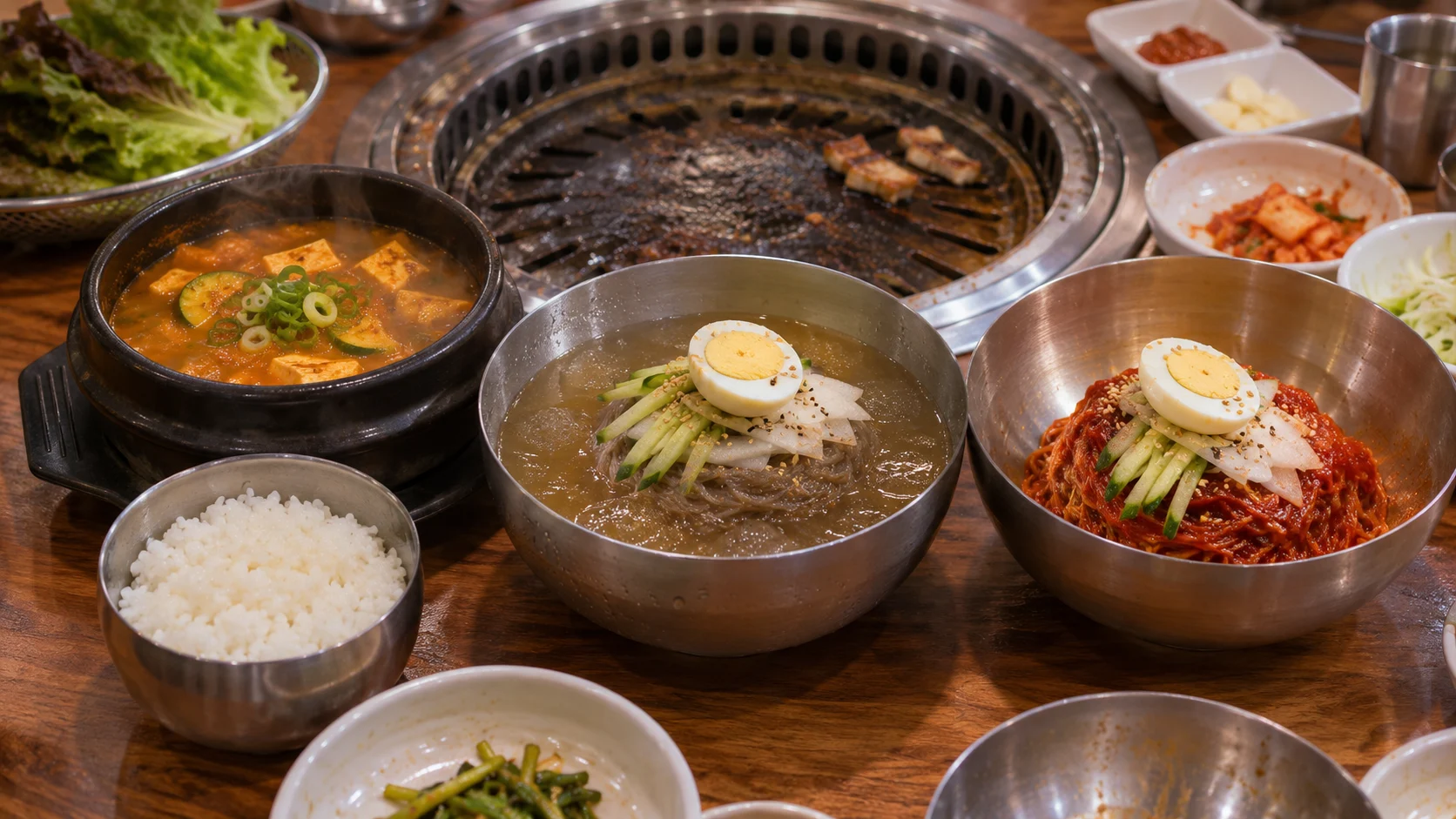
A bowl of rice with doenjang jjigae is the classic finish, but cold mul-naengmyeon and spicy bibim-naengmyeon are ordered just as often after the meat.
01 · THE CLASSIC TABLE
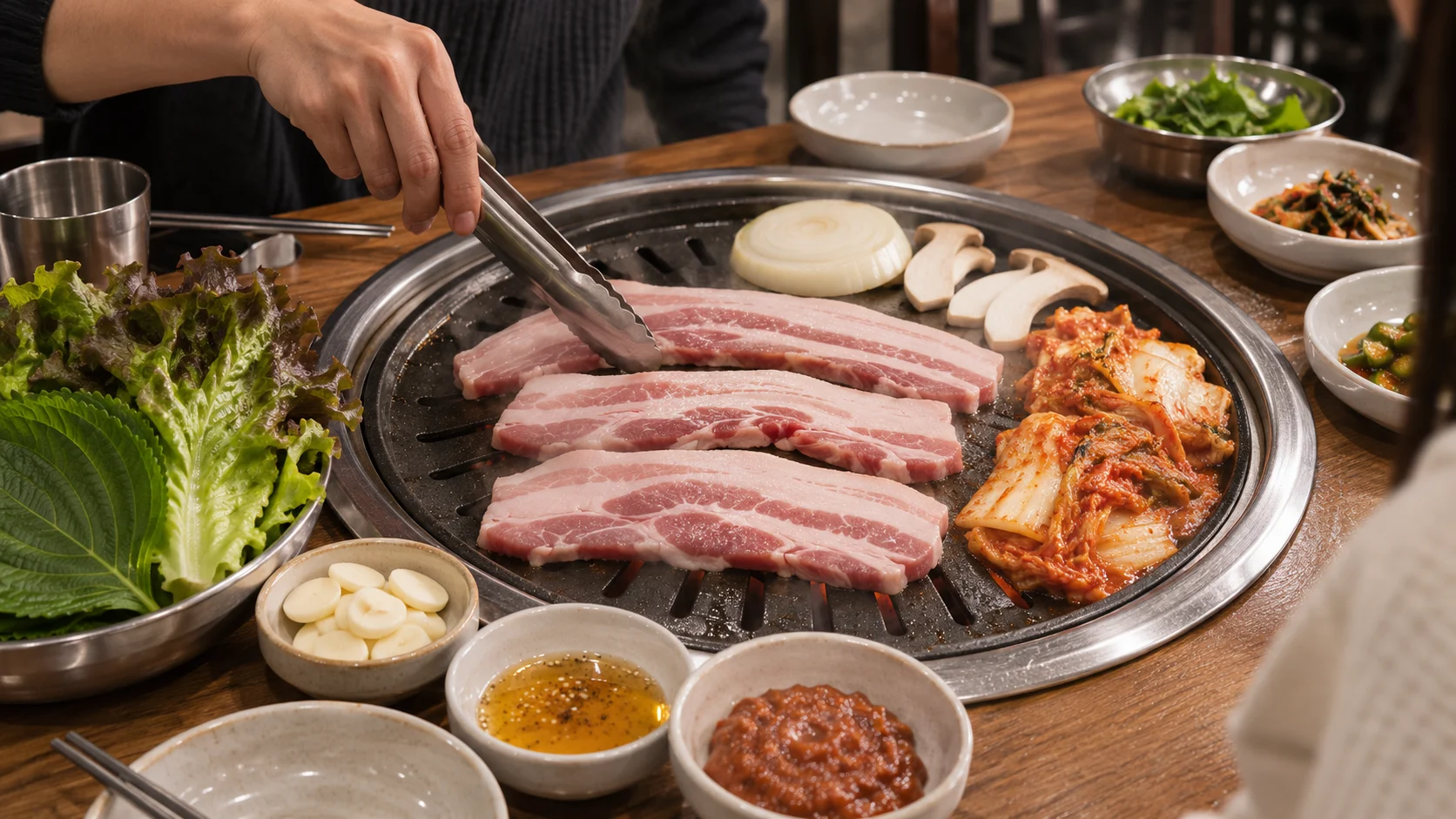
Fresh samgyeopsal is the everyday standard. Most ordinary restaurants bring raw pork belly at a moderate thickness, and diners place it on the tabletop grill themselves rather than receiving it pre-grilled.
By Mr. Ahn · Korean Office WorkerLast updated
02 · START WITH TWO
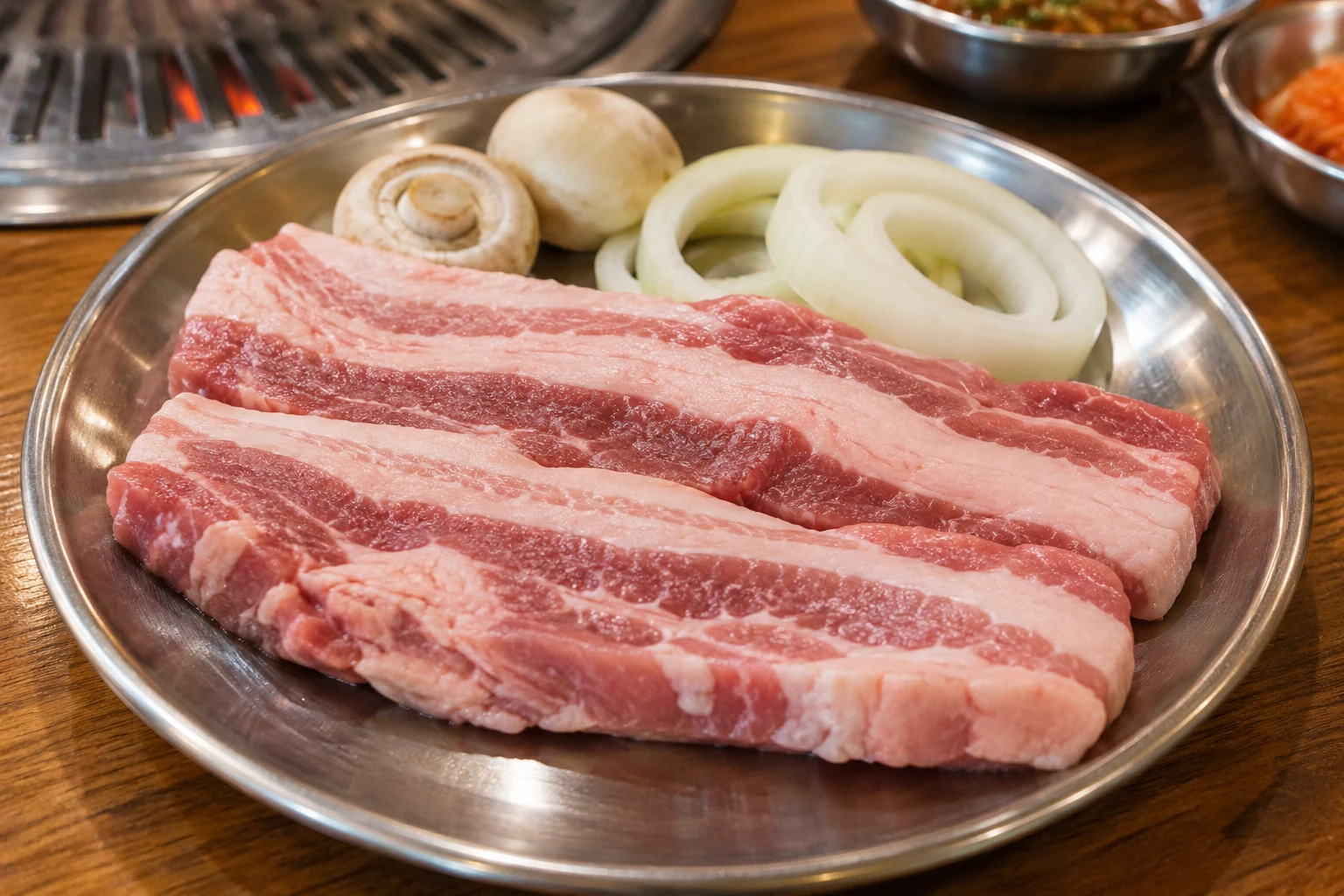
A table commonly begins with two portions, then adds one portion at a time. After samgyeopsal, the group may order another cut such as moksal or hangjeongsal. Thin daepae samgyeopsal is a quick-cooking option, while frozen pork belly is not the focus of the classic experience.
03 · GRILL IT YOURSELF
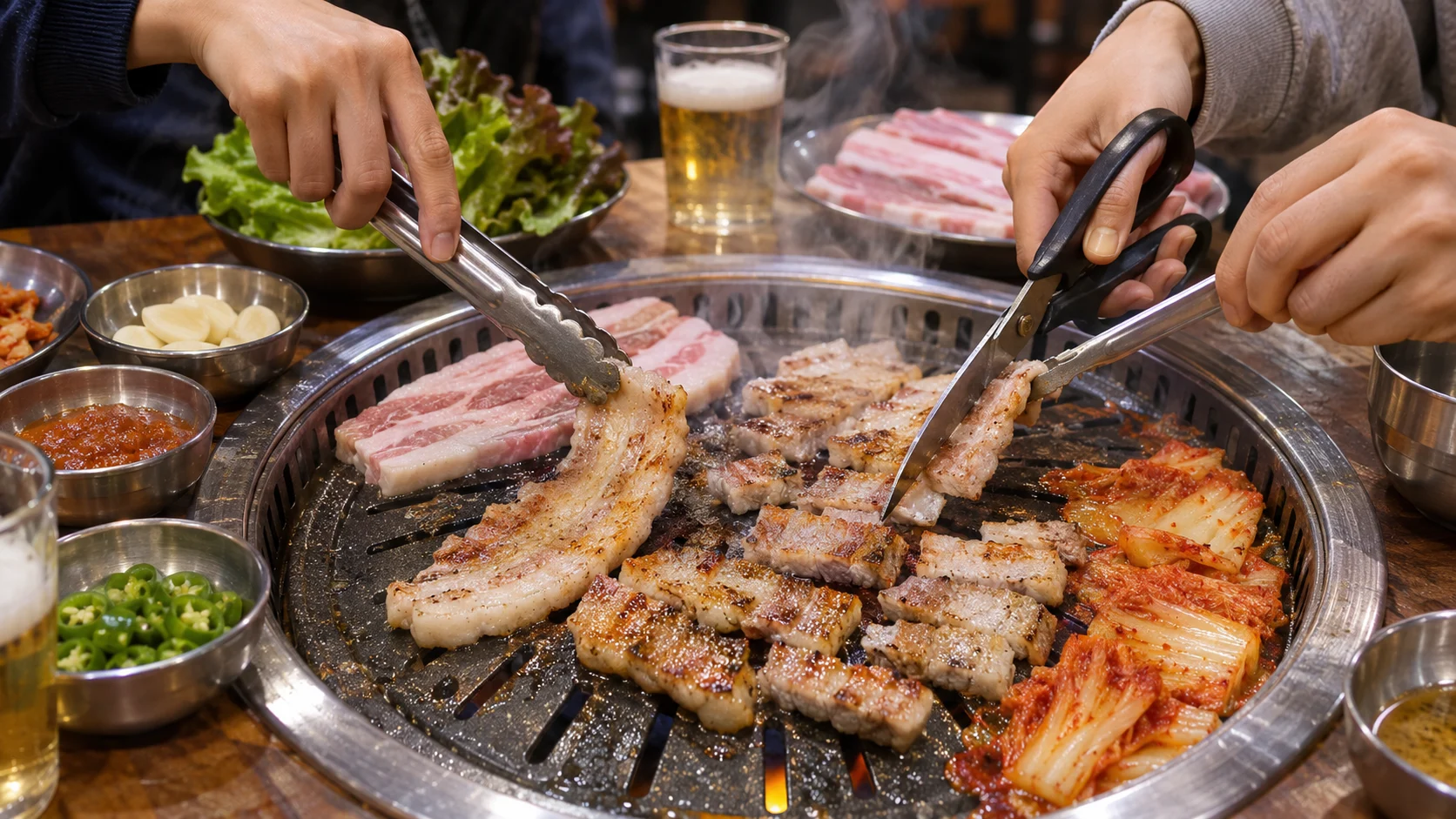
At a general samgyeopsal restaurant, diners turn the meat with tongs and cut it with scissors. Place kimchi along one side, and add the mushrooms or onion rings that may arrive with the raw pork. Garlic comes raw with the wraps, so grill as much as you want.
04 · THE SPECIALIST STYLE
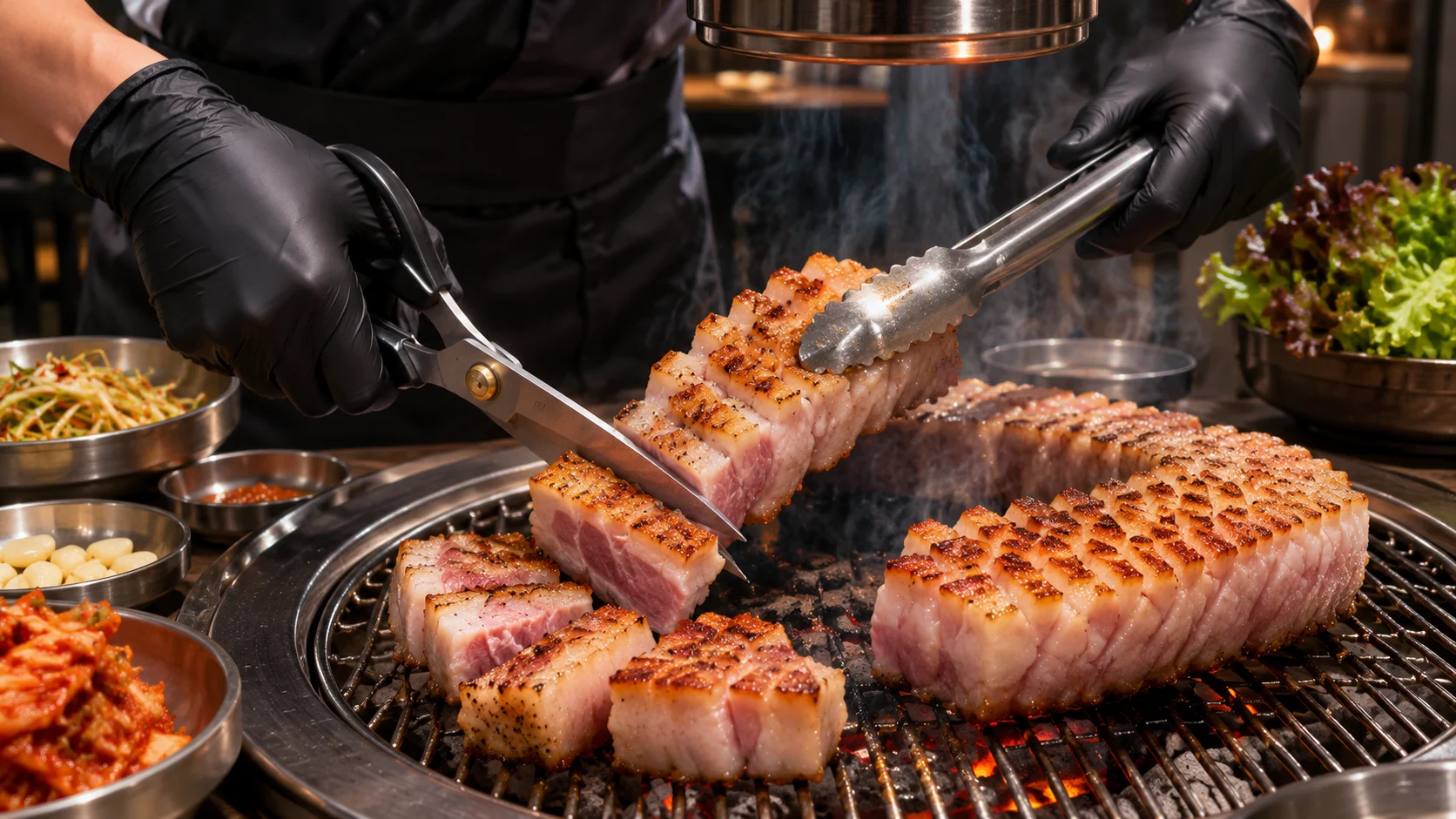
Modern specialist restaurants may serve very thick samgyeopsal, skin-on ogyeopsal, or honeycomb-scored cuts. These may be partly seared first, and staff often stays to grill, cut and manage them. That service belongs to this thick-cut style, not every samgyeopsal restaurant.
05 · BUILD A WRAP
Place one piece of pork on lettuce or perilla with a little ssamjang and raw or grilled garlic. Scallion salad is a basic side: some restaurants serve individual dishes and others a larger shared plate. Add it to the wrap or eat it separately—both are normal. Grilled kimchi is usually enjoyed beside the meat rather than required inside the wrap.
06 · THE BEST BITE
Eat the pork when the outside is browned and lightly crisp but the fat and center still taste juicy. Leaving it too long makes it dry and tough. Ssamjang and sesame-oil salt are the dependable dips; myeolchi-jeot or meljeot appears only at some specialist or Jeju-style restaurants.
07 · THREE COMMON FINISHES
A bowl of rice with doenjang jjigae is the classic finish, but cold mul-naengmyeon and spicy bibim-naengmyeon are ordered just as often after the meat. Some restaurants make fried rice with chopped pork, bean sprouts, seaweed and red seasoning, but it is not the general rule for samgyeopsal.
WHAT TO DRINK · WHAT COMES AFTER
The essential savory paste for a leaf wrap.
A simple salty, nutty dip for the pork itself.
Eat it beside the meat or add a little to a wrap.
Choose rice and stew, icy mul-naengmyeon, or spicy bibim-naengmyeon.
NEXT EXPERIENCE