01 · A HOME-COOKED MAIN
SPECIAL, NOT AN EVERYDAY RESTAURANT DISH.
Galbijjim is most at home on a family table for Chuseok, Seollal, birthdays and gatherings. A specialist rib restaurant may sell it, but it is not a dish visitors should expect on an ordinary restaurant menu.
02 · BUILD A GENTLE BRAISE
SOY SAUCE, WATER, AND TIME.
The seasoning may echo LA galbi, but the method changes the result. LA galbi concentrates its marinade over fire; galbijjim cooks slowly with water, so it has more broth and a softer, less salty-sweet taste.
03 · THE FAMILY POT
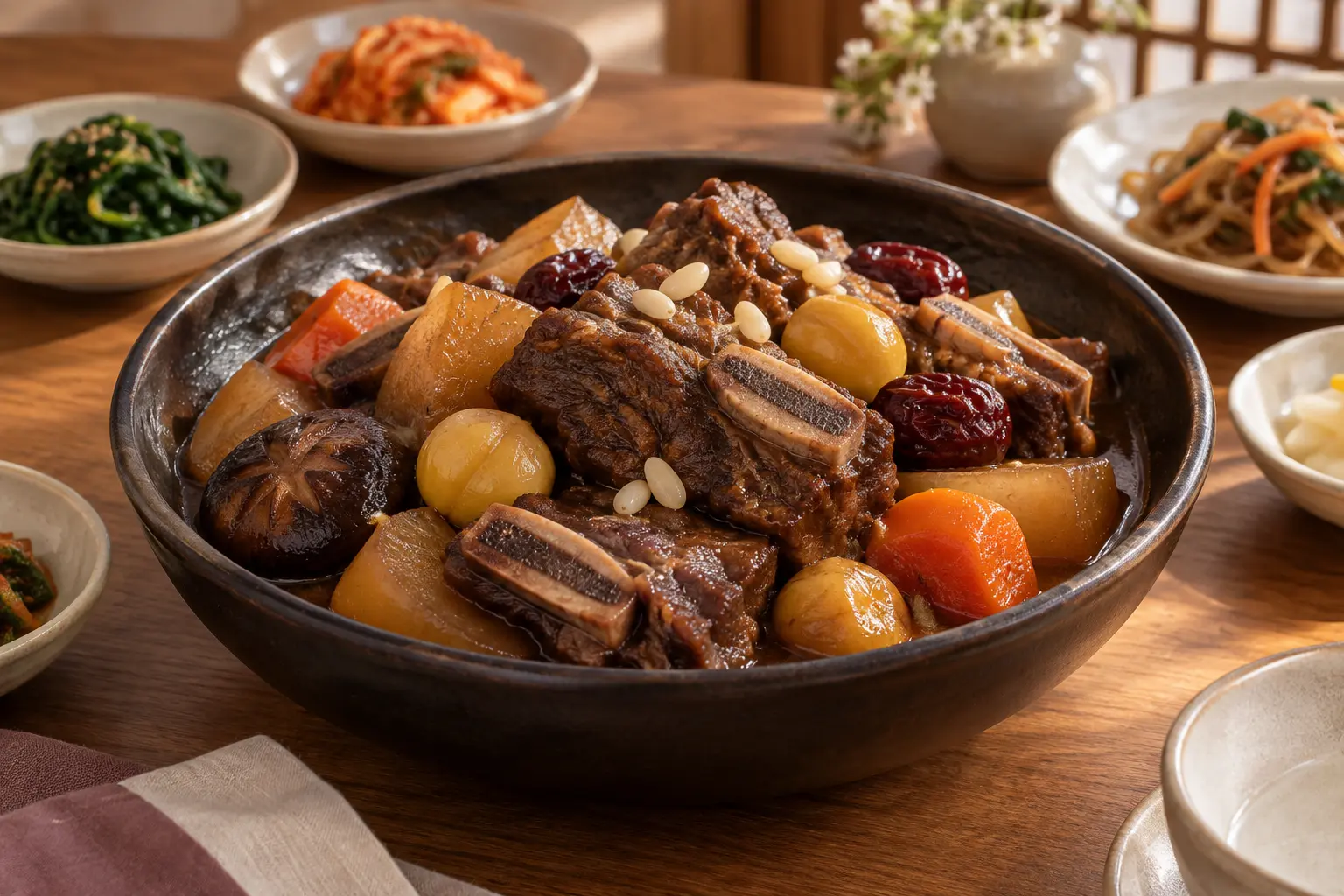
POTATO, ONION, AND USUALLY CARROT.
Potatoes and onions belong in the pot, and carrot is common unless someone at the table dislikes it. Korean radish is not part of this home style. Mushrooms and chestnuts are welcome extras; jujubes are much less common.
04 · MEAT, BROTH, AND GLASS NOODLES
THICK RIBS DO NOT HAVE ONE TEXTURE.
The plump meat near the bone becomes soft and separates cleanly after a long braise, while leaner fibers can stay pleasantly firm. Add glass noodles near the end for the fun of slurping up the soy broth without letting them turn mushy.
THE KOREAN TABLE
A large bowl at the center.
Serve galbijjim as the main dish among rice, jeon, japchae, namul and other banchan. Eat the ribs and rice in any rhythm you like, or spoon the mild broth over rice and mix it. Traditional beef galbijjim is soy-based and not spicy; spicy versions are restaurant-style variations, while spicy braised ribs are often made with pork. Leftovers can taste even more settled the next day—reheat the meat and broth thoroughly before eating.
First time making or eating Galbijjim?
Check what belongs in the family pot, why it is milder than grilled LA galbi, and how traditional soy galbijjim differs from spicy restaurant versions.
Read the Galbijjim questions →