What is Dwaeji Bulbaek?
Dwaeji bulbaek is thin pork cooked in a glossy soy-based seasoning and served with rice, kimchi and a few simple banchan.
KOREAN FOOD · FROM HEAT TO FINISH
31 / 32
QUICK ANSWERS
Dwaeji bulbaek is thin pork cooked in a glossy soy-based seasoning and served with rice, kimchi and a few simple banchan.
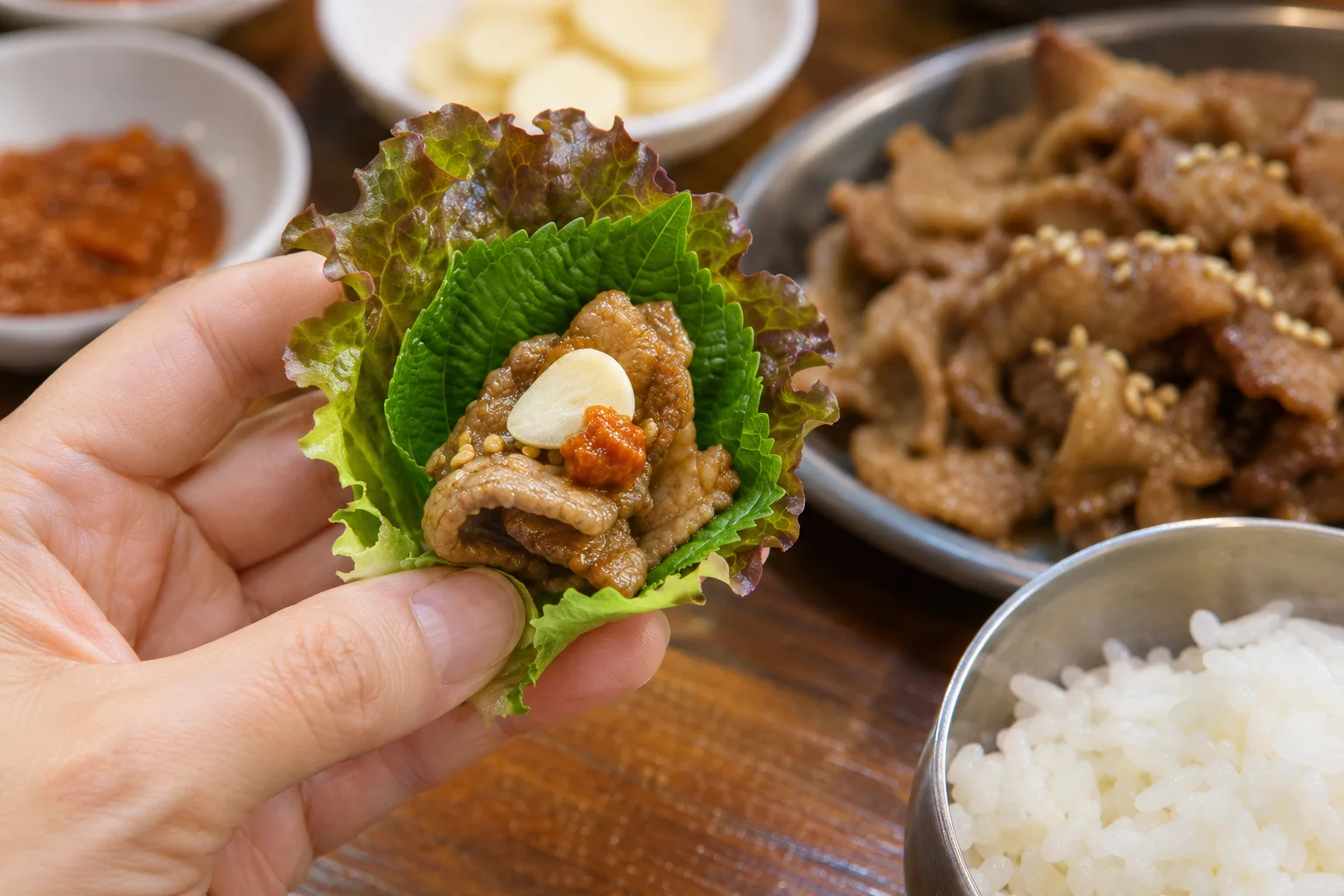
The everyday version stays focused: thin pork with some fatty edges, sliced onion, green onion and a soy-garlic seasoning. When leafy wraps are provided, place one piece of pork in lettuce or perilla with a thin garlic slice and a little ssamjang.
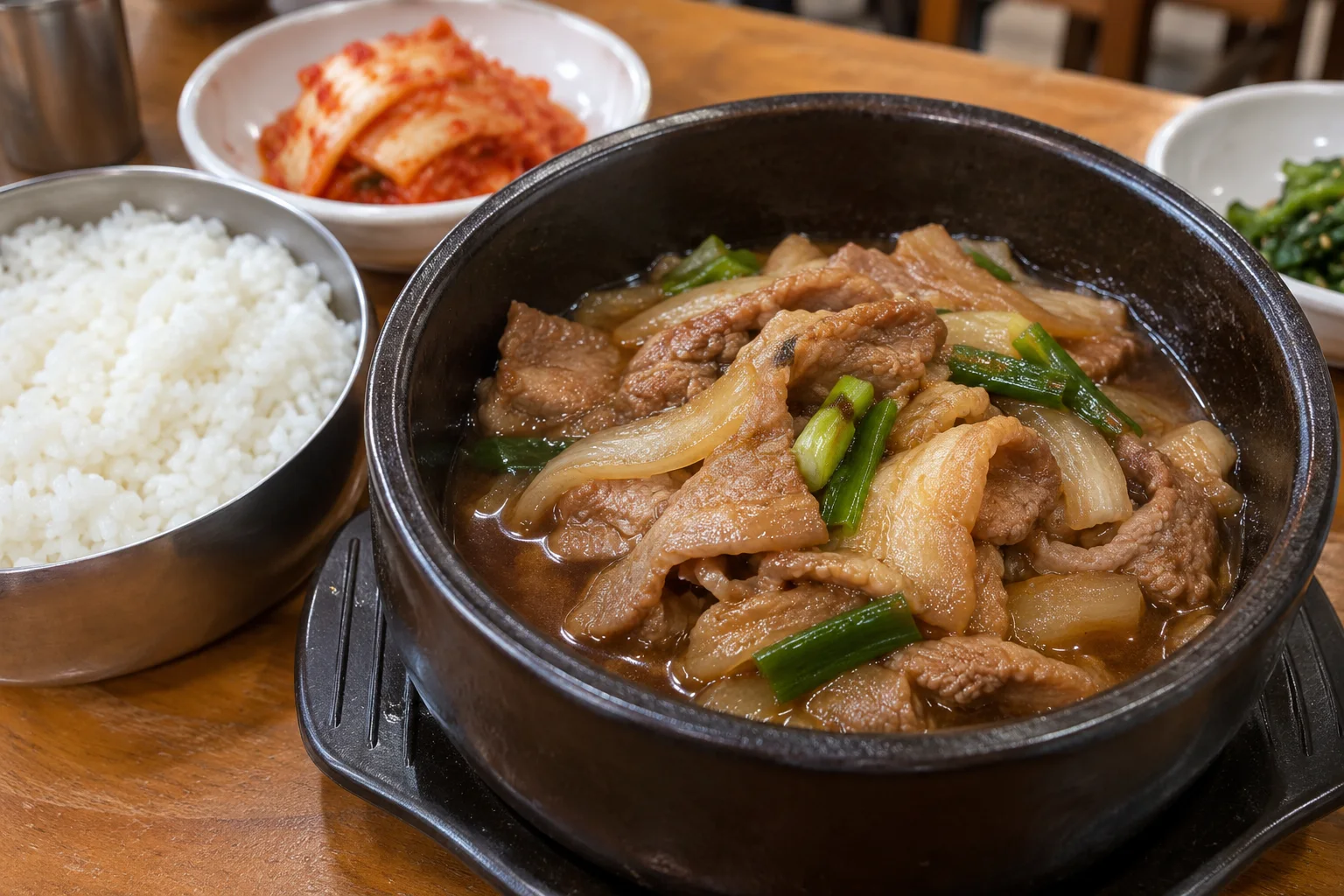
The version I remember from older drivers' restaurants often came almost like a rice-bowl meal in a ttukbaegi or deep bowl.
Eat the plate-style bulbaek as a rice side dish or in wraps because there is usually not enough liquid to mix the whole bowl.
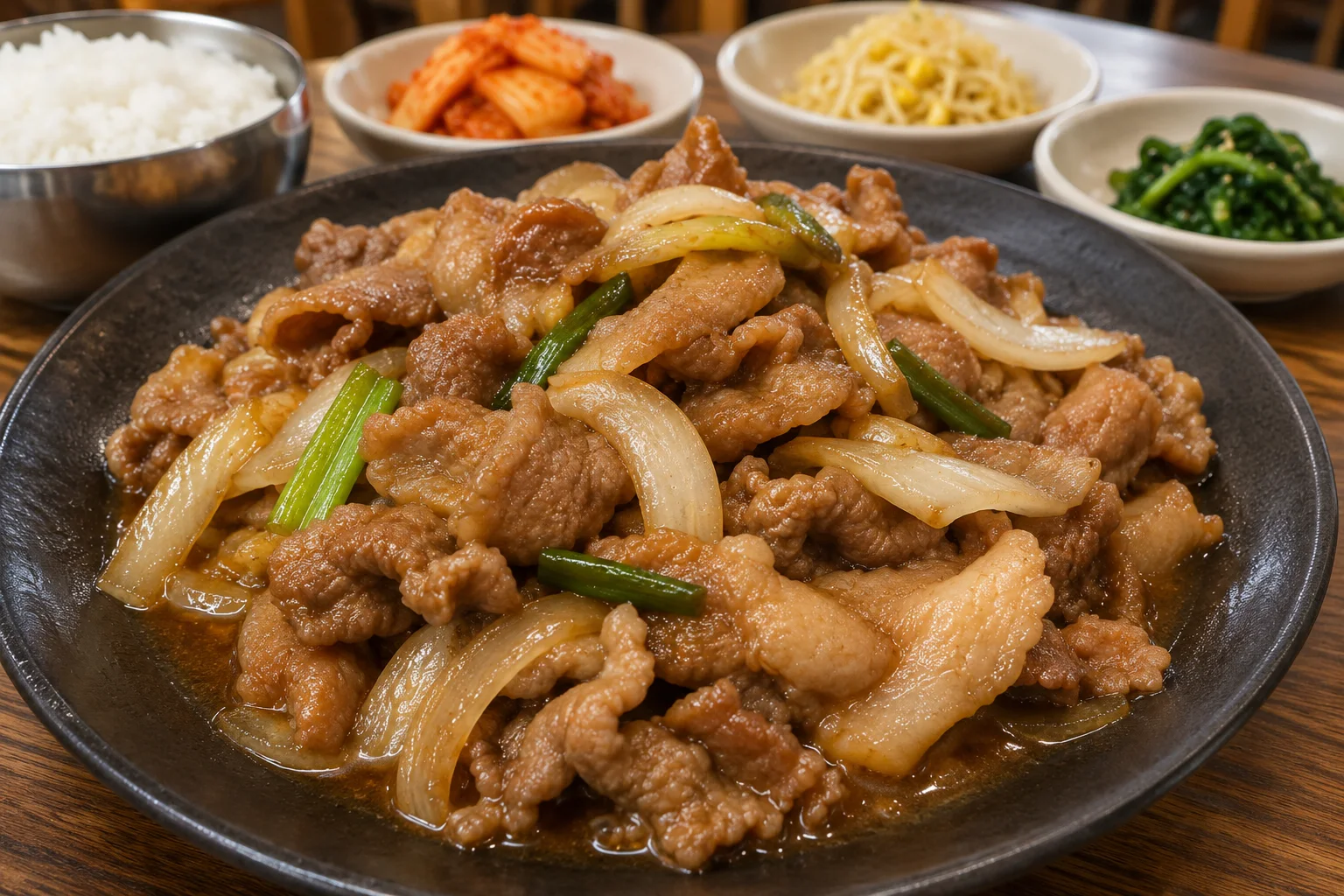
01 · THE FINISHED PLATE
Dwaeji bulbaek is thin pork cooked in a glossy soy-based seasoning and served with rice, kimchi and a few simple banchan. In everyday Korean usage, bulgogi by itself usually suggests beef first, so this pork set meal keeps its own name. Its flavor is closer to a lightly sweet soy braise than to spicy jeyuk, and smoke or flame-grilled aroma is not the point.
By Mr. Ahn · Korean Office WorkerLast updated
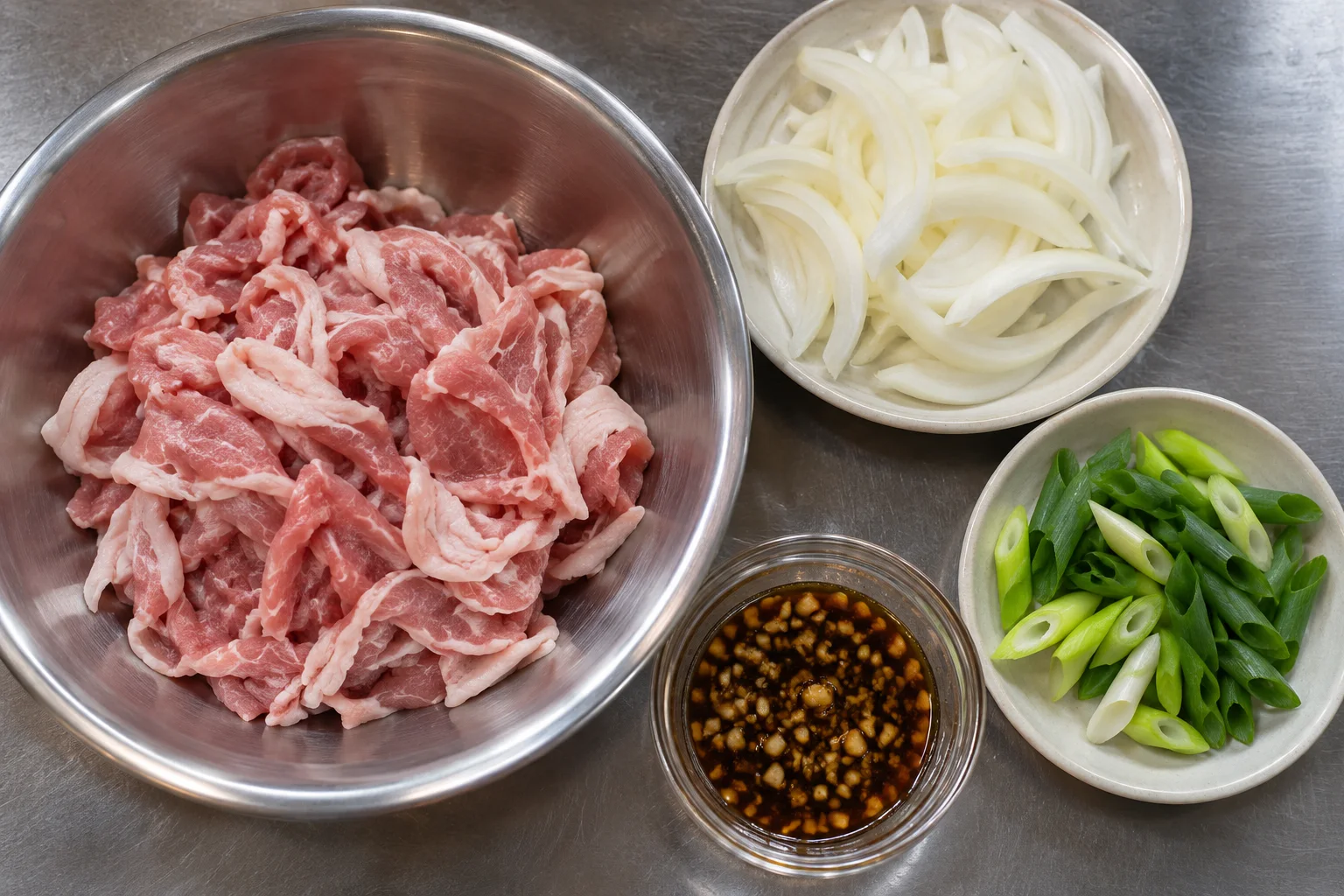
02 · WHAT GOES IN
The everyday version stays focused: thin pork with some fatty edges, sliced onion, green onion and a soy-garlic seasoning. Carrot, cabbage, mushrooms and perilla leaves should not be presented as standard ingredients.
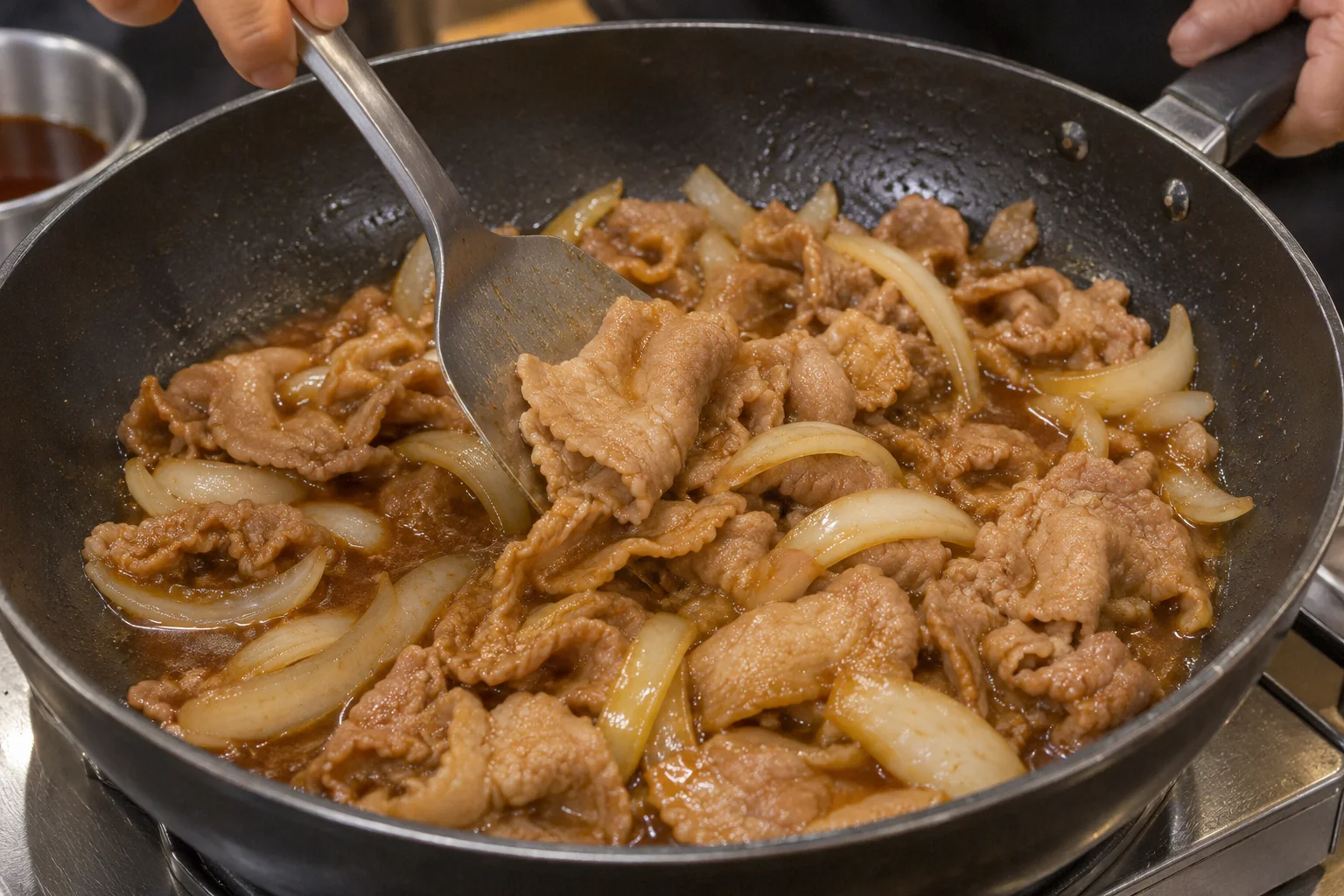
03 · IN THE PAN
Cook the onions briefly, then add the thin pork and its soy seasoning. The meat cooks quickly; turn it gently and stop while it remains tender and glossy instead of reducing it into a dry, smoky stir-fry.
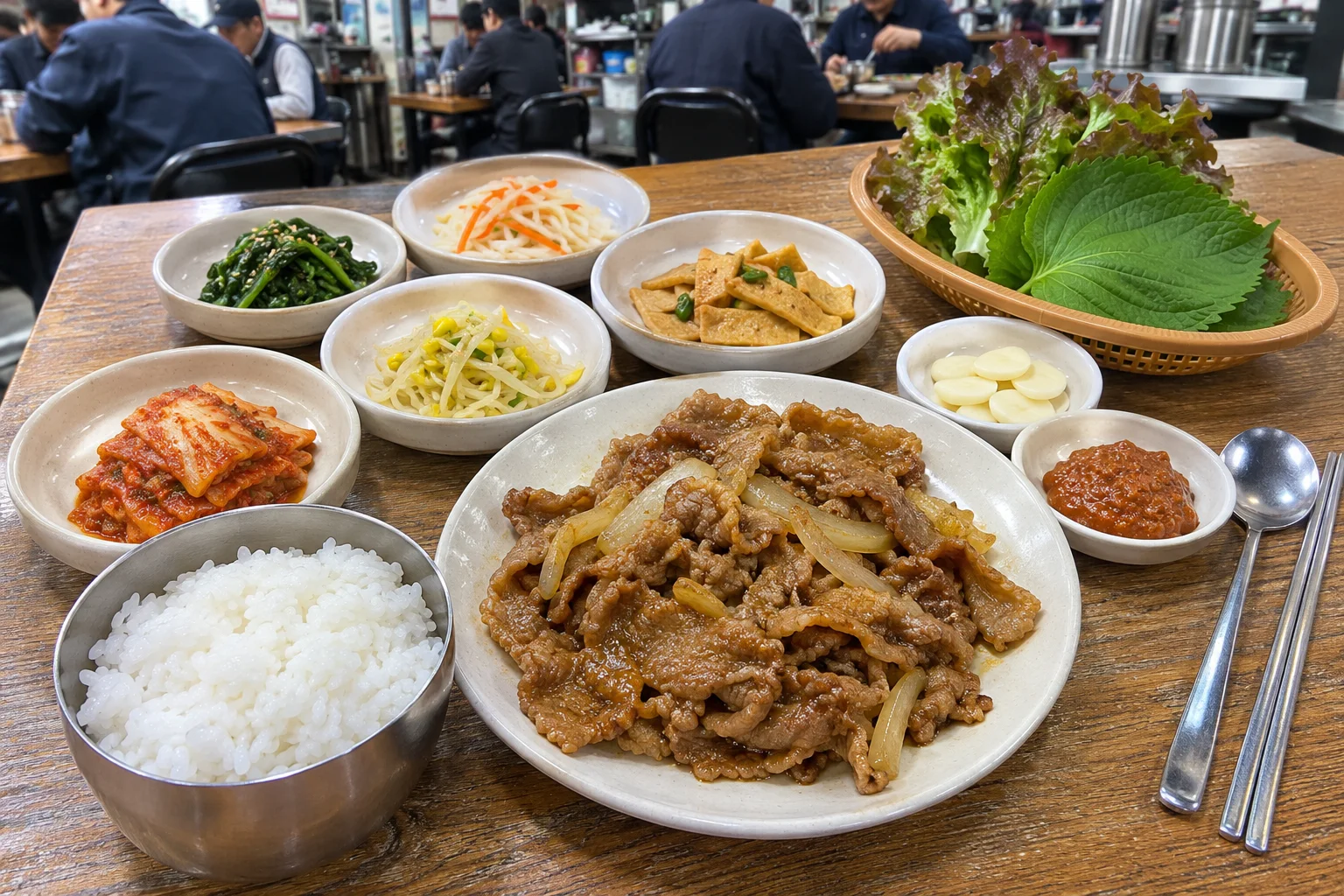
04 · HOW IT ARRIVES
Many restaurants now bring the pork on a round plate or shallow pan with a separate bowl of rice. Kimchi and a few simple side dishes complete the set; soup or doenjang-jjigae should not be assumed to come automatically.
05 · BUILD A WRAP
When leafy wraps are provided, place one piece of pork in lettuce or perilla with a thin garlic slice and a little ssamjang. Some restaurants also serve steamed cabbage leaves, but that is an extra rather than a universal part of the meal.
06 · THE OLDER STYLE
The version I remember from older drivers' restaurants often came almost like a rice-bowl meal in a ttukbaegi or deep bowl. It carries a little more soy-seasoned liquid than the modern plate style, making it easy to eat together with rice.
07 · HOW TO EAT IT
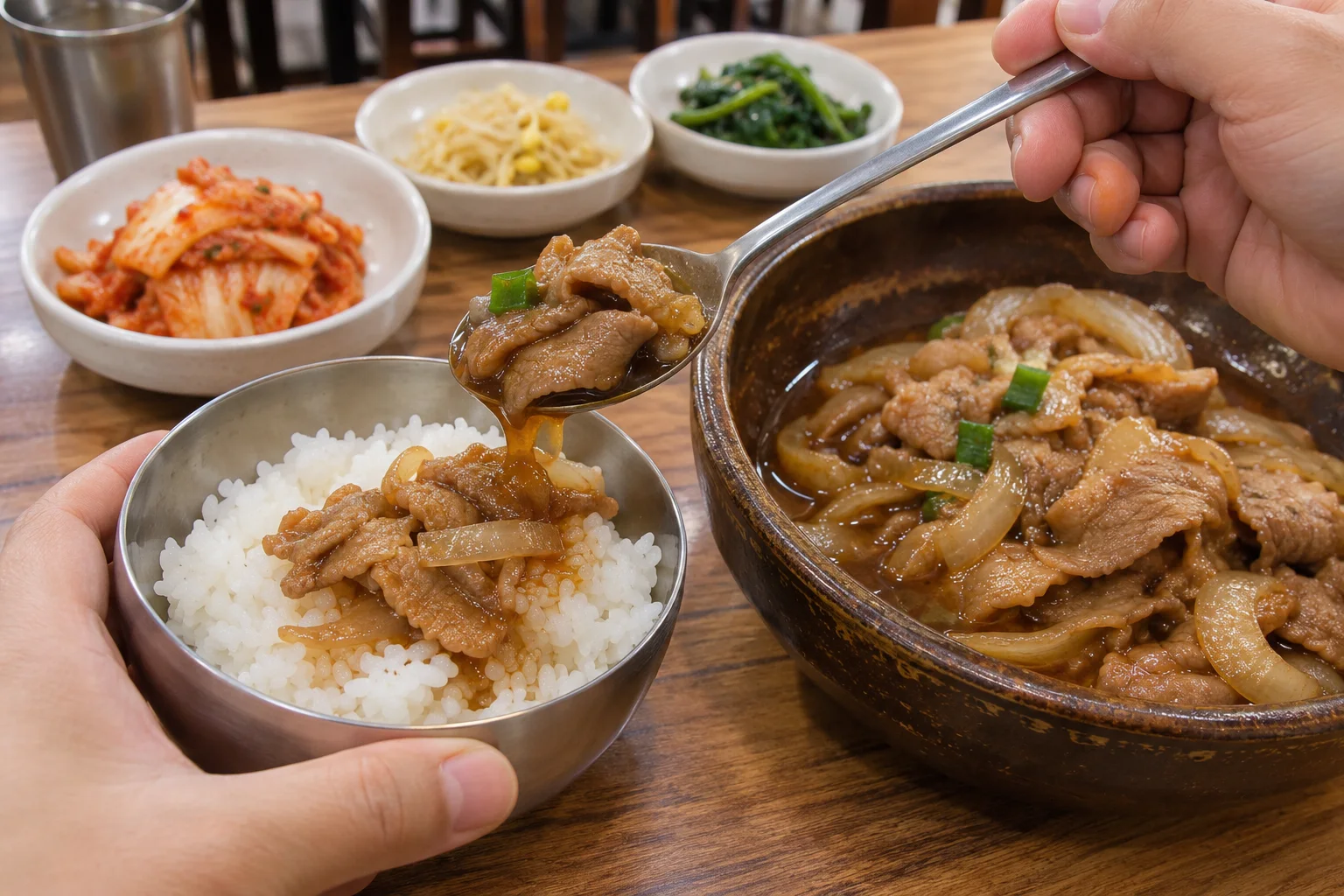
Eat the plate-style bulbaek as a rice side dish or in wraps because there is usually not enough liquid to mix the whole bowl. With the saucier bowl or ttukbaegi style, spoon pork and seasoning over rice and mix as much—or as little—as you like.
WHAT TO DRINK · WHAT COMES AFTER
Eat the plate style alongside rice, or spoon the saucier bowl version over it.
The dependable sharp side for sweet-savory pork.
Add sliced garlic and a small amount of ssamjang.
Some restaurants offer soft cabbage leaves as another wrap.
NEXT EXPERIENCE