What is Jjukkumi Bokkeum?
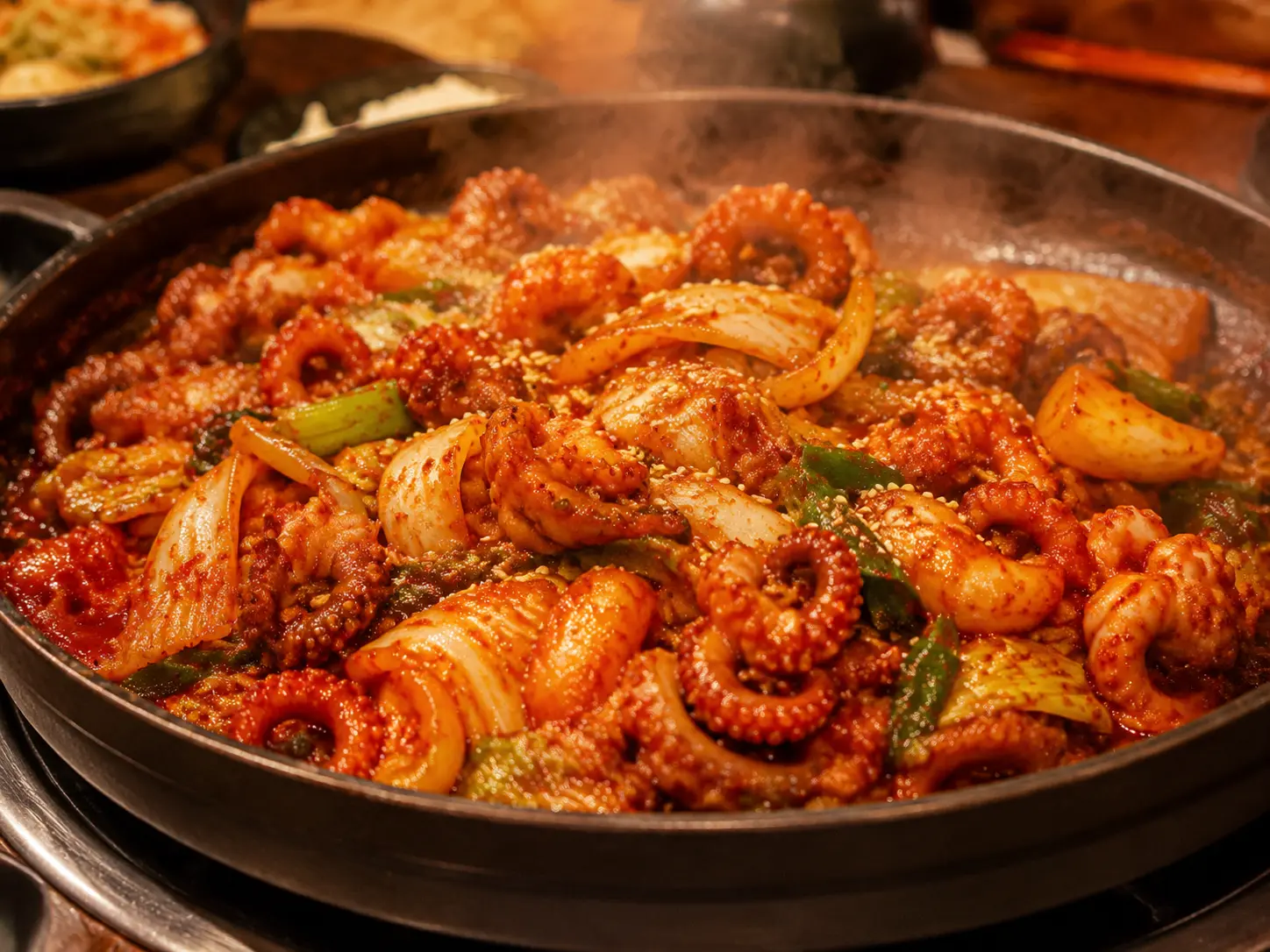
Jjukkumi bokkeum is webfoot octopus stir-fried in a restaurant's own sweet-hot gochujang sauce.
KOREAN FOOD · FROM HEAT TO FINISH
06 / 32
QUICK ANSWERS
Jjukkumi bokkeum is webfoot octopus stir-fried in a restaurant's own sweet-hot gochujang sauce.
Many specialist restaurants expect a two-person minimum, so confirm the serving size and spice level first. Jumeokbap is commonly ordered alongside the main pan rather than treated as a final course.
Specialist restaurants often serve fresh perilla leaves separately even when perilla is already cooked in the pan.
Leave a little sauce and a few chopped pieces, then order bokkeumbap.
Confirm the serving size and spice level before the pan starts. Choose plain jjukkumi for octopus only, or jjuksam when you want pork belly added.
Staff often starts and stirs a tabletop pan, but service differs by restaurant. Follow their cue, then lower the heat as soon as the octopus is ready.
01 · WHAT IS JJUKKUMI BOKKEUM?
Jjukkumi bokkeum is webfoot octopus stir-fried in a restaurant's own sweet-hot gochujang sauce. Plain jjukkumi remains the standard version; jjuksam, with samgyeopsal added, began as a newer trend and is now widely available.
By Mr. Ahn · Korean Office WorkerLast updated
02 · ORDER LIKE A REGULAR
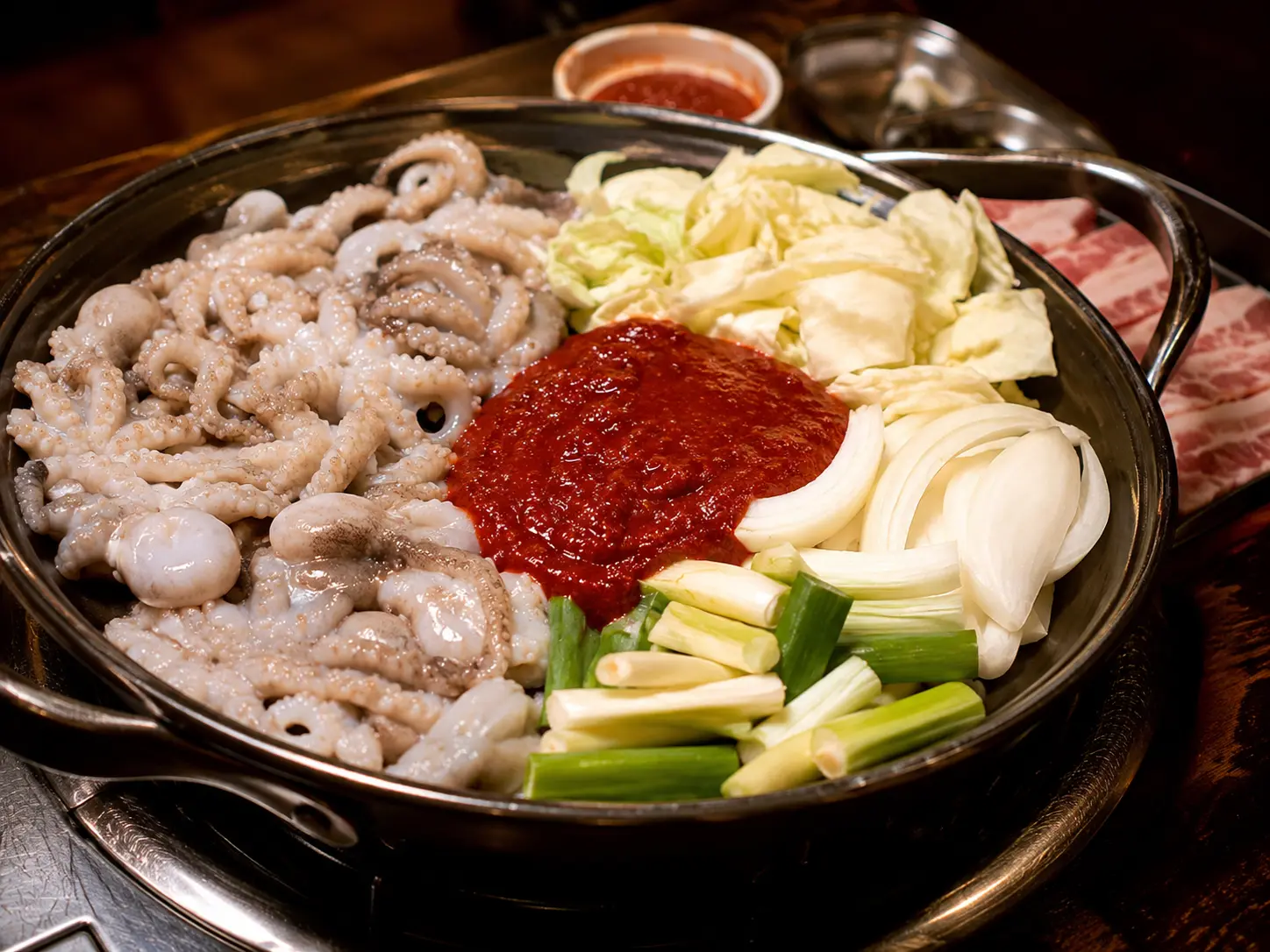
Many specialist restaurants expect a two-person minimum, so confirm the serving size and spice level first. Steamed egg is an excellent match for the heat, while cheese may melt around the edge of the pan or run in a line through its center, depending on the restaurant.
03 · WATCH THE FIRST ROUND
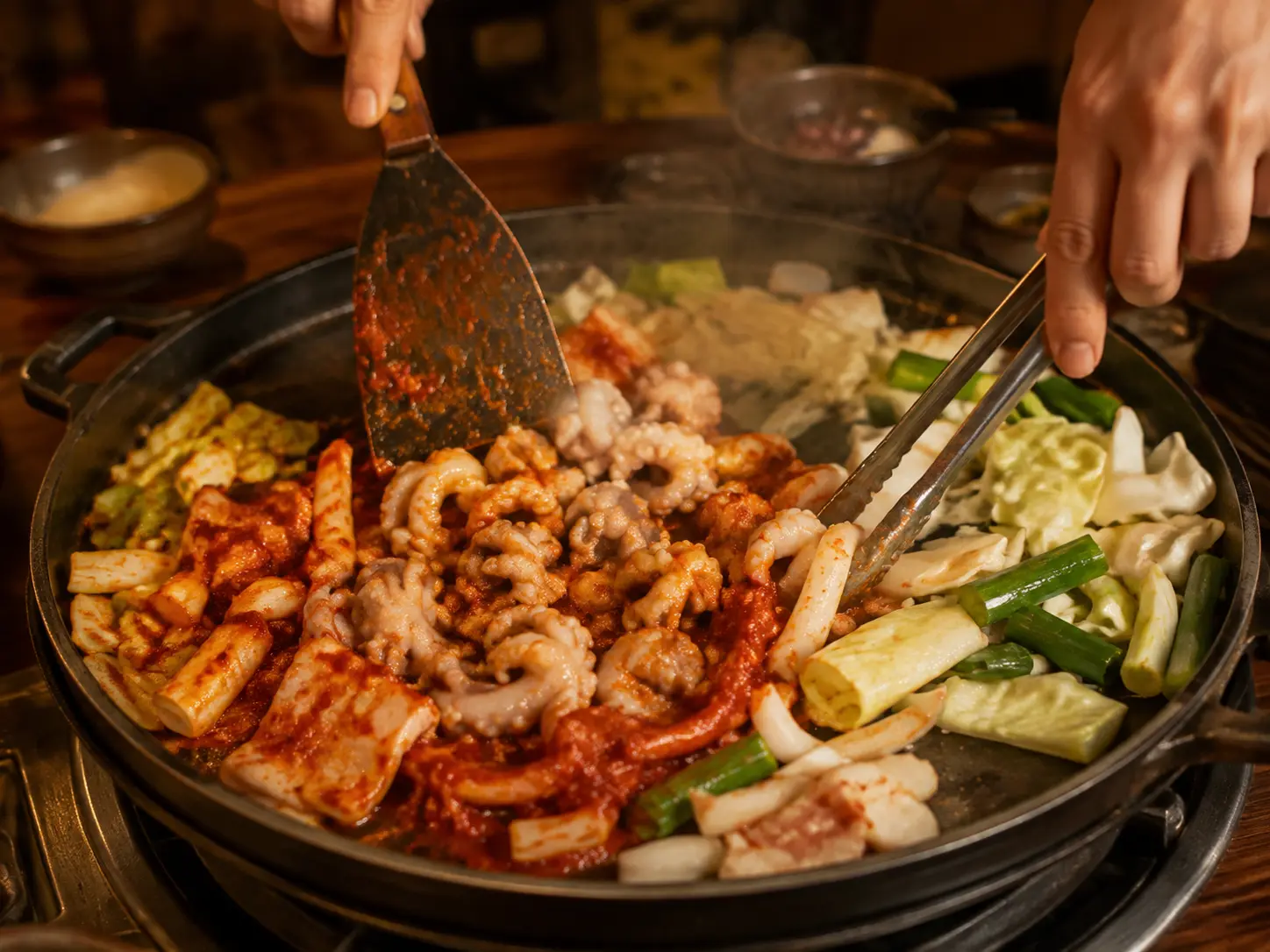
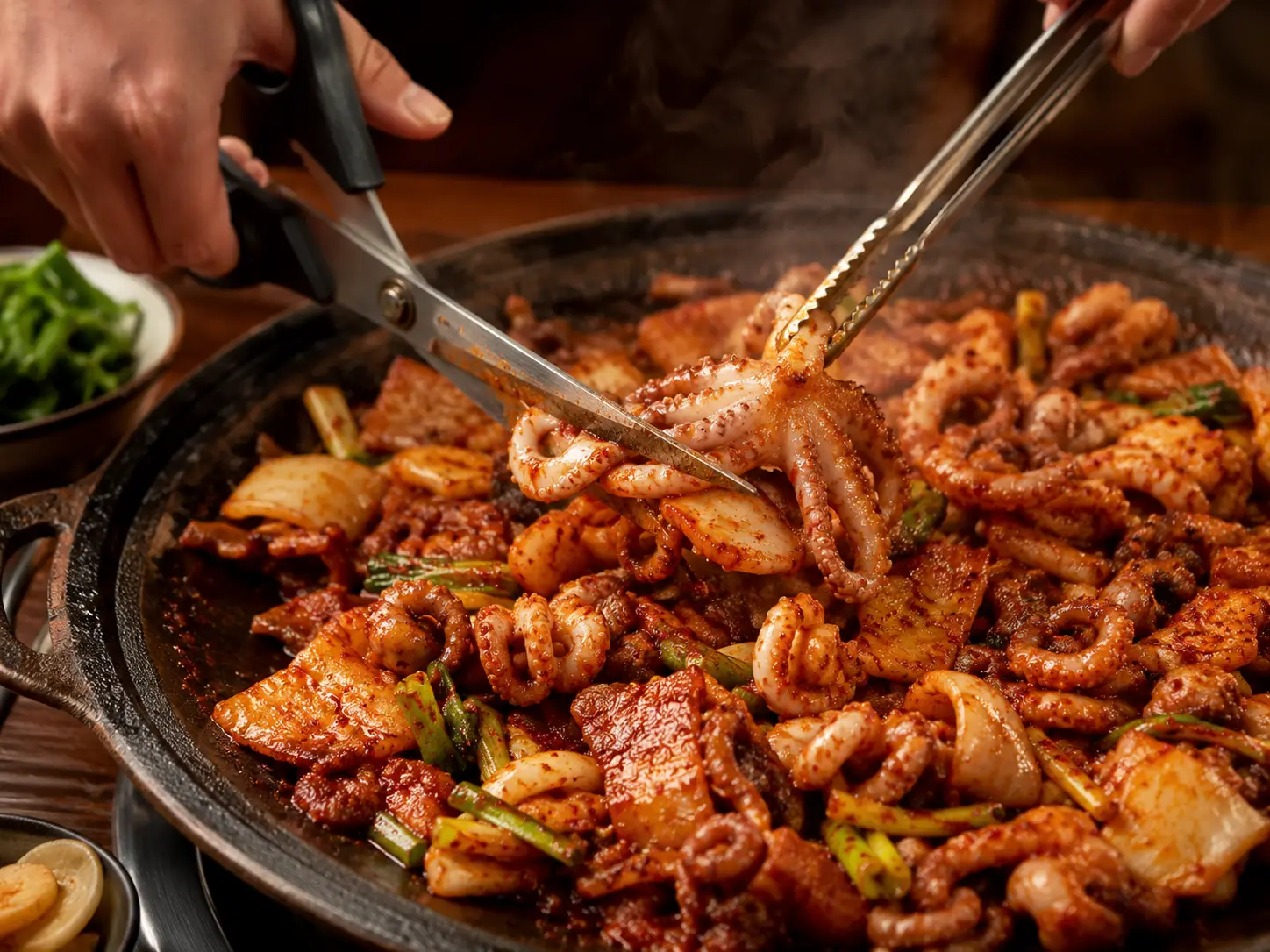
At tabletop restaurants, staff often starts the pan, stirs the sauce, and tells you when the octopus is ready; service style varies, so follow their cue before serving yourself. Once the pan is hot, the final octopus cooking is brief because extra time makes it chewy.
04 · THE PAN TAKES OVER
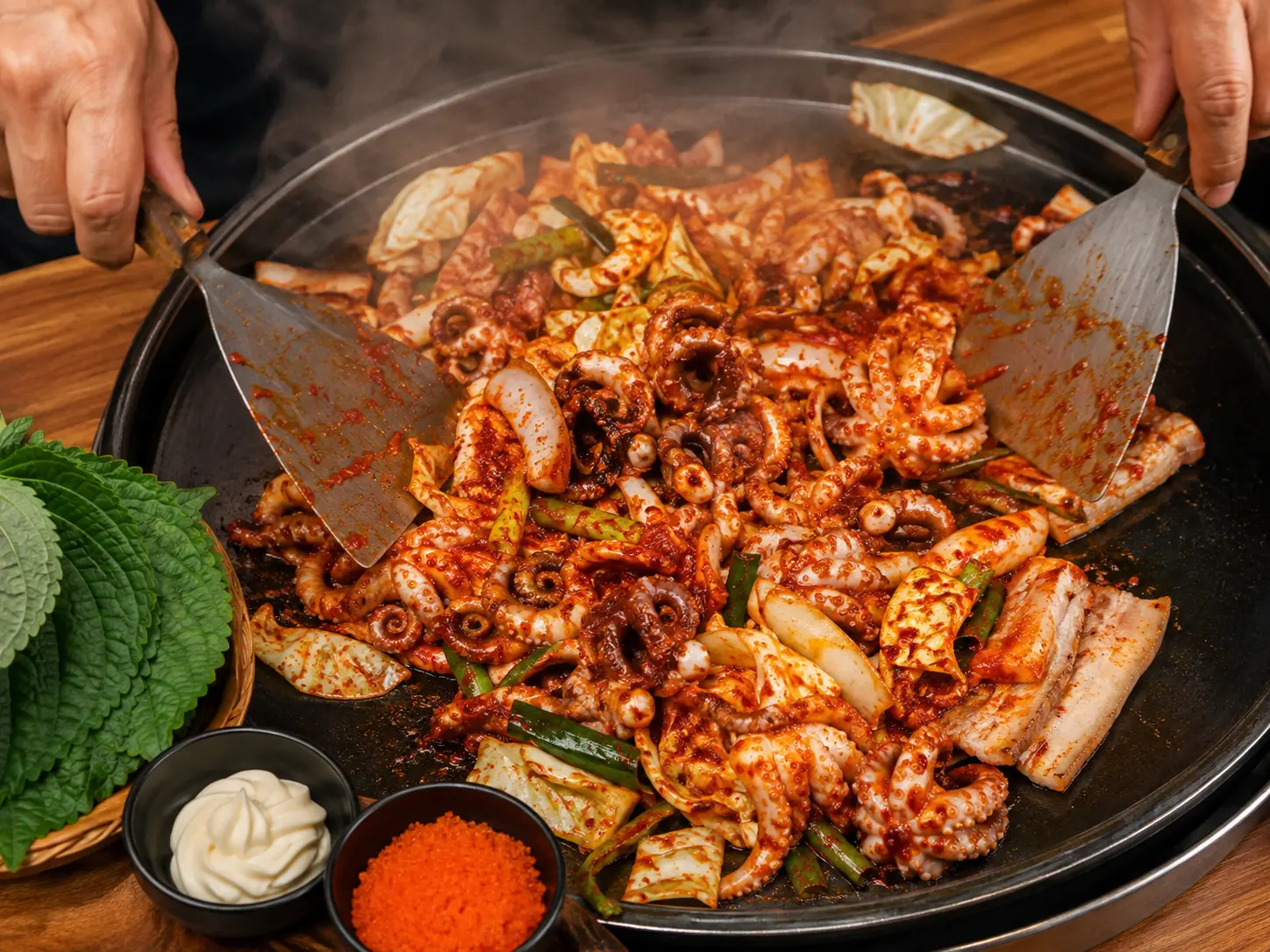
Keep the sauce moving over strong heat until it clings to the octopus and vegetables, then reduce the burner as soon as the pieces curl and turn opaque. Some restaurants add bean sprouts for a cleaner, refreshing taste, while others leave them out to keep the sauce more concentrated.
05 · ORDER FOR THE TABLE
Jumeokbap is commonly ordered alongside the main pan rather than treated as a final course. Rice, seaweed flakes, and often flying-fish roe arrive in a bowl for diners to mix and shape by hand—part side dish, part table activity.
06 · BUILD THE BITE
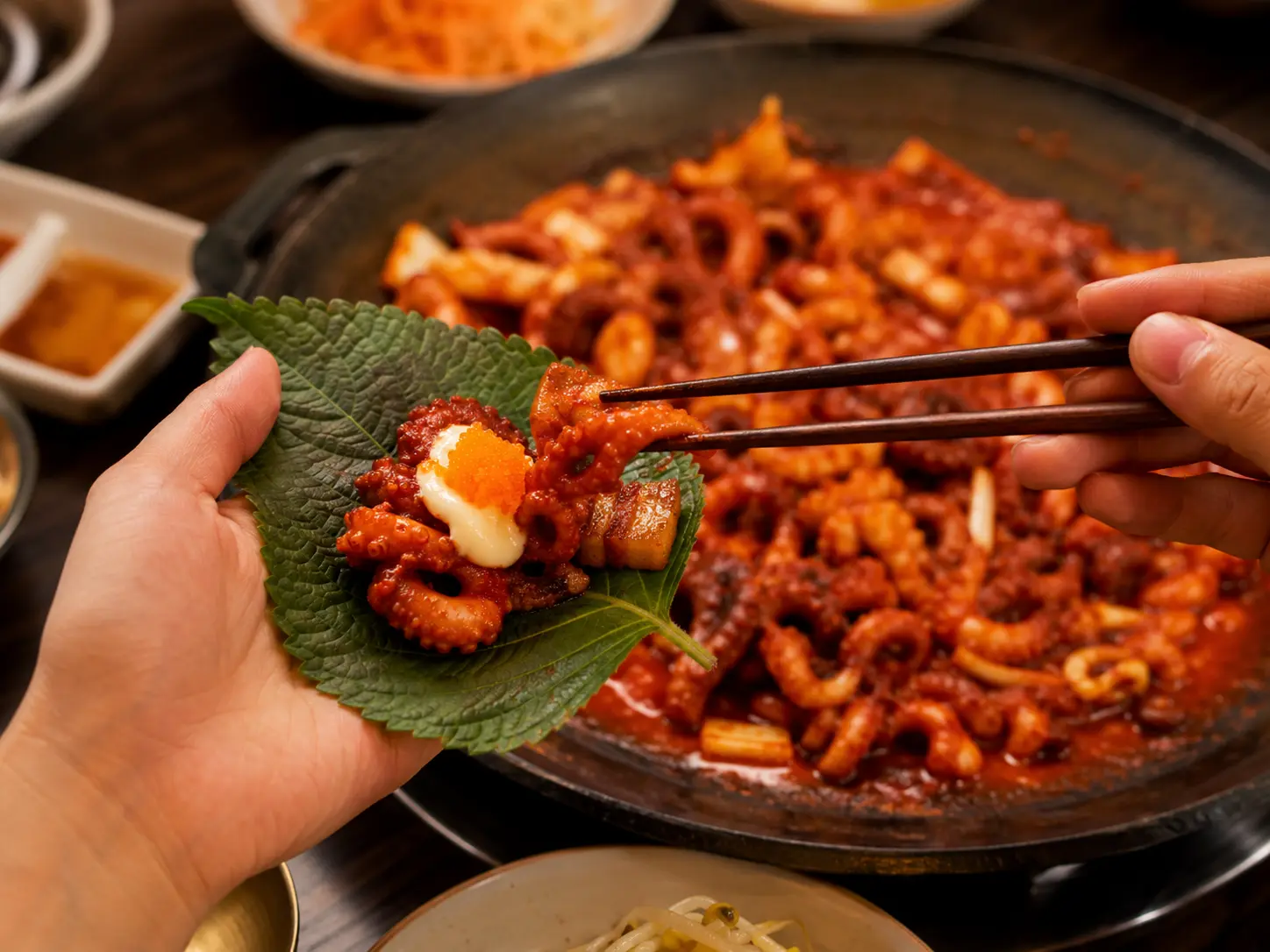
Specialist restaurants often serve fresh perilla leaves separately even when perilla is already cooked in the pan. Wrap the spicy octopus in one leaf for a cool, fragrant bite; the herbal aroma is a defining part of the combination.
07 · SAVE THE PAN
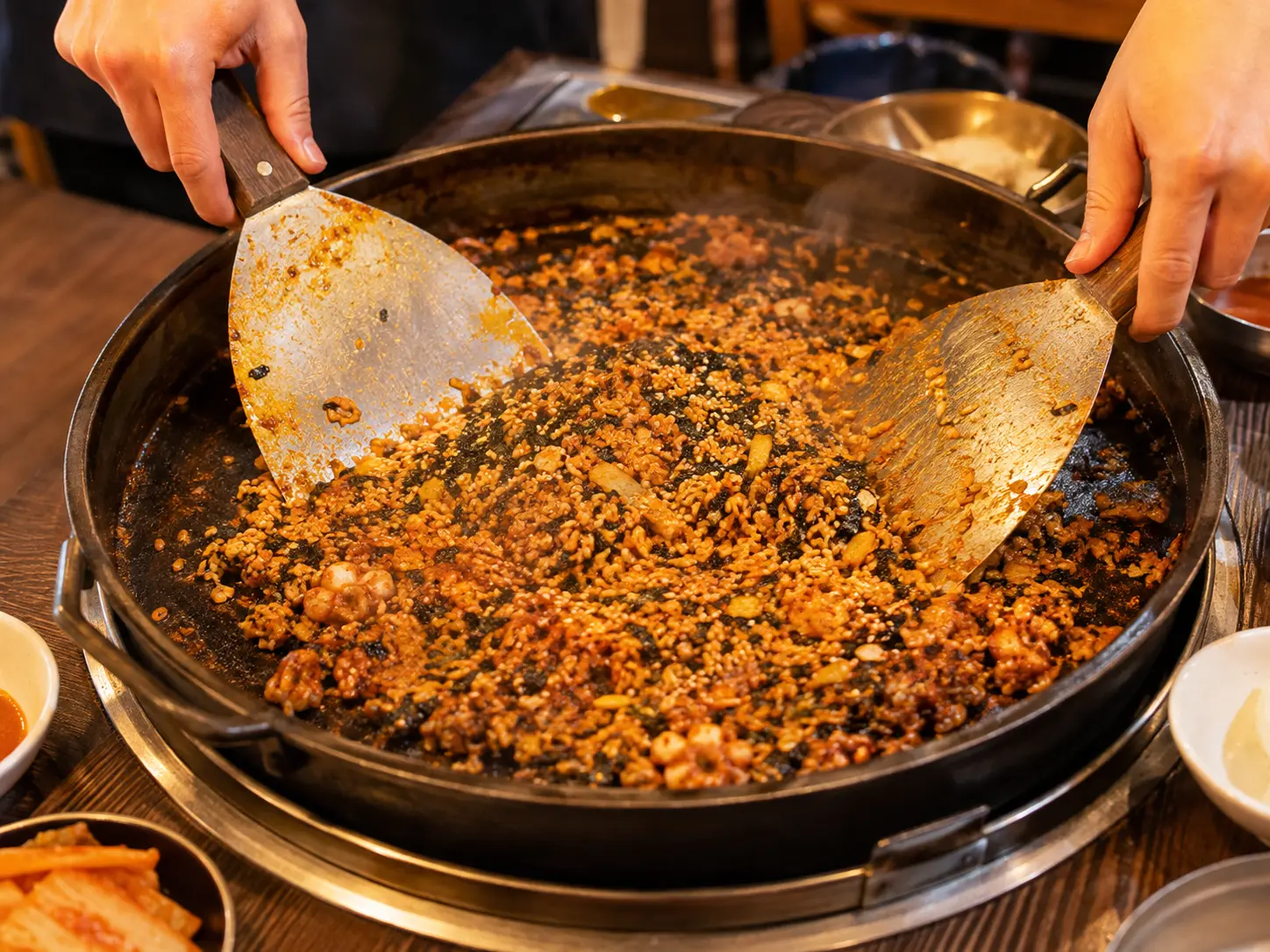
Leave a little sauce and a few chopped pieces, then order bokkeumbap. Seaweed flakes are essential; flying-fish roe and extra sesame oil are not universal additions. Spread the rice across the pan and let the underside turn lightly crisp before scraping it up.
WHAT TO DRINK · WHAT COMES AFTER
A cold pour stands up to the spicy sauce.
Carbonation cools the heat and pork fat.
Cold plum tea brings sweet acidity.
Simple soft serve resets the palate.
WHERE TO EXPERIENCE IT
One pick from the food’s best-known regional home, plus one accessible Seoul choice. Check the latest listing before visiting.
REGIONAL PICK
Yongdu-dong · Seoul
The restaurant most closely associated with Yongdu-dong’s spicy jjukkumi street.
OPEN IN GOOGLE MAPS ↗SEOUL PICK
Mugyo-dong · Seoul
A classic central-Seoul destination for intensely spicy stir-fried octopus.
OPEN IN GOOGLE MAPS ↗Coming to Korea? Use these as carefully selected starting points—and enjoy the dish where its local story feels most alive.
MAKE IT AT HOME
INGREDIENTS
COOKING METHOD
Rinse and drain the octopus very well; cut only the largest pieces.
Mix gochujang, gochugaru, soy sauce, sugar, garlic, corn syrup, and sesame oil.
Stir-fry onion and cabbage over high heat, then add sauce and reduce any released water.
Add octopus last and toss for only 3–5 minutes, until curled and opaque. Overcooking makes it rubbery.
HOME NOTEFor jjuksam, brown 250g sliced pork belly first and use its rendered fat for the vegetables.
NEXT EXPERIENCE