QUICKLY WET THE POLLACK
Rinse the dried pollack briefly or dip it in water just until flexible. Squeeze it gently and cut long strips into spoon-friendly lengths. Do not soak it until flavorless.
GUK · 국
A mild dried-pollack soup Koreans often cook at home the morning after drinking. Families use bugeochae or hwangtaechae depending on the season and what is available; with hwangtae, it is also called hwangtae guk or hwangtae haejangguk.
WHAT YOU NEED
Measured for 3 servings. Prepare and cut everything before the pot goes on the heat.
COOK IN ORDER
Rinse the dried pollack briefly or dip it in water just until flexible. Squeeze it gently and cut long strips into spoon-friendly lengths. Do not soak it until flavorless.
Warm the sesame oil over medium-low heat. Add the pollack and radish and stir for 2 to 3 minutes, until fragrant but not browned.
Add the water, bring to a boil and skim any foam. Lower the heat and simmer for 12 to 15 minutes, until the radish is translucent. Keeping it to pollack, radish and egg preserves the quick next-morning character of this home soup.
Add garlic and soup soy sauce. Use optional saeujeot or salt a little at a time; the broth should stay pale and taste of pollack and radish rather than soy sauce.
Pour the beaten egg slowly in a circle. Wait about 10 seconds, fold it once or twice to make soft ribbons, then add scallion and turn off the heat.
HOW TO KNOW IT IS READY
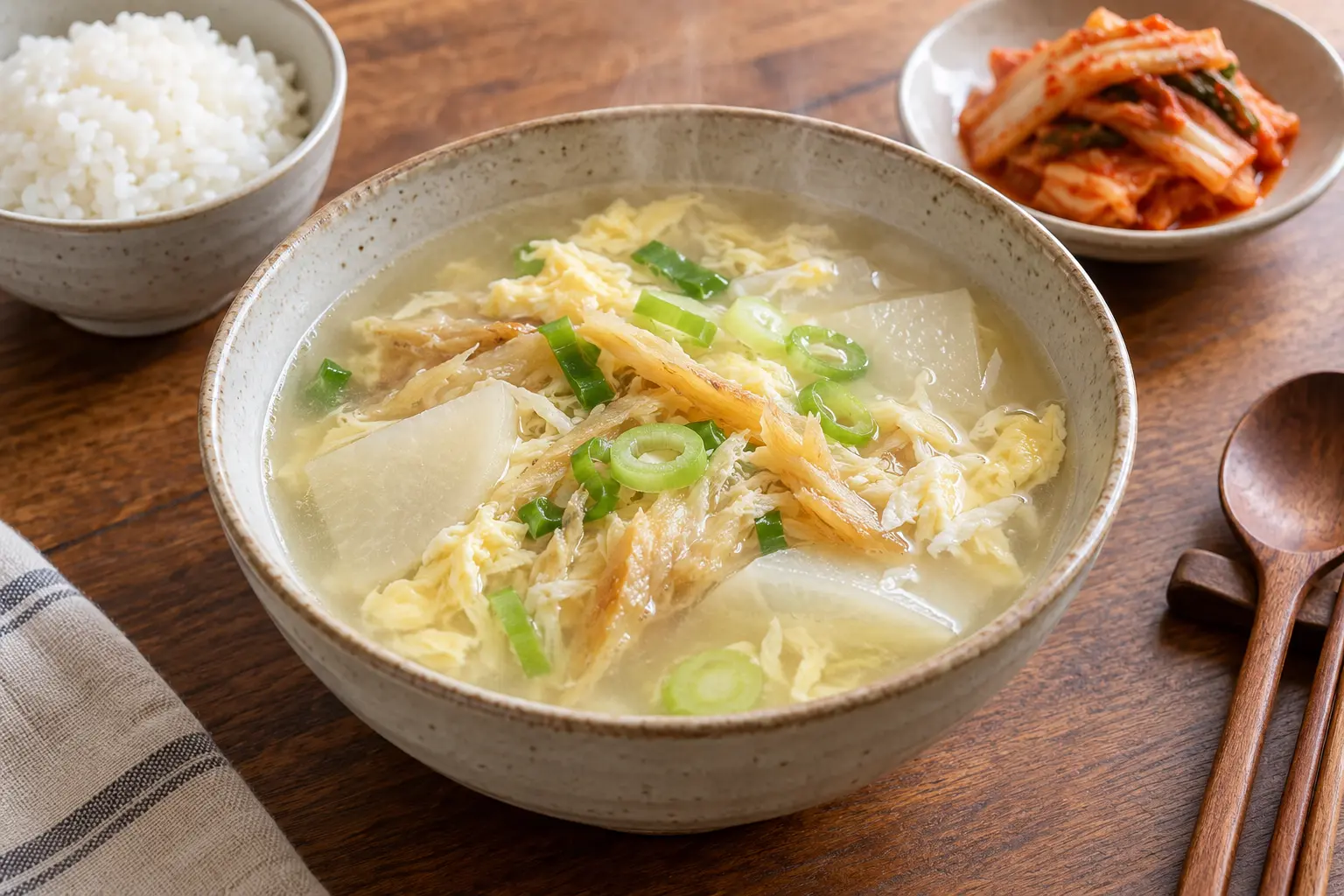
The broth should be pale ivory to light gold, with soft pollack shreds, translucent radish and large egg ribbons. It should taste clean and savory—not fishy, dark or heavily salted.
THE KOREAN TABLE
In many Korean homes, this is the next-morning soup made for a family member who drank the night before. The method is nearly the same whether the family uses bugeochae or hwangtaechae; the choice often changes with the season and what is easy to buy. When hwangtae is used, people may call it hwangtae guk or, to emphasize its next-morning role, hwangtae haejangguk. Koreans may describe the broth as siwonhada: not literally cold, but clean, refreshing and soothing. Eat it with hot rice and kimchi. It is traditional comfort food, not a medical hangover cure.
LEFTOVERS
Cool promptly and refrigerate for up to 2 days. Reheat only the portion you need to a gentle simmer, adding a little water if the broth has concentrated. Repeated hard boiling makes the egg tough and the pollack dry.