SEASON THE OPTIONAL BEEF
Mix the beef with 1 tablespoon soy sauce, garlic, a little sugar and pepper. Leave it while you prepare the vegetables; simply skip this step for meatless japchae.
BANCHAN & HOLIDAY · 반찬·명절 음식
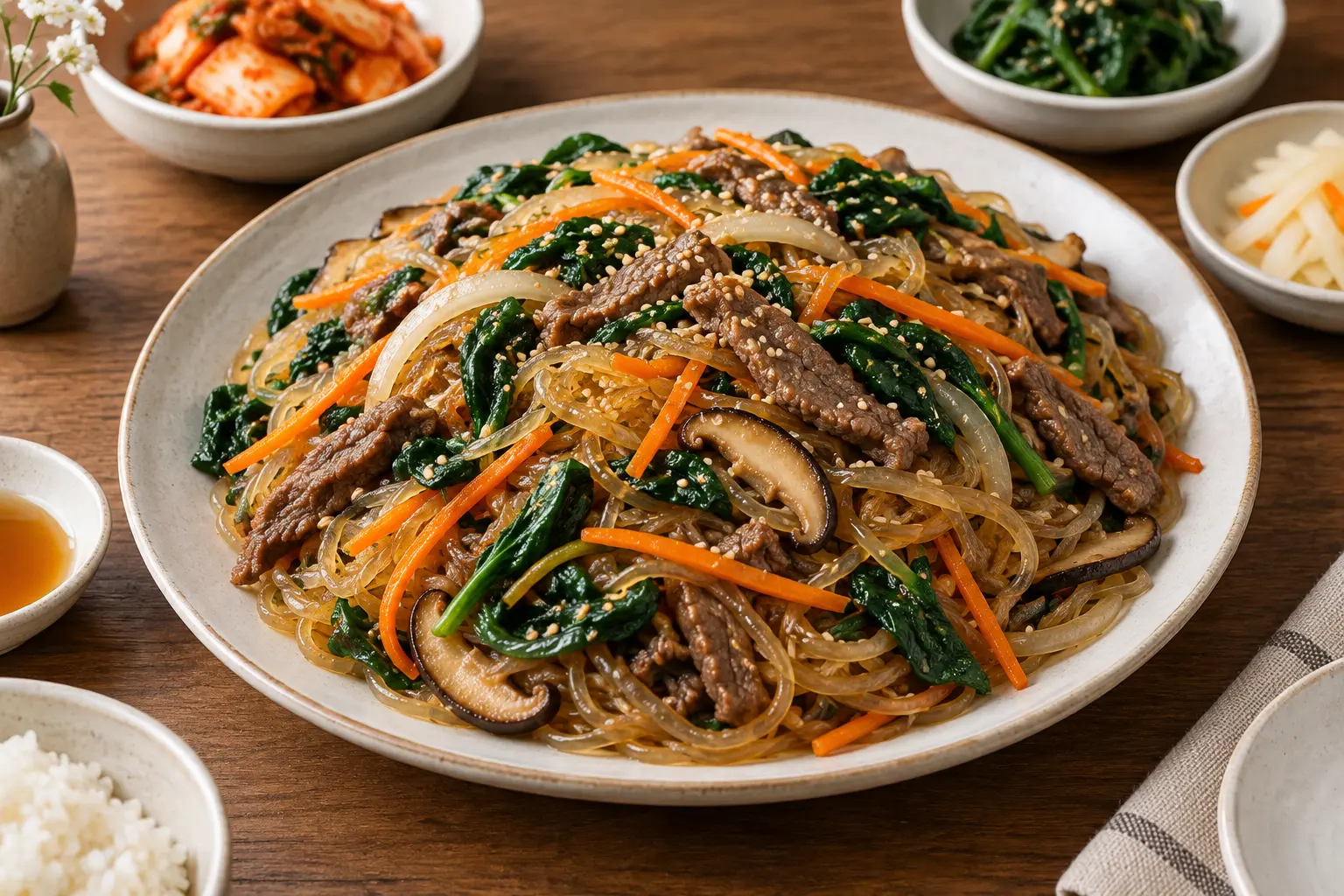
A completely non-spicy, sweet-savory noodle dish for birthdays, Chuseok and family gatherings. Thin beef is common, but meatless japchae is just as normal at home.
WHAT YOU NEED
Measured for 6 side servings. Prepare and cut everything before the pot goes on the heat.
COOK IN ORDER
Mix the beef with 1 tablespoon soy sauce, garlic, a little sugar and pepper. Leave it while you prepare the vegetables; simply skip this step for meatless japchae.
Stir-fry the onion, carrot and mushrooms so they keep their color and texture. Spinach is familiar but not compulsory; many Korean homes make japchae without it.
Cook the noodles until pliable but still pleasantly chewy. Drain well and cut them to an easy eating length during cooking—not with scissors at the table.
Add the remaining soy sauce, sugar and sesame oil to the noodles. Toss over medium heat until glossy, then fold in the vegetables and cooked optional beef.
Taste for soy, sweetness and pepper, scatter sesame seeds and let the japchae settle for a few minutes so the seasoning absorbs evenly.
HOW TO KNOW IT IS READY
The noodles should be translucent, springy and lightly glossy—not swimming in oil or clumped together. The vegetables should remain colorful and distinct.
THE KOREAN TABLE
At home, japchae is shared from a large platter at birthdays, Chuseok and family gatherings, though shops also sell it as everyday banchan. Korean-Chinese restaurants commonly serve japchaebap: freshly stir-fried japchae beside rice, not rice fried into the noodles. Its soy, sugar and sesame-oil flavor is mild and completely non-spicy.
LEFTOVERS
Refrigerate for up to 3 days. Cold noodles become firm and may stick together; a short, gentle stir-fry in a pan brings back their softness and aroma better than eating them cold.
See the practical differences between the holiday platter, everyday banchan and the rice plate served in Korean-Chinese restaurants.
Open the Japchae questions guide →